

The 2004 Indian Ocean Tsunami Explained: One of the Deadliest Natural Disasters in Modern History
On December 26, 2004, a magnitude 9.1 earthquake triggered a tsunami that claimed more than 230,000 lives across the Indian Ocean. Here is what happened, why the death toll was so high, and what changed as a result.
On December 26, 2004, one of the most powerful earthquakes ever recorded triggered a devastating tsunami that affected countries across the Indian Ocean. Often referred to as the Boxing Day Tsunami, the disaster claimed more than 230,000 lives and affected millions of people across multiple nations.
The event fundamentally changed how the world approaches tsunami detection, warning systems, and coastal preparedness. More than two decades later, the 2004 Indian Ocean tsunami remains one of the most significant natural disasters in modern history.
What Happened on December 26, 2004?
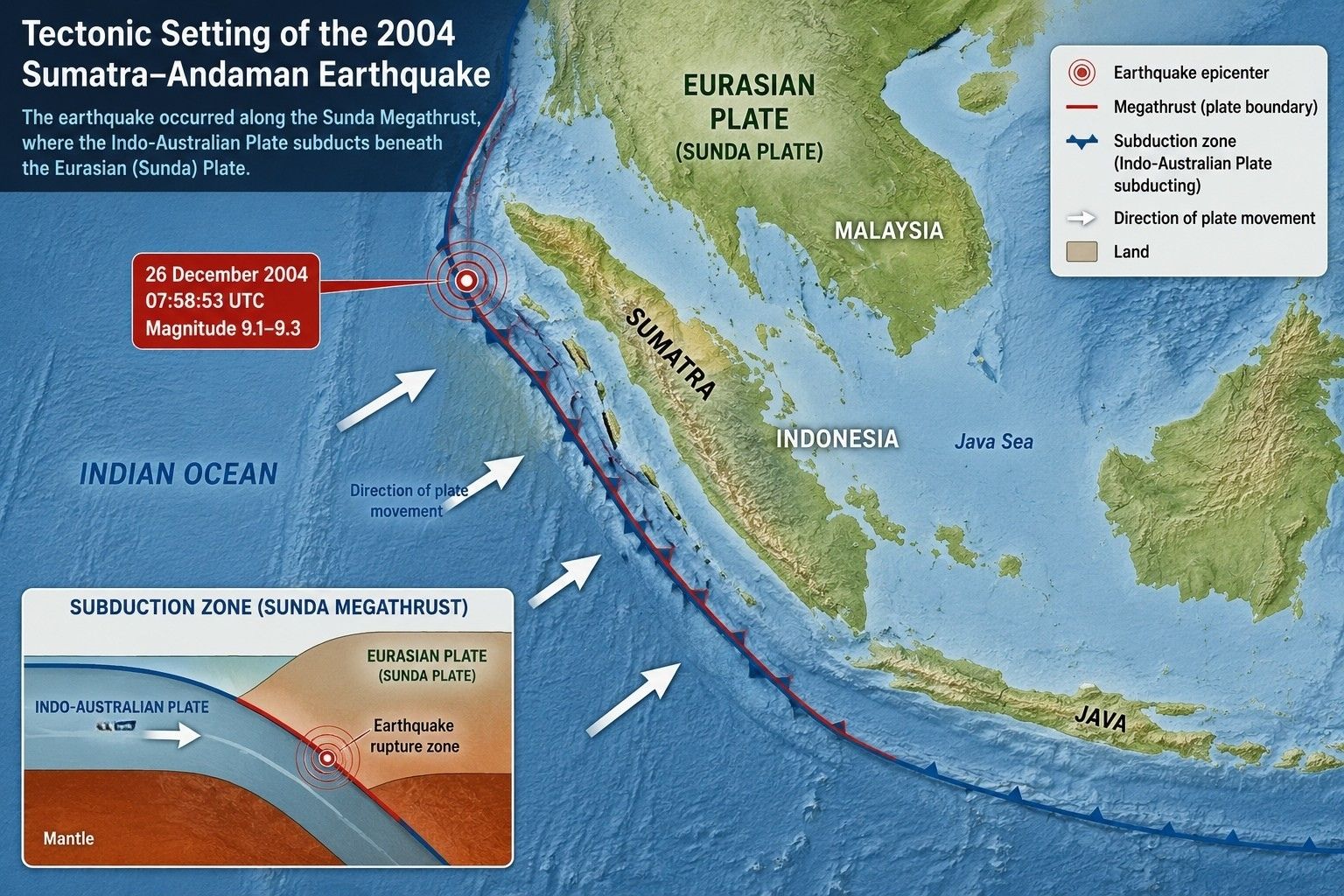
At approximately 7:58 a.m. local time, a massive undersea earthquake struck off the western coast of northern Sumatra, Indonesia. The earthquake measured approximately magnitude 9.1–9.3, making it one of the largest earthquakes ever recorded.
The rupture occurred along a major tectonic plate boundary — to understand what causes tsunamis at this geological level, this type of subduction zone movement is the most common trigger. When the ocean floor suddenly shifted, enormous amounts of seawater were displaced, generating tsunami waves that spread across the Indian Ocean.
How Powerful Was the Earthquake?
The earthquake lasted for several minutes — an extraordinarily long duration for a seismic event. Scientists estimate that the rupture extended over 1,300 kilometres (800 miles), portions of the seafloor moved by several metres, and the energy released was equivalent to billions of tonnes of TNT. The event was so powerful that it caused measurable vibrations around the entire planet.
Which Countries Were Affected?
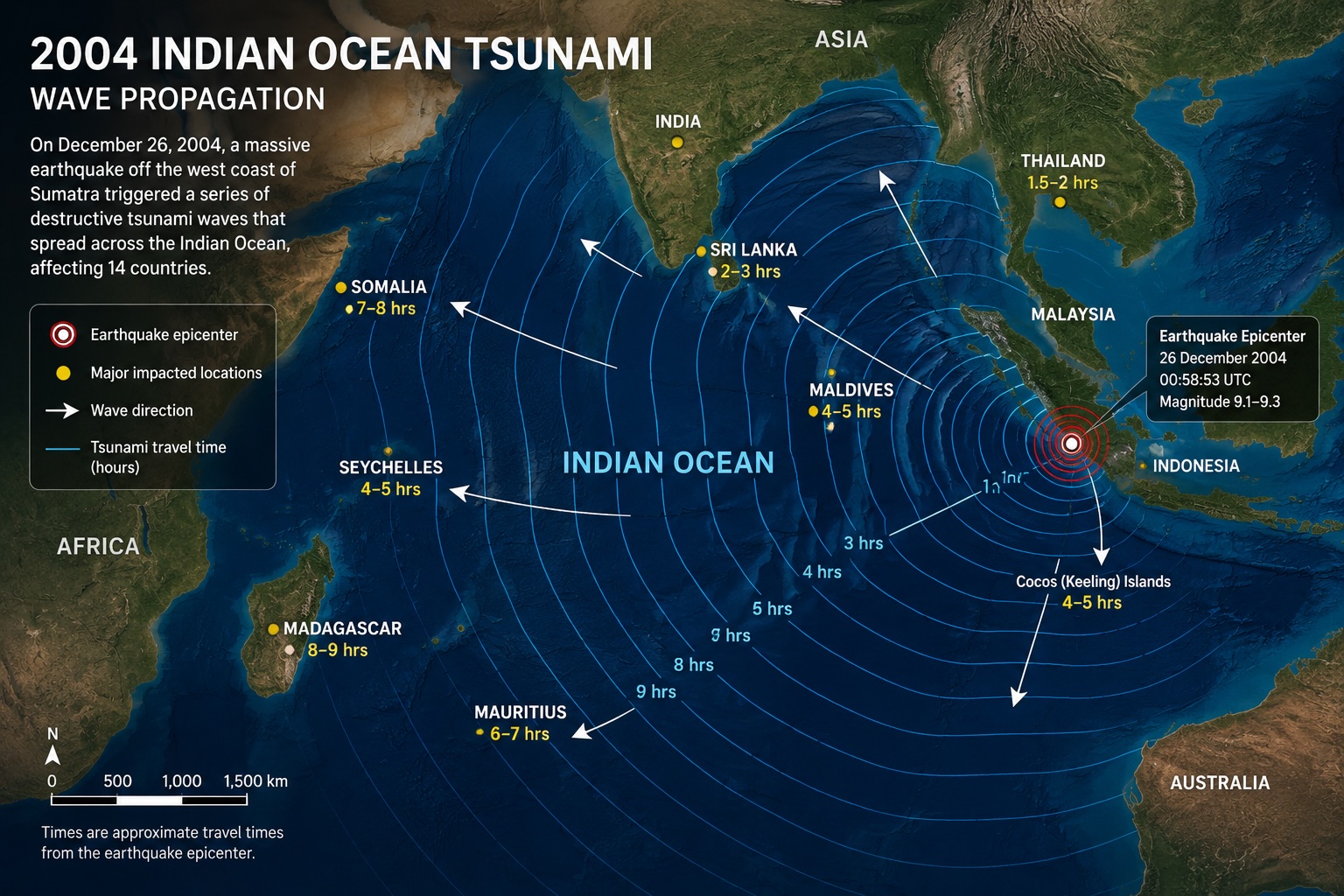
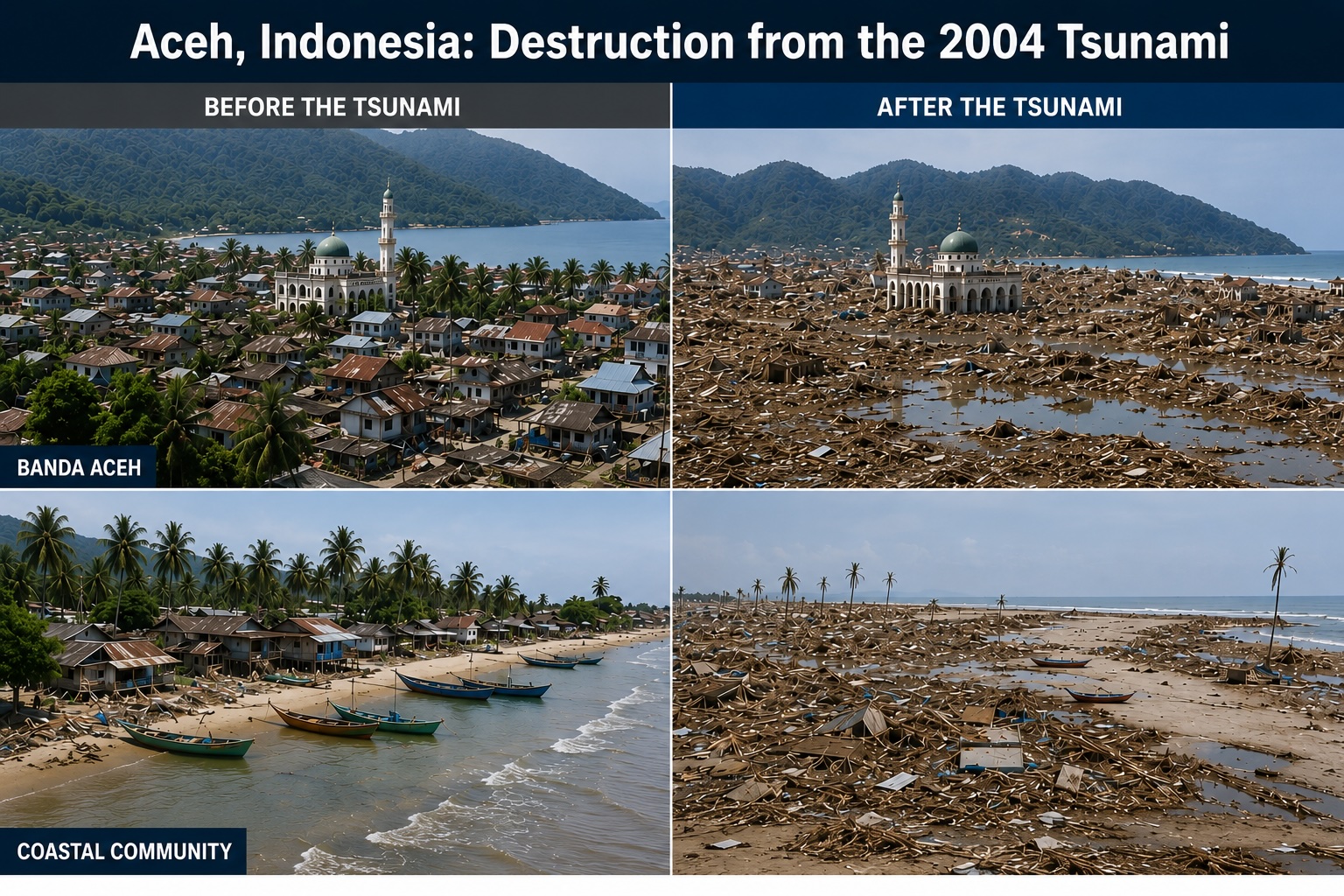
The tsunami affected numerous countries throughout the Indian Ocean region. Indonesia suffered the greatest loss of life, particularly in Aceh Province on the island of Sumatra, where entire communities were devastated. Sri Lanka experienced severe flooding and destruction along large sections of its coastline. India's eastern coast and the Andaman and Nicobar Islands were significantly impacted. Popular tourist destinations in Thailand experienced severe tsunami damage, and the low-lying islands of the Maldives experienced widespread flooding.
Remarkably, tsunami waves also travelled across the Indian Ocean to affect parts of East Africa, including Somalia — a stark demonstration of just how far-reaching the disaster was.
How Fast Did the Tsunami Travel?
Tsunami waves can travel at extraordinary speeds in deep water. During the 2004 event, waves crossed the Indian Ocean at speeds approaching 800 km/h (500 mph) — comparable to a commercial jet aircraft. Some coastlines were impacted within minutes of the earthquake. Others experienced impacts several hours later.
Despite the long travel times to some locations, many areas lacked dedicated tsunami warning systems, meaning communities had no advance notice of the approaching waves.
Why Was the Death Toll So High?
Several factors contributed to the devastating loss of life. At the time, the Indian Ocean did not have a comprehensive tsunami warning network. Today, modern tsunami warning systems are far more extensive. Many people were unfamiliar with tsunami warning signs — some individuals even moved toward the shoreline after observing unusual ocean behaviour. Many affected communities were located directly along low-lying coastlines, and thousands of tourists were visiting coastal destinations during the holiday season.
In several locations, witnesses reported natural warning signs before the tsunami arrived — including a sudden retreat of seawater, exposed seafloor, and unusual ocean sounds. Today, these observations are widely recognised as potential tsunami warning signs.
Natural Tsunami Warning Signs
If you observe the sea suddenly retreating or exposing the seafloor, or hear an unusual roaring sound from the ocean — move immediately to higher ground. Do not wait for an official warning.
The Human Impact
The human toll was immense. Estimates indicate more than 230,000 deaths, millions of people displaced, entire communities destroyed, and major losses to infrastructure across the region. Families, businesses, schools, hospitals, and transportation networks were affected across multiple countries.
The disaster became one of the largest humanitarian response efforts in modern history, drawing emergency assistance and international aid from governments and organisations around the world.
How the Disaster Changed Tsunami Preparedness
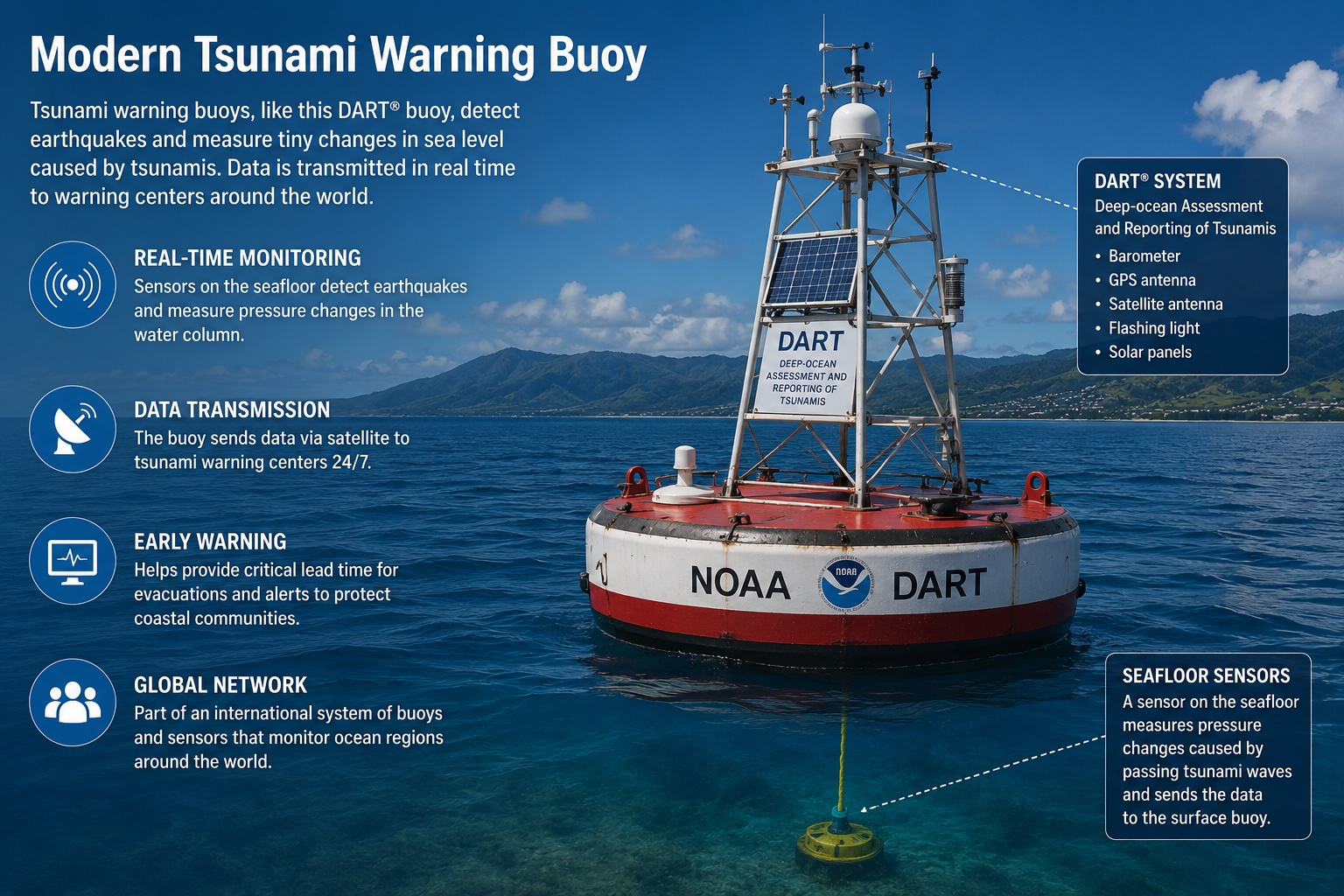
One of the most important outcomes of the disaster was a global effort to improve tsunami monitoring and warning systems. Following the tsunami, countries throughout the Indian Ocean invested in tsunami detection networks, seismic monitoring, and communication systems. Governments and scientific organisations expanded international collaboration, and public awareness campaigns educated communities about tsunami risks and natural warning signs.
The Legacy of 2004
The 2004 disaster led directly to the creation of the Indian Ocean Tsunami Warning System — a network connecting 28 nations that has since saved thousands of lives during subsequent tsunami events.
Lessons Learned
The 2004 Indian Ocean tsunami demonstrated several critical lessons that continue to shape preparedness globally. Early warning saves lives — timely information can significantly improve evacuation outcomes. See our tsunami preparedness checklist to understand what you can do before an emergency. Public education matters — understanding natural warning signs can help people react quickly without waiting for official alerts. Communities with emergency plans and evacuation routes are generally better positioned to respond. And effective tsunami monitoring requires international cooperation, because natural hazards do not respect national borders.
Could a Similar Event Happen Again?
Large undersea earthquakes remain possible in many parts of the world. Although scientists cannot predict exactly when they will occur, modern warning systems are far more advanced than they were in 2004. Today, multiple organisations continuously monitor earthquakes, ocean conditions, sea-level changes, and tsunami activity. These improvements provide valuable additional time for emergency response and evacuation.
How Tsunami Shield Supports Awareness
Tsunami Shield helps users stay informed through official tsunami alerts, earthquake monitoring, saved location monitoring, preparedness resources, and regional coastal monitoring. Awareness and preparedness remain among the most effective ways to reduce risk during coastal emergencies.
Stay Informed, Wherever You Are
Tsunami Shield delivers official tsunami alerts and earthquake monitoring directly to your phone — for your home, your family's locations, and every destination you travel to.
Final Thoughts
The 2004 Indian Ocean tsunami was one of the deadliest natural disasters in recorded history. Its impact extended far beyond the immediate destruction, leading to significant improvements in tsunami monitoring, warning systems, and public education around the world.
Although no system can eliminate natural hazards entirely, the lessons learned from 2004 continue to help communities improve preparedness and protect lives today. Understanding this event is a reminder of why awareness, education, and timely information remain essential components of coastal safety.
Frequently Asked Questions
What caused the 2004 Indian Ocean tsunami?
The 2004 Indian Ocean tsunami was caused by a magnitude 9.1–9.3 undersea earthquake off the western coast of northern Sumatra, Indonesia. The earthquake ruptured a major tectonic plate boundary, causing the seafloor to shift abruptly and displace enormous volumes of seawater, generating tsunami waves that spread across the Indian Ocean.
How many people died in the 2004 Indian Ocean tsunami?
Estimates indicate that more than 230,000 people lost their lives across 14 countries, making it the deadliest tsunami in recorded history. Indonesia suffered the greatest loss of life, particularly in Aceh Province on the island of Sumatra.
Why was there no tsunami warning in 2004?
At the time, the Indian Ocean did not have a functioning tsunami warning system. While earthquake detection systems recorded the seismic event, there was no formal network to translate that information into timely warnings for Indian Ocean nations and coastal communities.
How did the 2004 tsunami change global preparedness?
The disaster led directly to the creation of the Indian Ocean Tsunami Warning System, connecting 28 nations. It also accelerated improvements to Pacific warning systems, expanded international scientific cooperation, and prompted major public education campaigns about tsunami risks and natural warning signs.
Read Next
Continue exploring related topics


