

Venezuela Earthquake (June 2026): What Happened, Was There a Tsunami Risk, and What Coastal Communities Should Know
On 24 June 2026, two powerful earthquakes struck northern Venezuela just 39 seconds apart, triggering tsunami advisories across parts of the Caribbean. Here is what happened, the tsunami risk, and the key lessons for coastal communities.
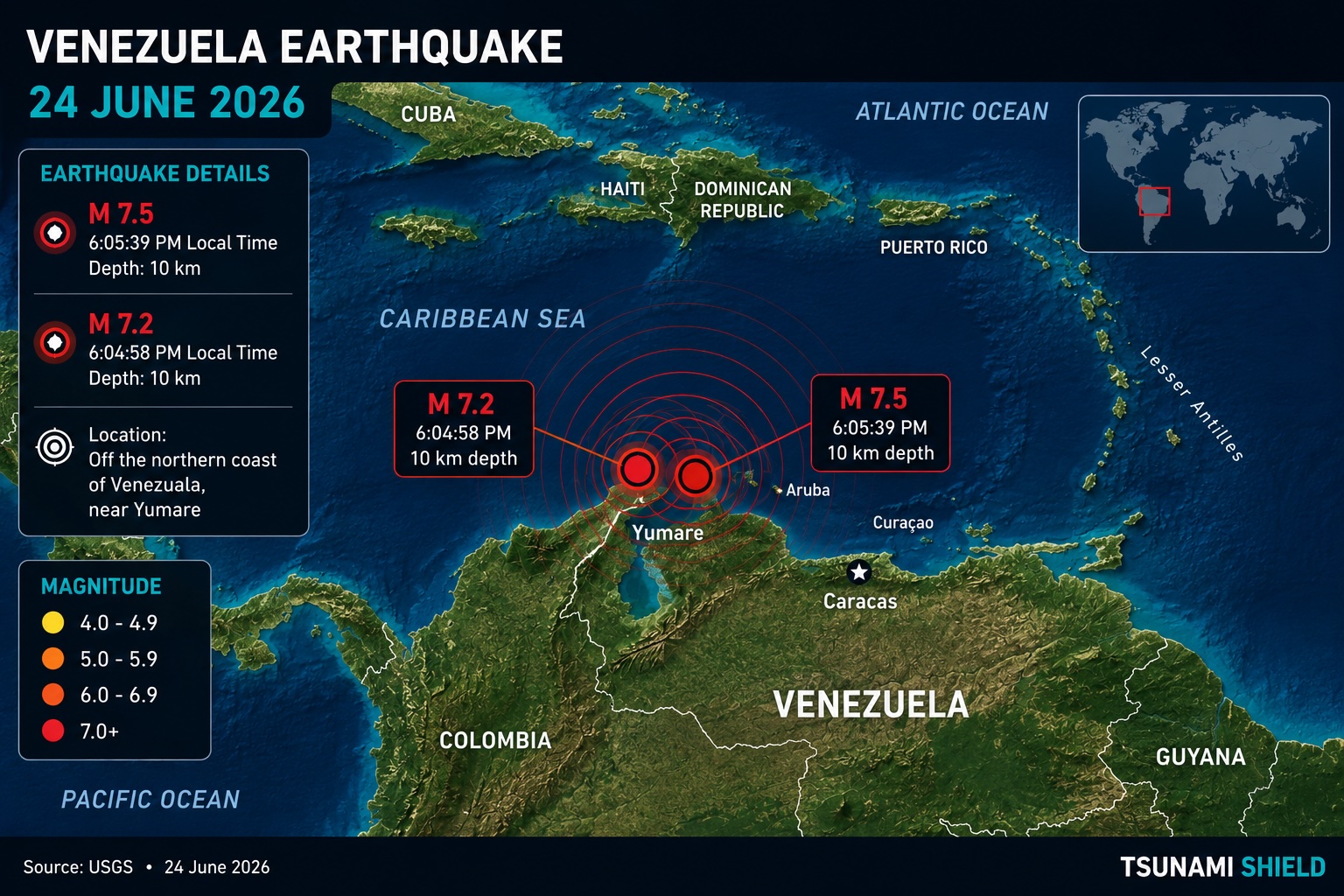
On 24 June 2026, northern Venezuela was struck by one of the country's strongest earthquakes in modern history. Two powerful earthquakes measuring magnitude 7.2 and 7.5 occurred just 39 seconds apart, causing widespread destruction across northern Venezuela and triggering tsunami warnings throughout parts of the Caribbean.
While the tsunami threat ultimately proved limited for most coastlines, the event serves as an important reminder that large undersea earthquakes can generate dangerous tsunamis with little warning.
Whether you live near the coast, are travelling in the Caribbean, or simply want to understand how tsunami warnings work, here's what happened — and what lessons everyone can take away.
Twin Earthquakes Strike Northern Venezuela
The first earthquake struck at approximately 6:04 pm local time, followed just 39 seconds later by an even larger earthquake. The epicentres were located off Venezuela's northern Caribbean coast near Yumare, west of Caracas, at relatively shallow depths — conditions capable of producing strong ground shaking and, in some cases, tsunami-generating seafloor movement.
The earthquakes caused widespread destruction, including major structural damage, building collapses, power outages, transportation disruptions, and numerous aftershocks. Emergency crews immediately began search and rescue operations while neighbouring countries monitored the Caribbean for possible tsunami activity.
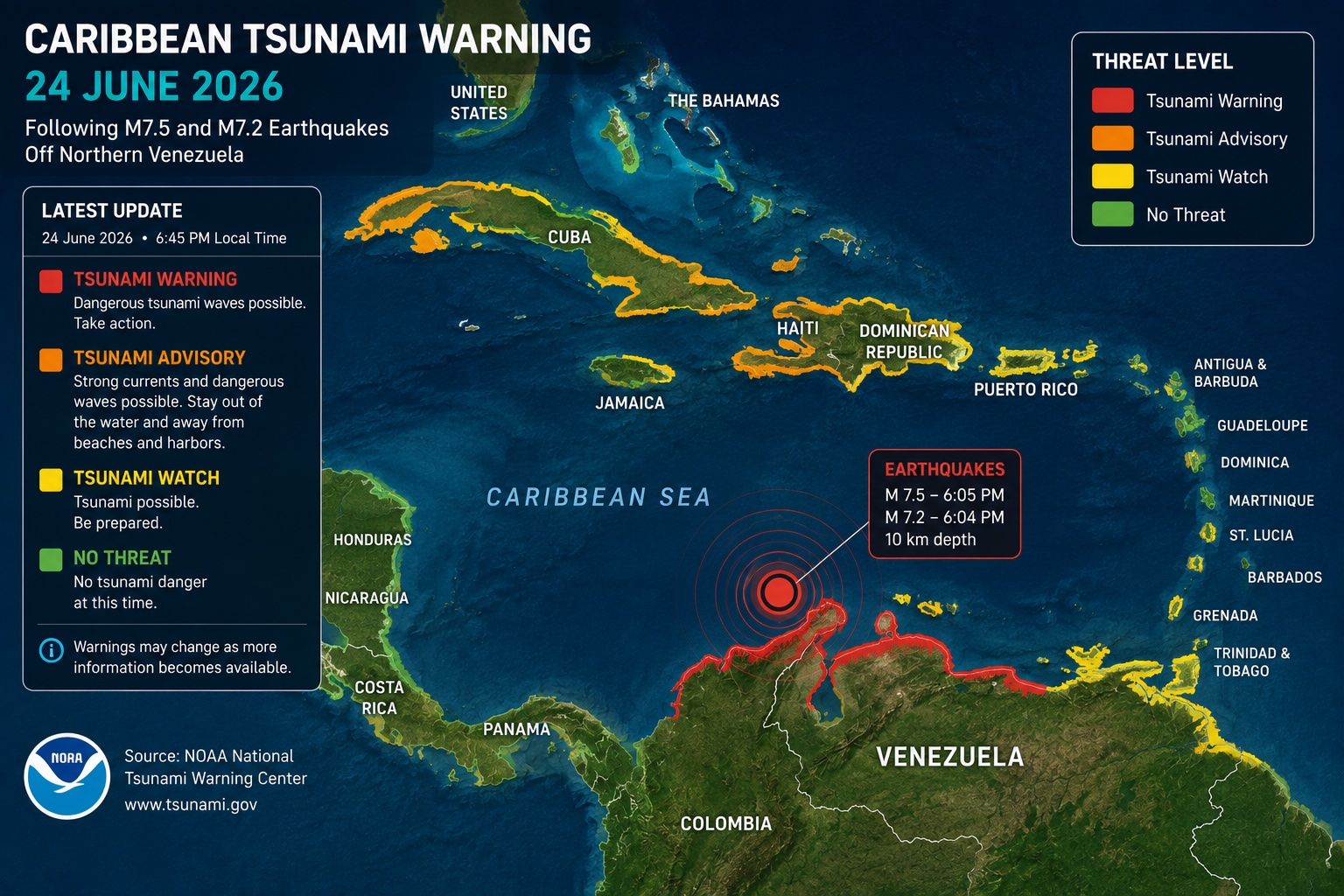
Was There a Tsunami?
Yes — but fortunately the impacts were limited.
Following the earthquakes, tsunami warning centres quickly analysed the event because earthquakes above magnitude 7 beneath or near the ocean can sometimes generate destructive tsunami waves.
Short-lived tsunami advisories were issued for parts of the Caribbean while scientists evaluated sea-level observations. Fortunately, no widespread destructive tsunami developed and warnings were later cancelled.
Tsunami Warning vs Tsunami Advisory
Not every large offshore earthquake creates a major tsunami — but every one deserves immediate attention until experts determine the actual risk. A tsunami advisory means dangerous currents are possible; a full warning means destructive waves are expected. Always follow official guidance.
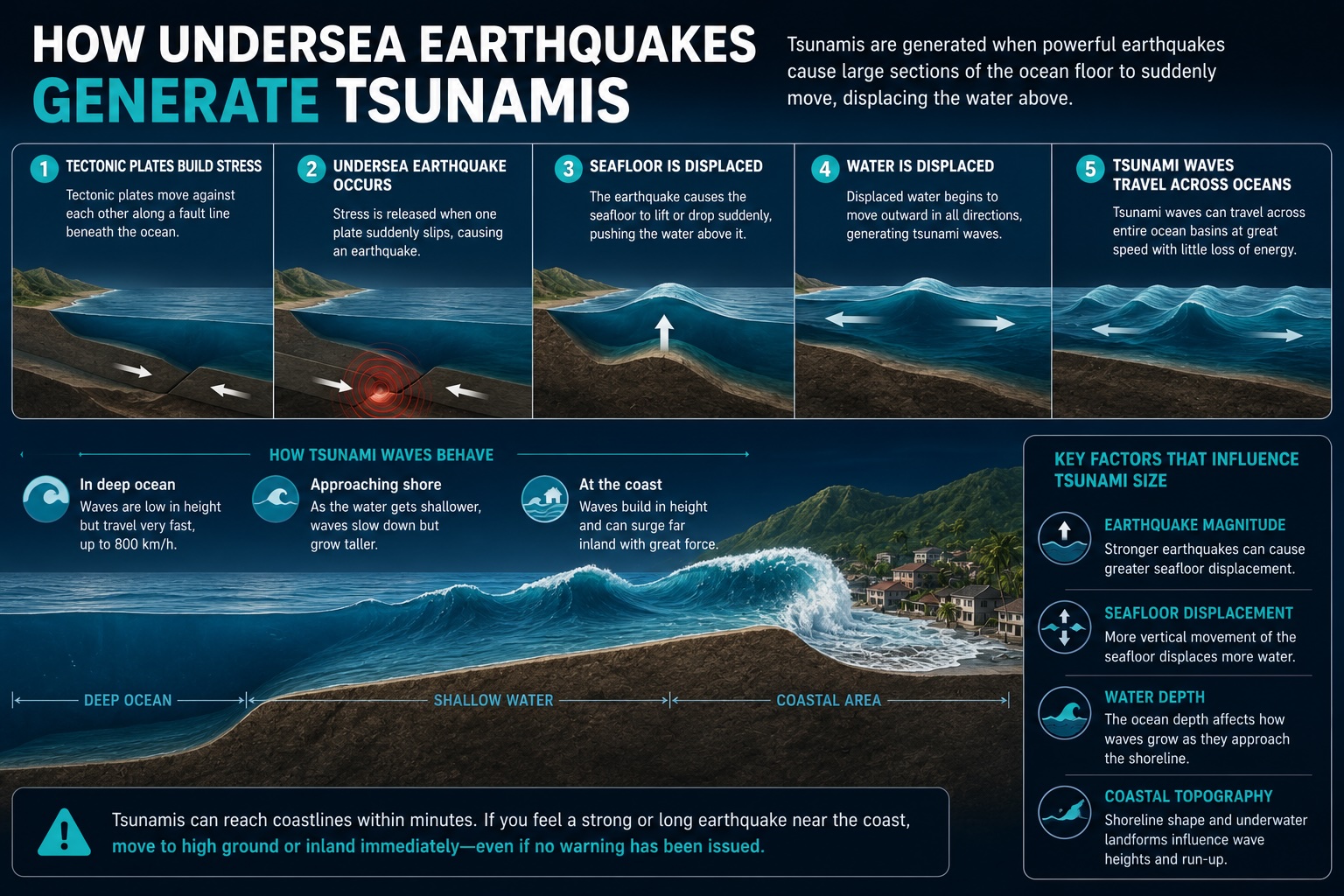
Why Some Earthquakes Produce Tsunamis
Magnitude alone does not determine whether a tsunami will occur. Scientists also consider a range of factors: the depth of the earthquake, the type of fault movement, the amount of vertical seafloor displacement, the distance from the coastline, and local underwater topography.
An earthquake that causes significant vertical movement of the ocean floor can displace enormous volumes of water, generating tsunami waves that travel across entire ocean basins. In this case, the earthquakes did not produce sufficient vertical seafloor displacement to generate a widespread destructive tsunami — but the proximity to the coast and the shallow depth of the events made an immediate assessment essential.
Could This Have Been Worse?
Yes. Had the earthquakes produced greater vertical displacement beneath the Caribbean Sea, nearby coastal communities could have faced dangerous tsunami waves within minutes. The Caribbean has experienced destructive tsunamis in the past, triggered by local seismic activity and submarine landslides along the Lesser Antilles subduction zone.
For this reason, authorities encourage anyone who experiences strong or prolonged ground shaking, a sudden withdrawal of the sea, or loud roaring sounds from the ocean, to move immediately to higher ground without waiting for an official warning.
Natural Warning Signs
Natural warning signs often arrive before mobile alerts. If you feel strong or prolonged shaking near the coast, see the sea suddenly withdraw, or hear a loud roaring from the ocean, move to higher ground immediately — do not wait for an official warning.
Lessons for Coastal Communities
Events like the Venezuela earthquakes reinforce several important preparedness lessons. Know whether you live, work or travel in a tsunami hazard zone. Understand your local evacuation routes and practice them before you need them. Never ignore tsunami warnings or advisories — the cost of a false alarm is inconvenience; the cost of ignoring a real warning can be your life.
Keep emergency supplies ready and have multiple ways to receive official alerts. Preparedness is most effective before an emergency occurs.
Preparedness Tip
If you are visiting a coastal destination, take five minutes to identify your nearest evacuation route upon arrival. Most hotels and tourist areas in at-risk regions display evacuation maps — find yours before you need it.
How Tsunami Shield Helps
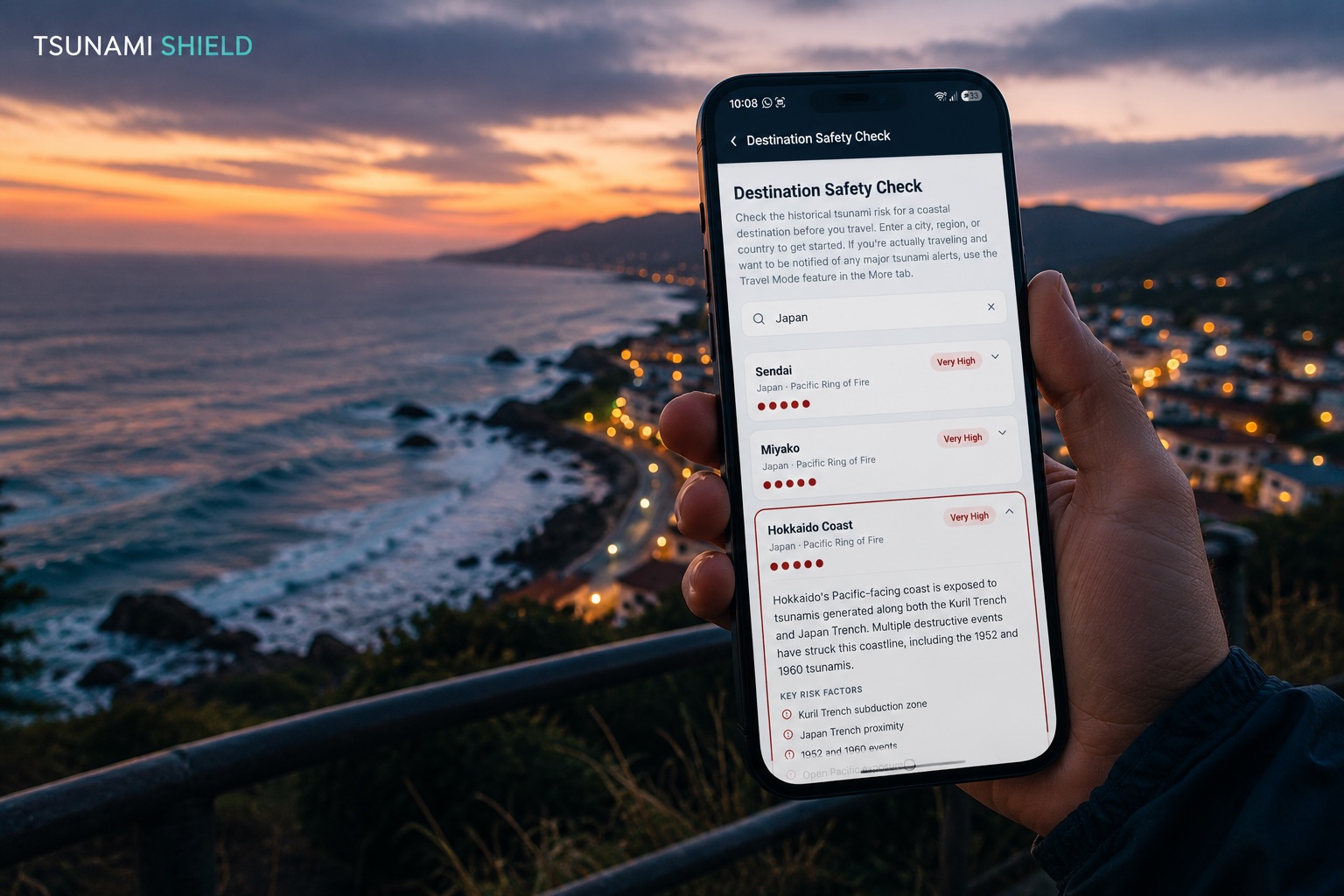
Tsunami Shield was designed to help people stay informed before, during and after tsunami emergencies. The app delivers official tsunami alerts and earthquake monitoring for your home, your family's locations, and every travel destination you add — breaking through silent mode when it matters most.
Key features include official tsunami alerts, earthquake monitoring, global tsunami tracking, a Destination Safety Check, multiple location monitoring, evacuation guidance, emergency assistance tools, and a quick "I'm Safe" messaging feature. Whether you're at home, travelling overseas or visiting the coast, Tsunami Shield helps you stay prepared wherever you are.
Tsunami Shield: Stay Informed Everywhere
Add your home, your family's addresses, and your travel destinations to Tsunami Shield and receive verified tsunami and earthquake alerts for every location — even when your phone is on silent.
Final Thoughts
The Venezuela earthquakes were a powerful reminder that coastal earthquakes can happen without warning — and that tsunami assessments begin immediately after major offshore seismic events.
Although a destructive tsunami did not materialise in this case, future earthquakes elsewhere may produce very different outcomes. Staying informed, understanding tsunami risks and having reliable warning tools can make all the difference when every second counts.
Preparedness isn't about expecting disaster — it's about being ready if it ever happens.
Frequently Asked Questions
Were the June 2026 Venezuela earthquakes among the largest in the country's history?
Yes. Two earthquakes of magnitude 7.2 and 7.5, occurring just 39 seconds apart, rank among the strongest recorded in Venezuela's modern history. The country's most significant prior event was a magnitude 6.5 earthquake in 1967 that caused major damage in Caracas. The 2026 twin earthquakes were significantly more powerful.
How quickly were tsunami warnings issued after the Venezuela earthquakes?
Tsunami warning centres operate 24 hours a day and typically issue preliminary assessments within minutes of a major offshore earthquake. Following the June 2026 Venezuela earthquakes, short-lived tsunami advisories were issued for parts of the Caribbean within minutes as scientists evaluated sea-level monitoring data from the region.
Is the Caribbean at risk from tsunamis?
Yes. While the Pacific Ocean generates the majority of destructive tsunamis, the Caribbean has experienced significant events throughout history. Local seismic activity, submarine landslides, and nearby subduction zones can all produce damaging waves. The 1946 Dominican Republic tsunami and the 2010 Haiti earthquake are notable regional examples.
What is the difference between a tsunami watch, advisory, and warning?
A tsunami warning means destructive waves are expected — coastal areas should evacuate immediately. A tsunami advisory indicates dangerous currents and possible minor waves near shore. A tsunami watch means a tsunami is possible and officials are monitoring the situation. Always treat any coastal advisory seriously and move away from the shoreline until an official all-clear is issued.
Read Next
Continue exploring related topics


