

How Much Warning Time Do You Get Before a Tsunami Arrives?
One of the most common questions after hearing about a tsunami warning is: how much time do I have? The answer depends on where the earthquake occurred, how far away it was, and how fast the waves travel.
One of the most common questions people ask after hearing about an earthquake or tsunami warning is: "How much time do I have?"
The answer depends on several factors. Some tsunamis may arrive within minutes, while others may take several hours to reach distant coastlines. Understanding why warning times vary can help people better appreciate the importance of preparedness and staying informed.
Although no two events are exactly alike, modern warning systems can often provide valuable information that helps communities understand developing situations and take appropriate action.
There Is No Single Answer
Tsunamis do not all behave the same way. Warning times depend on where the earthquake occurred, how large it was, the distance from the source to the coastline, ocean depth, local geography, and how tsunami waves travel across the ocean floor.
Some communities may have very little time to react — sometimes just minutes. Others may have several hours. This variability is one of the most important things to understand about tsunami preparedness.
Local Tsunamis
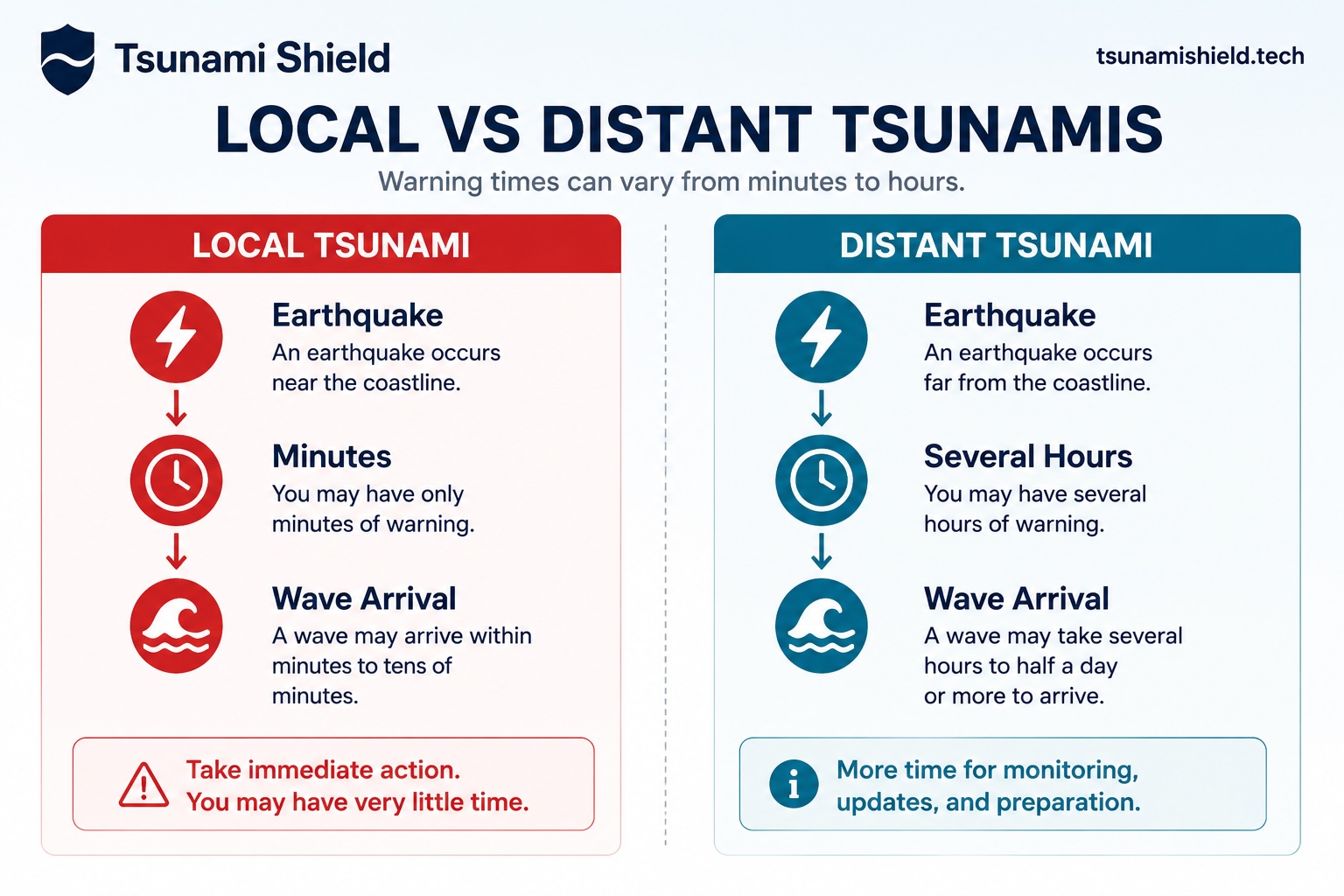
A local tsunami occurs when the source of the tsunami is relatively close to the affected coastline. Examples include earthquakes occurring just offshore, nearby underwater landslides, and volcanic events close to land.
In these situations, tsunami waves may arrive within minutes to tens of minutes. Because warning times can be extremely short, natural warning signs become particularly important. Strong or prolonged ground shaking near the coast should be treated as an immediate signal to move to higher ground — without waiting for an official alert.
Distant Tsunamis
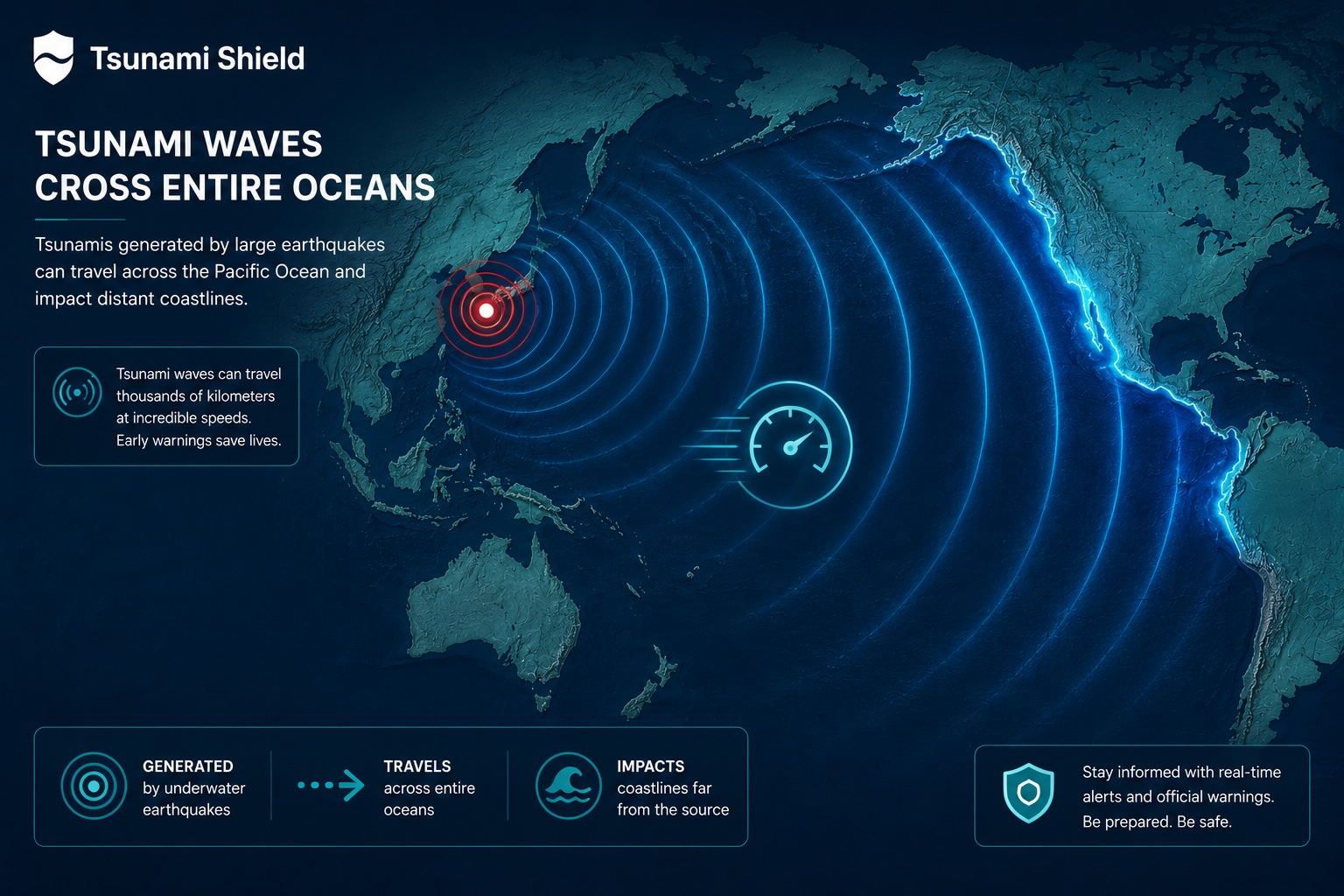
Some tsunamis travel across entire ocean basins. Examples include Alaska earthquakes affecting Hawaii, Japan earthquakes affecting North America, Chile earthquakes affecting Hawaii, and South American earthquakes affecting Pacific islands.
In these situations, tsunami waves may take several hours or even half a day or more to arrive. Longer travel times allow scientists more opportunity to assess the situation, analyse data, monitor ocean conditions, and issue warnings and updates — giving communities more time to prepare and evacuate.
How Fast Do Tsunamis Travel?
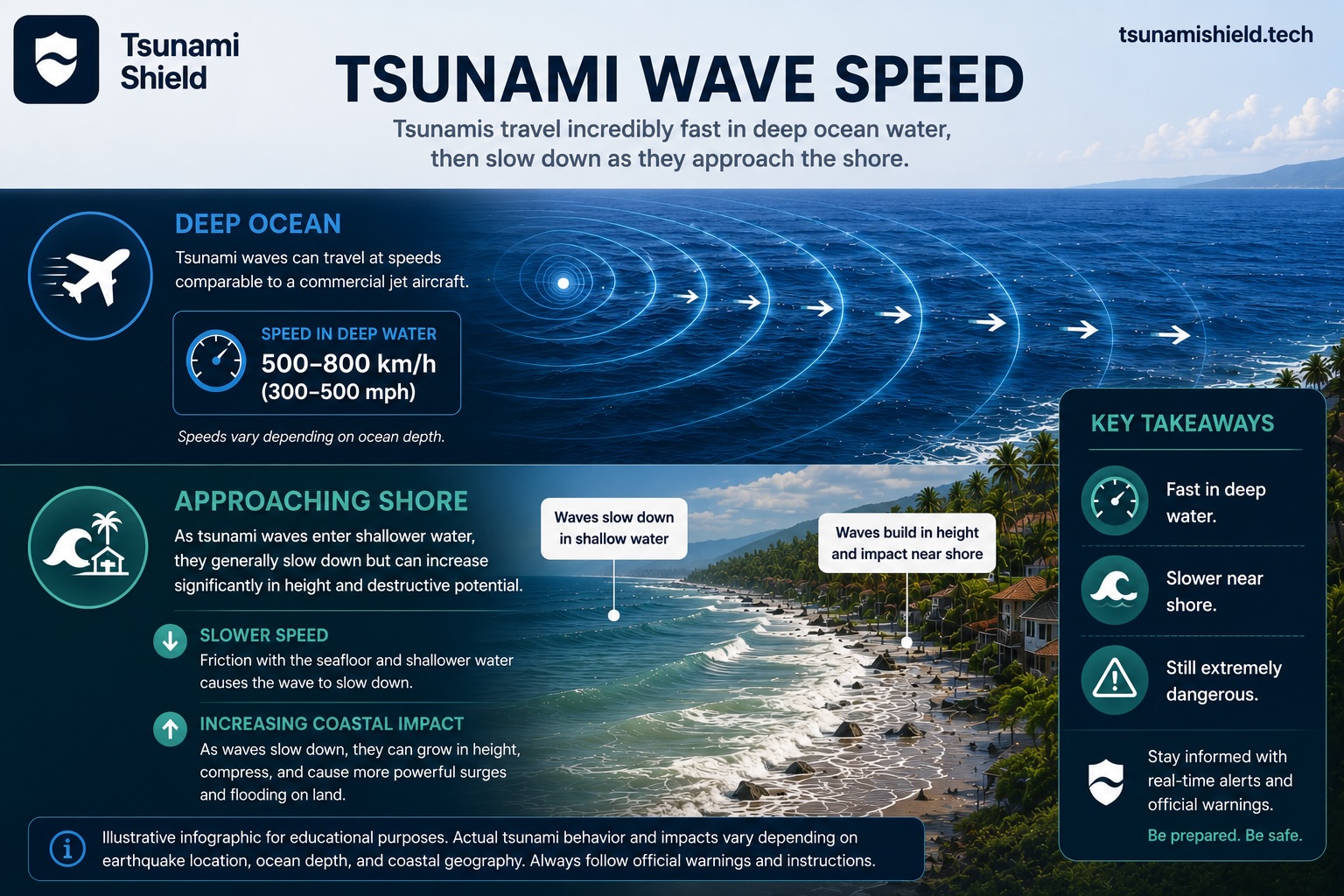
Tsunamis can move incredibly quickly across deep ocean water. Large tsunami waves may travel at speeds comparable to a commercial jet aircraft — sometimes exceeding 800 kilometres per hour in deep water.
However, speed depends on water depth. In deep ocean, waves are fast but their height may be barely noticeable at the surface. As they approach shallower coastal waters, they slow down — but their energy becomes compressed, causing wave heights to increase significantly. Even though they slow near land, they can still create extremely dangerous and powerful conditions.
Why Some Communities Receive More Warning Time
Distance from the earthquake source often plays the most important role in warning time. A large earthquake occurring thousands of miles away may allow several hours for warnings and preparations to take place. An earthquake occurring just offshore may leave very little time before waves arrive.
This is why preparedness recommendations differ between local and distant tsunami events — and why building awareness before an event occurs matters so much.
Why Earthquakes Near the Coast Require Immediate Action
People sometimes wait for official notifications before taking action. However, if you are near the coast and experience strong or prolonged ground shaking, or notice unusual ocean behaviour such as the sea rapidly pulling back from shore, you should immediately follow local emergency guidance.
Natural warning signs may be the first — and sometimes the only — indication of danger for local tsunami events. In these situations, every minute matters. Do not wait for your phone to alert you.
Natural Warning: Feel Strong Shaking Near the Coast?
If you are near the coastline and experience strong or prolonged ground shaking, move immediately to higher ground. Do not wait for an official alert — for local tsunamis, natural warning signs may be the only warning you receive.
Why Warnings Continue After the First Wave
Many people assume a tsunami consists of a single wave. This is often not the case. Tsunamis frequently involve multiple waves, changing water levels, dangerous currents, and unpredictable surges.
Additional waves may arrive long after the first one — sometimes larger and more destructive. Hazardous conditions can continue for many hours after the initial impact. This is why authorities maintain warnings and advisories even after the first waves arrive, and why returning to coastal areas before official all-clears are issued can be extremely dangerous.
How Scientists Estimate Arrival Times
Modern warning systems use sophisticated technologies to assess tsunami threats and estimate arrival times. Scientists analyse earthquake information, ocean observations from DART buoys, sea-level measurements from tide gauges, computer models, and historical data.
Forecast models help estimate potential travel times, potentially affected regions, and evolving wave conditions. As additional information becomes available, forecasts and warnings may be updated — which is why staying connected to reliable information sources matters throughout the entire event.
The Importance of Staying Informed
Because conditions can evolve quickly and warning times vary so significantly, reliable information is extremely important. Staying informed helps people understand developing situations, follow official guidance, communicate with family members, and make informed decisions about when and how to act.
Preparedness often begins with awareness — understanding what might happen, where to find information, and what to do when situations develop.
How Tsunami Shield Supports Awareness
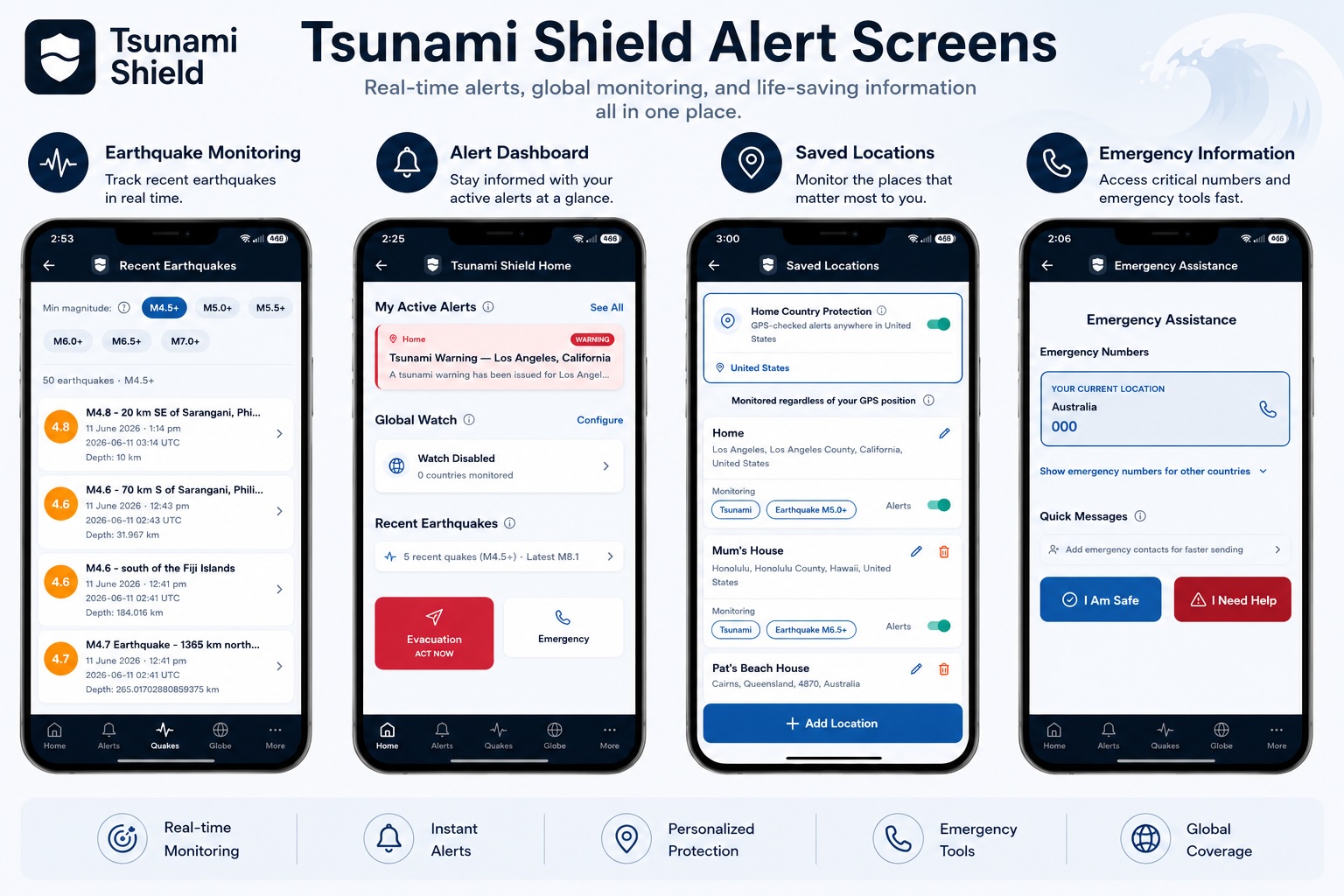
Tsunami Shield helps users stay informed through official tsunami alerts, earthquake monitoring, saved locations, regional monitoring, preparedness resources, and emergency information tools — all delivered to their phone in real time.
Understanding that warning times can vary significantly is one of the key reasons why access to reliable, timely information matters so much. The goal is straightforward: help people stay informed about the places and people that matter most.
Real-Time Alerts When They Matter Most
Tsunami Shield delivers official tsunami alerts and earthquake monitoring to your phone for every location you care about — home, family, and travel destinations — so you always know what's happening, wherever you are.
Preparedness Matters Even When Warning Times Are Short
Preparedness does not eliminate natural hazards — but understanding how tsunami warnings work and knowing where to find information can improve confidence and response during unexpected situations.
Whether warning times are measured in minutes or hours, awareness remains one of the most effective preparedness tools available. The communities that fare best in tsunami events are typically those where residents already understand the risks, know the natural warning signs, and have thought in advance about what they would do.
Final Thoughts
There is no universal amount of warning time before a tsunami arrives. Some communities may have only minutes. Others may have several hours. Modern monitoring systems and international cooperation help scientists rapidly assess potential threats and communicate information as quickly as possible.
Understanding that warning times vary — and knowing how to stay informed — can help people feel more prepared and more confident during coastal emergencies. Preparedness is not about expecting disasters. It is about understanding your surroundings, staying informed, and being ready to act thoughtfully when unexpected situations arise.
Frequently Asked Questions
How much warning time do you get before a tsunami?
Warning times vary significantly depending on the source of the tsunami. For local tsunamis — generated by a nearby offshore earthquake or landslide — waves may arrive in minutes. For distant tsunamis travelling across ocean basins, warning times can range from one to several hours. This variability makes understanding natural warning signs just as important as receiving official alerts.
What is the difference between a local and a distant tsunami?
A local tsunami is generated close to the affected coastline — for example, by an earthquake just offshore. Waves can arrive in minutes, leaving very little time for official warnings. A distant tsunami originates far away and takes hours to cross the ocean. Distant tsunamis allow more time for monitoring, assessment, and warning issuance.
How fast does a tsunami travel?
In deep ocean water, tsunami waves can travel at speeds comparable to a commercial jet aircraft — sometimes exceeding 800 kilometres per hour. As they approach shallow coastal waters, they slow considerably but their height increases dramatically, concentrating enormous energy into the wave.
Can you outrun a tsunami?
In deep ocean, no — tsunami waves travel far too fast to outrun by any means. In coastal areas where waves slow to perhaps 50–60 kilometres per hour, running or driving to higher ground immediately is possible if you act without delay. This is why preparedness and knowing your evacuation route in advance is so important — there is no time to plan once shaking begins.
Is the first tsunami wave always the largest?
Not necessarily. Tsunamis typically involve multiple waves arriving over a period of hours. In some events, later waves have been larger and more destructive than the first. This is why authorities maintain warnings well after initial impacts, and why returning to coastal areas before an official all-clear is extremely dangerous.
Read Next
Continue exploring related topics


