
Cruise Ship Safety and Tsunami Awareness: What Passengers Should Know Before Sailing
Cruising is one of the world's most popular ways to travel — but cruise destinations often include coastlines with real seismic history. Here is what every cruise passenger should know about tsunami awareness and staying safe at sea and ashore.
Cruising is one of the world's most popular ways to travel. Millions of people embark on cruises every year to explore beautiful coastal destinations, tropical islands, and scenic ports around the world. Most cruises are enjoyable, relaxing, and uneventful.
However, cruise travel often involves visiting coastal regions that may occasionally experience natural hazards such as earthquakes, tsunamis, severe weather, or volcanic activity. Understanding basic preparedness principles can help travellers feel more informed and more confident during their journey. Preparedness is not about expecting emergencies — it is about understanding your surroundings and knowing where to find reliable information if situations develop.
Are Tsunamis a Major Risk for Cruise Ships?
Generally, no. Cruise ships are considered relatively safe during most tsunami situations. In deep ocean water, tsunami waves typically have very long wavelengths and relatively small wave heights — meaning large vessels may feel little to no noticeable effect. Passengers at sea may not even realise a tsunami has passed beneath the ship.
The greater risks associated with tsunamis usually occur near shorelines, ports, harbours, marinas, and low-lying coastal areas — not in open water.
Why Coastal Areas Matter
Cruise ships regularly visit destinations including Hawaii, Alaska, California, Australia, New Zealand, Pacific islands, and Mediterranean ports. Many of these destinations sit near coastlines that have experienced earthquakes and tsunami events throughout history.
Although significant events are uncommon, awareness remains an important component of travel preparedness — particularly when visiting ports in seismically active regions.
Understanding Tsunami Warnings
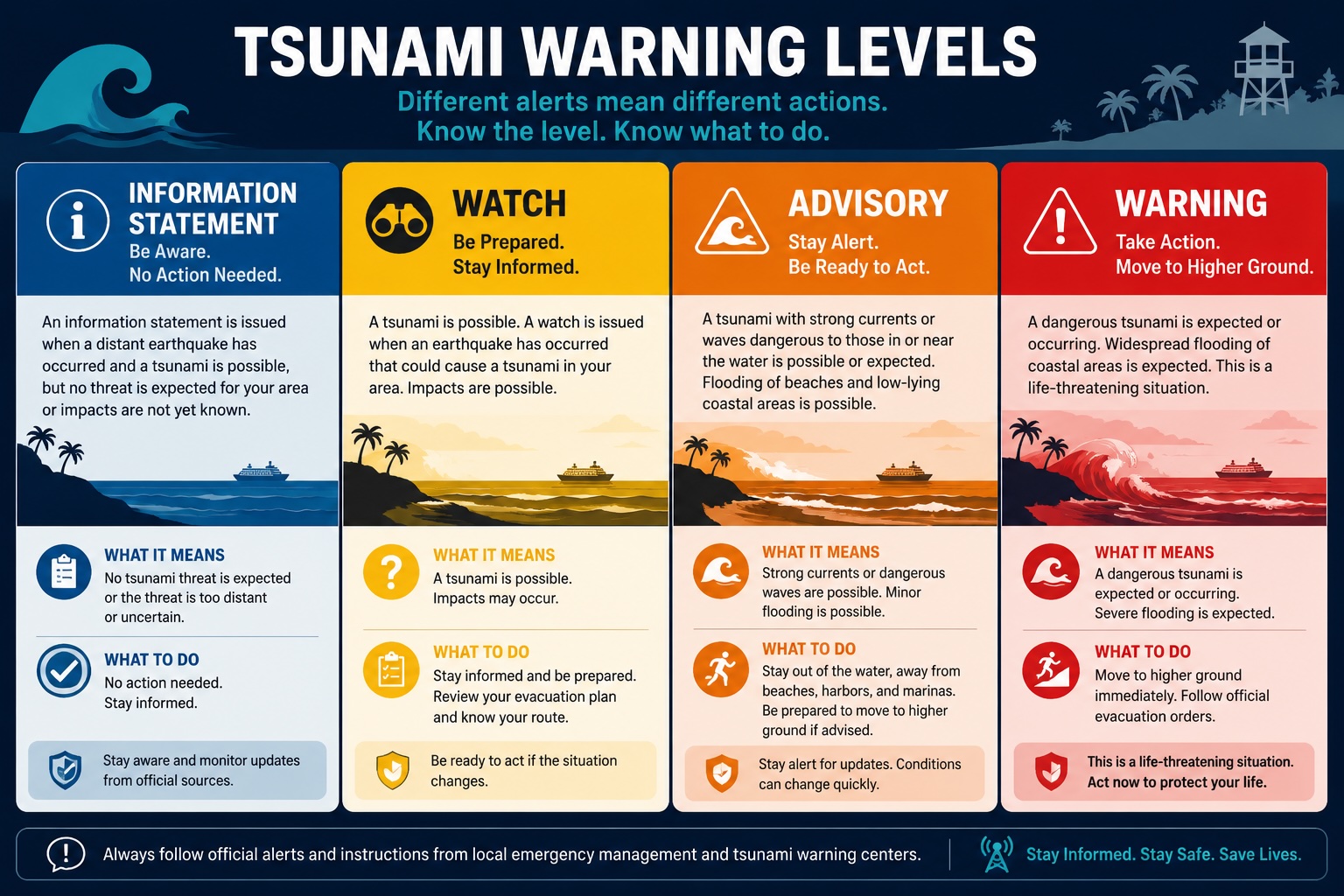
Tsunami alerts are issued in several categories, each indicating a different level of risk. An Information Statement means no immediate threat exists. A Tsunami Watch means a tsunami may be possible — remain informed and monitor updates. A Tsunami Advisory indicates dangerous currents and coastal conditions are expected; avoid shorelines and harbour areas. A Tsunami Warning means dangerous flooding and significant impacts are expected or occurring, and protective actions may be necessary.
Understanding these terms can help travellers interpret official information more effectively and respond appropriately.
Cruise Operators Monitor Conditions Continuously
Cruise operators continuously monitor weather information, maritime conditions, safety updates, local guidance, and operational risks. Cruise lines have extensive safety procedures and routinely adjust itineraries when conditions require.
Potential responses may include delaying port arrivals, changing itineraries, remaining at sea, cancelling port visits, or modifying schedules. Passenger safety remains a primary consideration, and cruise operators are experienced in managing situations that require rapid decisions.
What If a Tsunami Warning Is Issued While in Port?
If a tsunami warning is issued while the ship is docked, the most important step is to follow crew instructions. Crew members are trained to respond to maritime emergencies, including situations requiring departure from port.
Stay calm, avoid rushing, and monitor official information provided by the ship and local authorities. Do not move toward beaches or waterfront areas to observe conditions. Situations vary depending on local conditions, warning times, port infrastructure, and operational considerations — your crew will direct you to the safest course of action.
In Port During a Tsunami Warning
If a tsunami warning is issued while you are aboard a docked ship, follow crew instructions immediately. Do not approach the waterfront, beaches, or harbour areas to observe conditions — move away from the shore.
What If You Are Exploring Ashore?
Many cruise passengers spend time away from the ship during shore excursions — sometimes in unfamiliar locations far from the vessel. Preparedness is especially useful when visiting unfamiliar places, exploring independently, or travelling away from the ship.
Simple steps include understanding local hazards in the area you are visiting, knowing how to contact your ship, staying informed through official channels, and paying attention to any posted tsunami hazard zone signage. If you experience natural warning signs — such as strong ground shaking or the sudden retreat of water from the shore — move immediately to higher ground.
Natural Warning Signs
Although official monitoring systems are sophisticated, travellers should also understand natural warning signs that may indicate a tsunami is approaching — particularly in locations where official alerts may take time to reach you.
If you experience strong or prolonged ground shaking near the coast, move away from low-lying coastal areas immediately. If the water suddenly pulls back unusually far from shore, exposing the seafloor, seek higher ground without delay. Unexpected surges or rapidly changing water conditions should also be taken seriously. Do not wait for additional confirmation if natural warning signs are present.
Natural Warning Signs Ashore
Strong ground shaking, a sudden retreat of water from the shoreline, or unusual ocean surges are all potential natural warning signs of an approaching tsunami. If you observe any of these — move to higher ground immediately, without waiting for an official alert.
Why Travellers Value Reliable Information
Travel often places people in unfamiliar environments where the usual safety networks — local knowledge, familiar emergency systems, and native-language broadcasts — are no longer available. Questions like "where is the nearest high ground?", "what do local warning sirens mean?", or "how do I find reliable updates?" can be difficult to answer quickly in an unfamiliar destination.
Access to reliable, centralised information can help reduce uncertainty and improve confidence during travel — whether the situation is serious or you simply want reassurance that things are normal.
Helping Family Members Stay Informed
Cruise travel often involves multiple destinations and changing itineraries, which can make it difficult for family members at home to know exactly where you are at any given time. Family members may want reassurance that you are safe, that they can understand any developing situations, and that they have a way to monitor information relevant to the places you are visiting.
Awareness tools and communication plans can help provide peace of mind for both travellers and their loved ones throughout the voyage.
How Tsunami Shield Supports Cruise Travellers
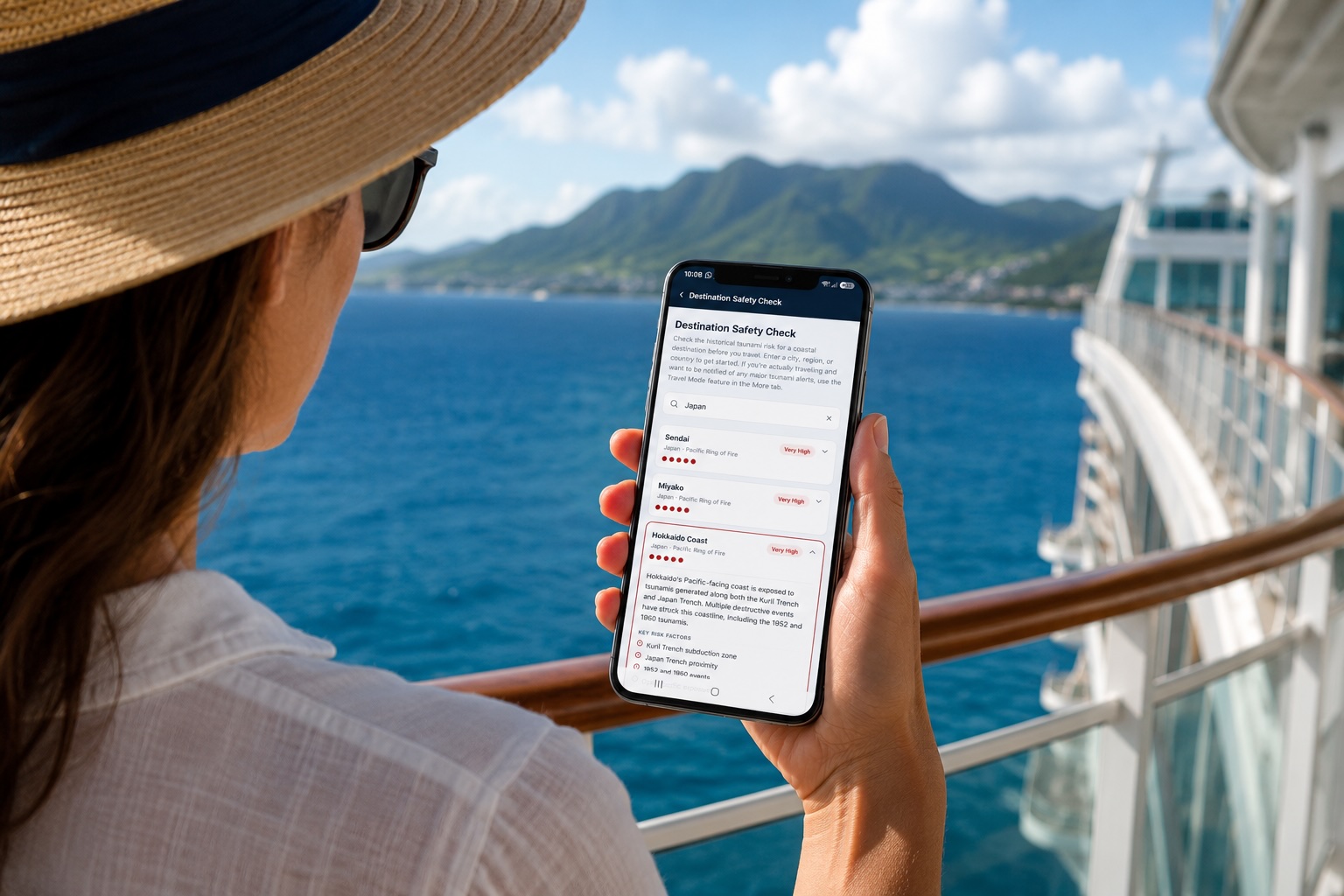
Tsunami Shield helps travellers stay informed through official tsunami alerts, earthquake monitoring, saved location monitoring, regional monitoring, and preparedness resources. Travellers can add the destinations they plan to visit before departure, then receive official alerts and significant earthquake notifications relevant to each location throughout the voyage.
The goal is simple: help travellers stay informed and enjoy greater peace of mind before, during, and after their journey.
Monitor Every Port Before You Arrive
Add your cruise destinations to Tsunami Shield before you sail. You'll receive official tsunami alerts and earthquake monitoring for each port — so you're always informed, wherever the voyage takes you.
Final Thoughts
Cruising remains one of the world's most enjoyable travel experiences. Although natural hazards occasionally occur in coastal regions, modern monitoring systems, experienced cruise operators, and simple preparedness measures help support safe travel experiences.
Understanding tsunami awareness, staying informed, and knowing where to find reliable information can help travellers feel more confident wherever their cruise takes them. Preparedness is not about expecting emergencies — it is about travelling with greater awareness and peace of mind.
Frequently Asked Questions
Are cruise ships safe from tsunamis?
Generally, yes — when at sea. In deep ocean water, tsunami waves have very long wavelengths and small wave heights, and large cruise ships may barely notice them passing. The greater risk occurs in ports, harbours, and near shorelines, where tsunami energy is amplified as water becomes shallower.
What should I do if a tsunami warning is issued while my cruise ship is in port?
Follow your crew's instructions immediately. Cruise crew are trained for maritime emergencies, including tsunami situations. Stay calm, monitor official information from the ship and local authorities, and avoid moving toward the waterfront, beaches, or harbour areas to observe conditions.
What are the natural warning signs of a tsunami I should know about ashore?
The main natural warning signs are strong or prolonged ground shaking near the coast, a sudden and unusual retreat of water from the shoreline (exposing the seafloor), and unusual ocean surges or rapidly changing water conditions. If you observe any of these, move immediately to higher ground without waiting for an official alert.
How can I stay informed about tsunami risks during a cruise?
Before you sail, add your cruise destinations to Tsunami Shield to receive official tsunami alerts and earthquake monitoring for each port. Onboard, follow updates from your cruise operator. When ashore, pay attention to local hazard signage and be aware of natural warning signs in any coastal areas you visit.
Read Next
Continue exploring related topics


