

What Is a Tsunami? Understanding One of Nature's Most Powerful Forces
A tsunami is one of the most powerful natural hazards on Earth. Here is a clear guide to what a tsunami is, how it forms, how it travels, and what to do if a warning is issued.
A tsunami is one of the most powerful natural hazards on Earth. Unlike ordinary ocean waves created by wind, tsunamis are generated by large-scale disturbances beneath or near the ocean. These events can send enormous volumes of water across entire ocean basins, affecting coastlines thousands of miles away.
While many people associate tsunamis with giant walls of water, the reality is often more complex. Understanding how tsunamis form, how they travel, and how warning systems work can help coastal residents, travelers, and families stay informed and prepared.
In this guide, we'll explain what a tsunami is, what causes them, how they are detected, and what you should do if a warning is issued.
What Is a Tsunami?
A tsunami is a series of powerful ocean waves caused by the sudden displacement of a large volume of water. The word "tsunami" comes from Japanese and means "harbor wave." While tsunamis are often referred to as tidal waves, this term is incorrect because tsunamis are not caused by tides.
A tsunami can consist of multiple waves arriving over several hours. The first wave is not always the largest, and dangerous currents can continue long after the initial arrival.
How Do Tsunamis Form?
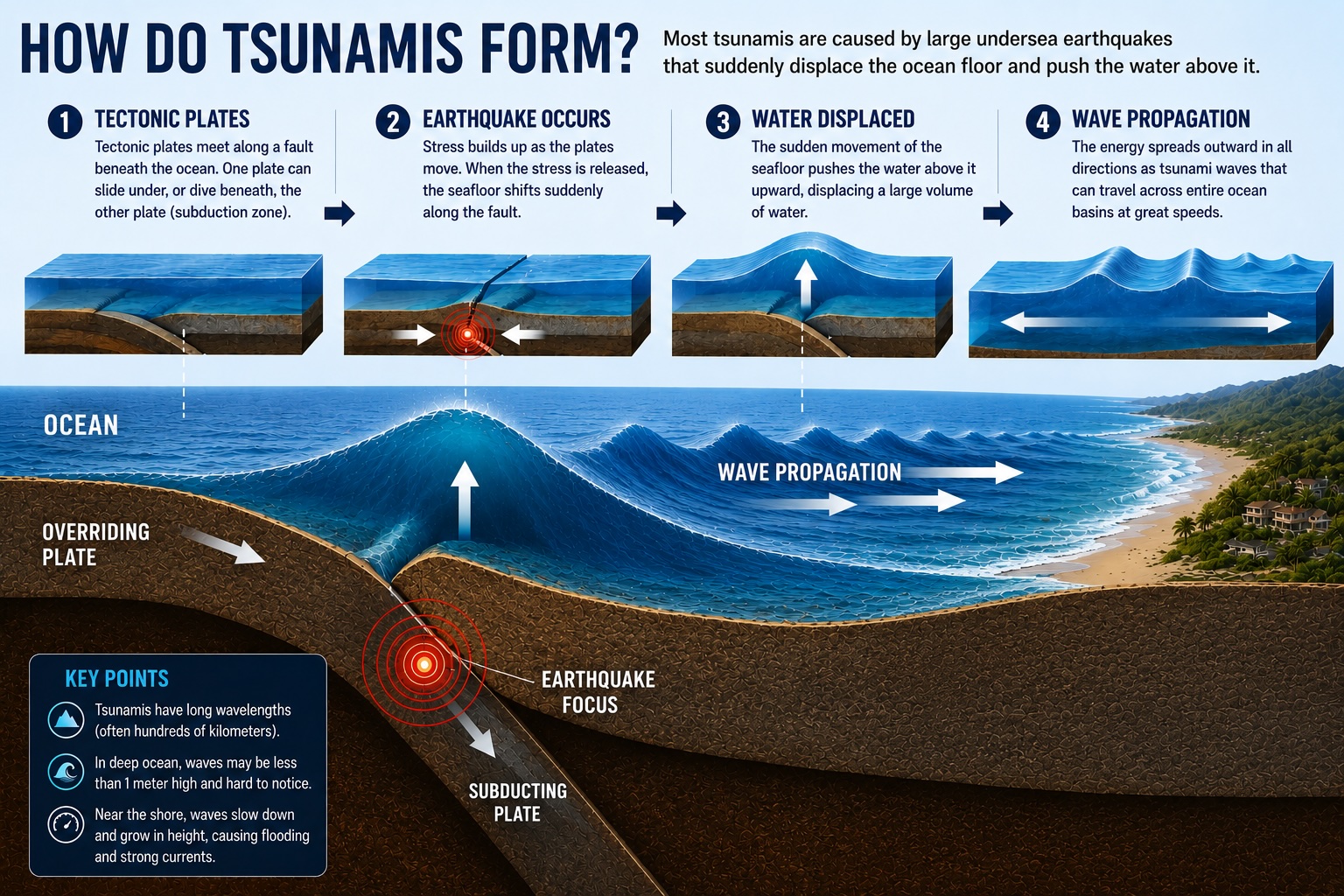
Most tsunamis are caused by undersea earthquakes occurring near tectonic plate boundaries. When a large earthquake causes the ocean floor to suddenly rise or fall, it displaces massive amounts of water. This displacement generates waves that spread outward in all directions across the ocean.
Other causes include underwater landslides (large sections of sediment can collapse and push water outward), volcanic eruptions (explosive eruptions or volcanic collapses can trigger tsunamis), and meteorite impacts (rare, but capable of generating extremely large tsunamis).
How Fast Can a Tsunami Travel?
In deep ocean water, tsunami waves can travel at speeds exceeding 800 km/h (500 mph) — similar to the cruising speed of a commercial jet aircraft. However, because the waves can be hundreds of kilometers long, they may only appear as gentle rises and falls in deep water.
As a tsunami approaches shore, water becomes shallower, wave speed decreases, wave height increases, and coastal flooding becomes possible. This process is known as wave shoaling.
What Happens When a Tsunami Reaches Land?
When a tsunami reaches the coast, several dangerous effects can occur.
Rapid Coastal Flooding — water can surge far inland, depending on local geography.
Powerful Currents — fast-moving water can sweep away vehicles, structures, and people.
Multiple Waves — several waves may arrive over many hours.
Debris Impacts — floating debris can become hazardous projectiles.
The danger often continues long after the first wave arrives.
Do Not Return Until the All-Clear Is Given
The first wave is not always the largest. Dangerous conditions, including strong currents and additional waves, can continue for hours. Always wait for official authorities to declare the area safe before returning to the coast.
Tsunami vs. Tidal Wave
Many people use the term "tidal wave" when referring to tsunamis, but they are very different phenomena.
A tsunami is caused by displacement of water, often triggered by earthquakes, can cross entire oceans, and is not related to tides.
Tides are caused by the gravitational pull of the Moon and Sun, follow predictable daily cycles, and are not associated with earthquakes.
For this reason, scientists and emergency agencies use the term "tsunami."
Where Do Tsunamis Occur Most Often?
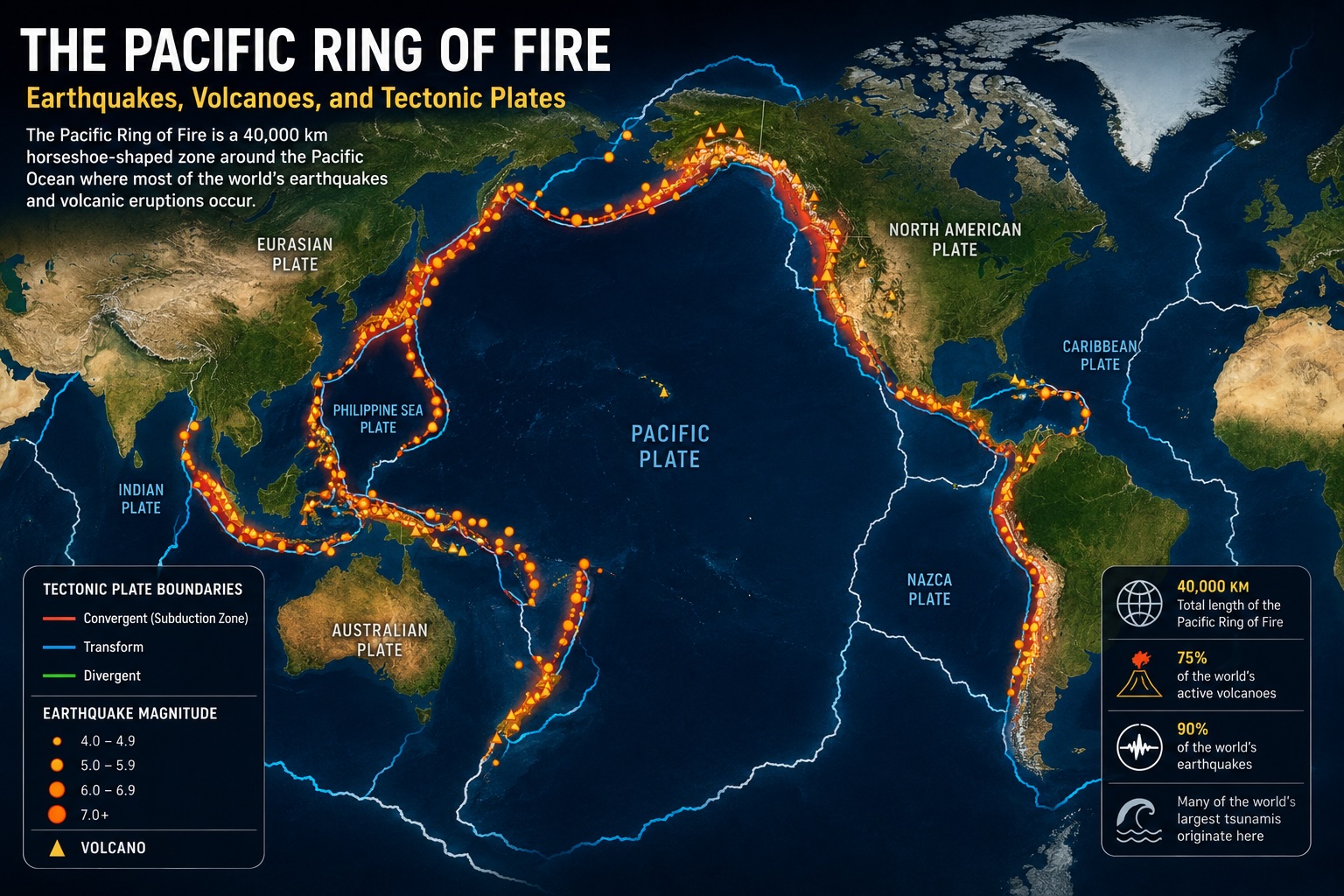
The majority of the world's tsunamis occur around the Pacific Ocean. This region is known as the Pacific Ring of Fire, where several tectonic plates meet.
Areas with higher tsunami risk include Alaska, Hawaii, California, Oregon, Washington State, British Columbia, Japan, Indonesia, New Zealand, and Chile.
However, tsunamis can occur in many parts of the world, including the Atlantic and Indian Oceans.
How Are Tsunamis Detected?
Modern tsunami warning systems use multiple technologies to detect potential tsunami threats.
Seismic Monitoring Networks — earthquake sensors detect significant undersea earthquakes.
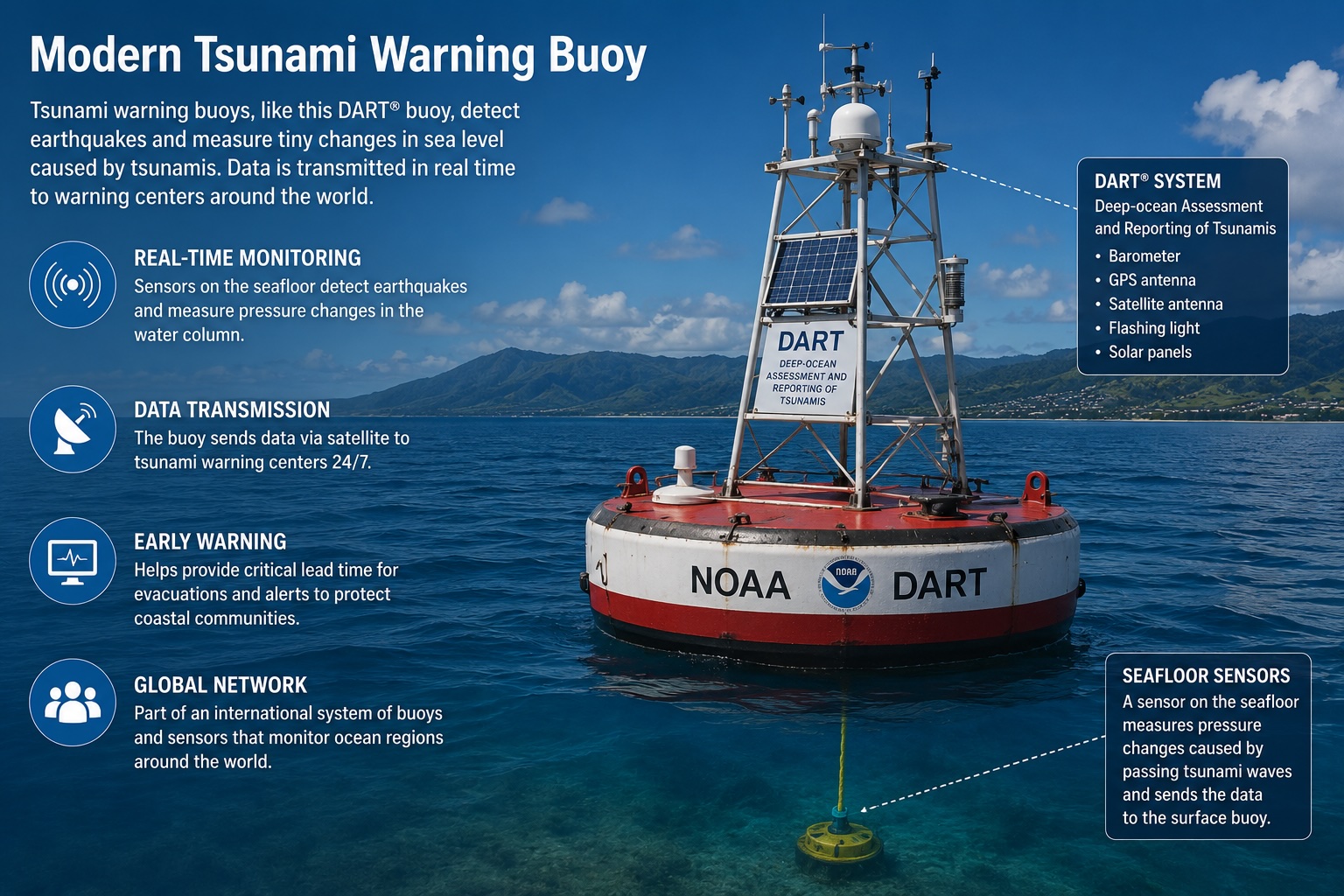
Deep-Ocean Assessment and Reporting of Tsunamis (DART) Buoys — specialized ocean buoys monitor changes in water pressure that may indicate a tsunami.
Coastal Tide Gauges — these stations monitor changes in sea level near coastlines.
National and International Warning Centers — agencies analyze incoming data and issue alerts when necessary.
What Do Tsunami Warnings Mean?
Emergency agencies use several alert levels, each with a specific meaning — see our full guide to the difference between a tsunami watch, advisory, and warning.
Information Statement — no threat exists, but an event is being monitored.
Tsunami Watch — a tsunami may be possible. Stay informed and prepare to act.
Tsunami Advisory — strong currents and dangerous coastal conditions are expected.
Tsunami Warning — significant coastal flooding and dangerous waves are expected or occurring. Immediate action may be required.
Always follow instructions issued by local authorities.
What Should You Do During a Tsunami Warning?
If a tsunami warning is issued:
- Move inland immediately
- Seek higher ground
- Follow local evacuation instructions
- Stay away from beaches and harbors
- Continue monitoring official alerts
- Do not return until authorities declare the area safe
Why Preparedness Matters
Tsunamis are relatively rare, but when they occur they can have devastating consequences. The combination of rapid onset, powerful currents, coastal flooding, and limited warning times makes coastal preparedness especially important for coastal residents and travelers.
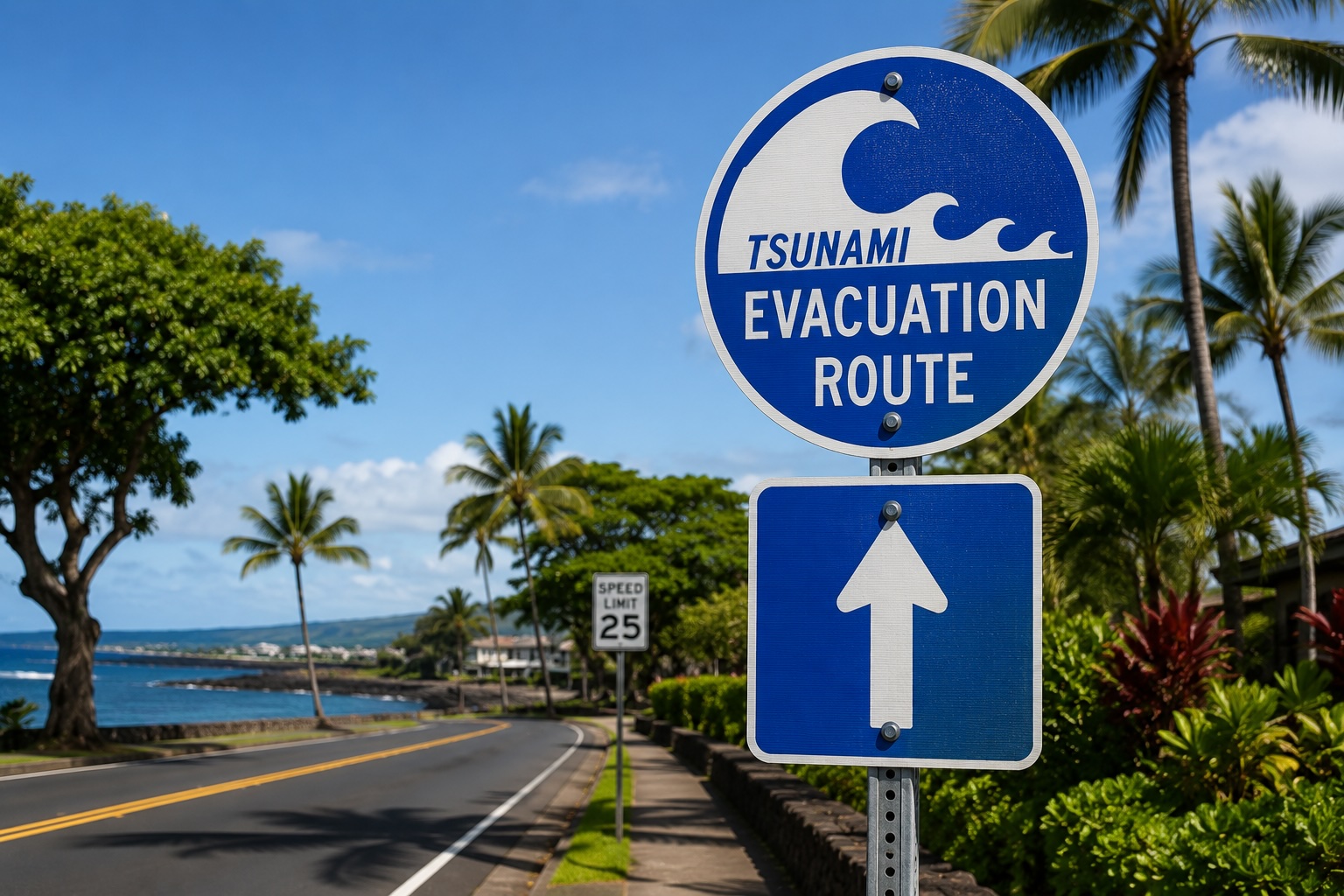
Understanding tsunami risks, monitoring official alerts, and knowing evacuation routes can significantly improve personal safety.
Stay Informed with Tsunami Shield
Tsunami Shield monitors official sources 24/7 and delivers verified alerts directly to your device — so you always have access to reliable information when it matters most.
Final Thoughts
Tsunamis are among the most powerful natural events on Earth. Although they are often associated with distant disasters, many coastal regions around the world face some degree of tsunami risk.
By understanding how tsunamis form, how warning systems work, and what actions to take during an emergency, individuals and families can be better prepared when every minute counts.
Whether you live near the coast, travel internationally, or simply want to stay informed, awareness and preparation remain the most effective tools for reducing risk.
Frequently Asked Questions
What is the difference between a tsunami and a tidal wave?
"Tidal wave" is a common but misleading term for a tsunami. Tsunamis have nothing to do with tides — they are generated by sudden geological events such as earthquakes, landslides, or volcanic eruptions. Scientists and emergency agencies use the term "tsunami" exclusively to avoid confusion.
How fast does a tsunami travel?
In deep ocean water, tsunami waves can travel at speeds exceeding 800 km/h (500 mph) — comparable to a commercial jet aircraft. As the waves reach shallow coastal water, they slow dramatically but their height increases significantly, which is what makes them so destructive at the shoreline.
Is the first wave always the largest?
No. The first wave is not always the largest. A tsunami can consist of multiple waves arriving over several hours, and later waves are sometimes larger and more destructive. This is why it is important to stay away from the coast and continue monitoring official alerts until authorities declare the area safe.
What should I do if a tsunami warning is issued?
Move inland immediately, seek higher ground, follow local evacuation instructions, stay away from beaches and harbors, and continue monitoring official alerts. Do not return to coastal areas until authorities declare them safe.
Read Next
Continue exploring related topics


