
The 2011 Japan Tsunami Explained: Lessons From One of the Most Powerful Earthquakes Ever Recorded
On March 11, 2011, a magnitude 9.0 earthquake struck off northeastern Japan, triggering a devastating tsunami and nuclear crisis. Here is what happened, what made it so significant, and what it changed.
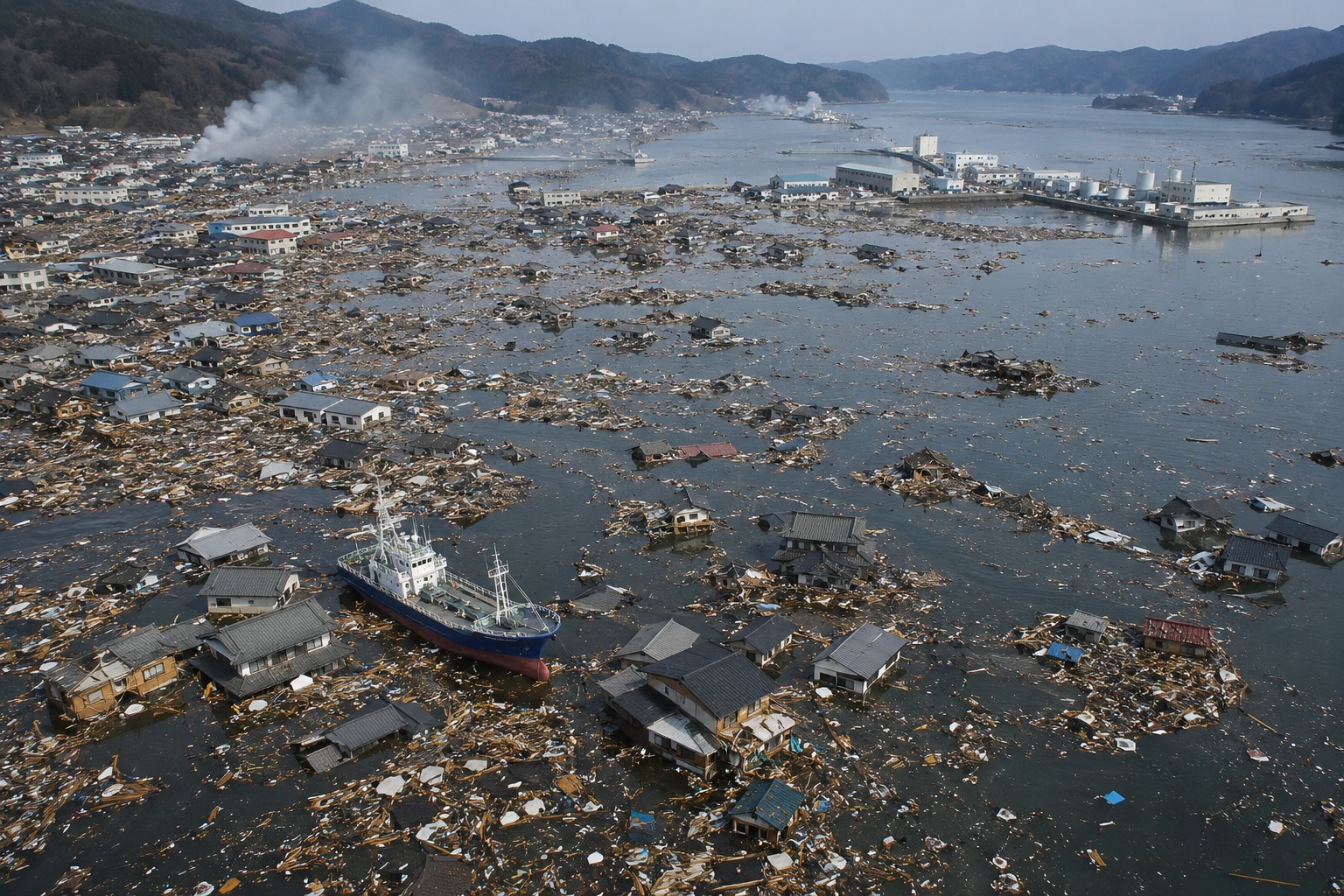
On March 11, 2011, one of the most powerful earthquakes in recorded history struck off the northeastern coast of Japan. The earthquake triggered a devastating tsunami that caused widespread destruction, claimed thousands of lives, and led to one of the world's most significant nuclear accidents.
The event became known as the Great East Japan Earthquake and Tsunami, or the Tōhoku Earthquake and Tsunami. It demonstrated both the immense power of nature and the critical importance of preparedness, warning systems, and resilient communities.
What Happened on March 11, 2011?
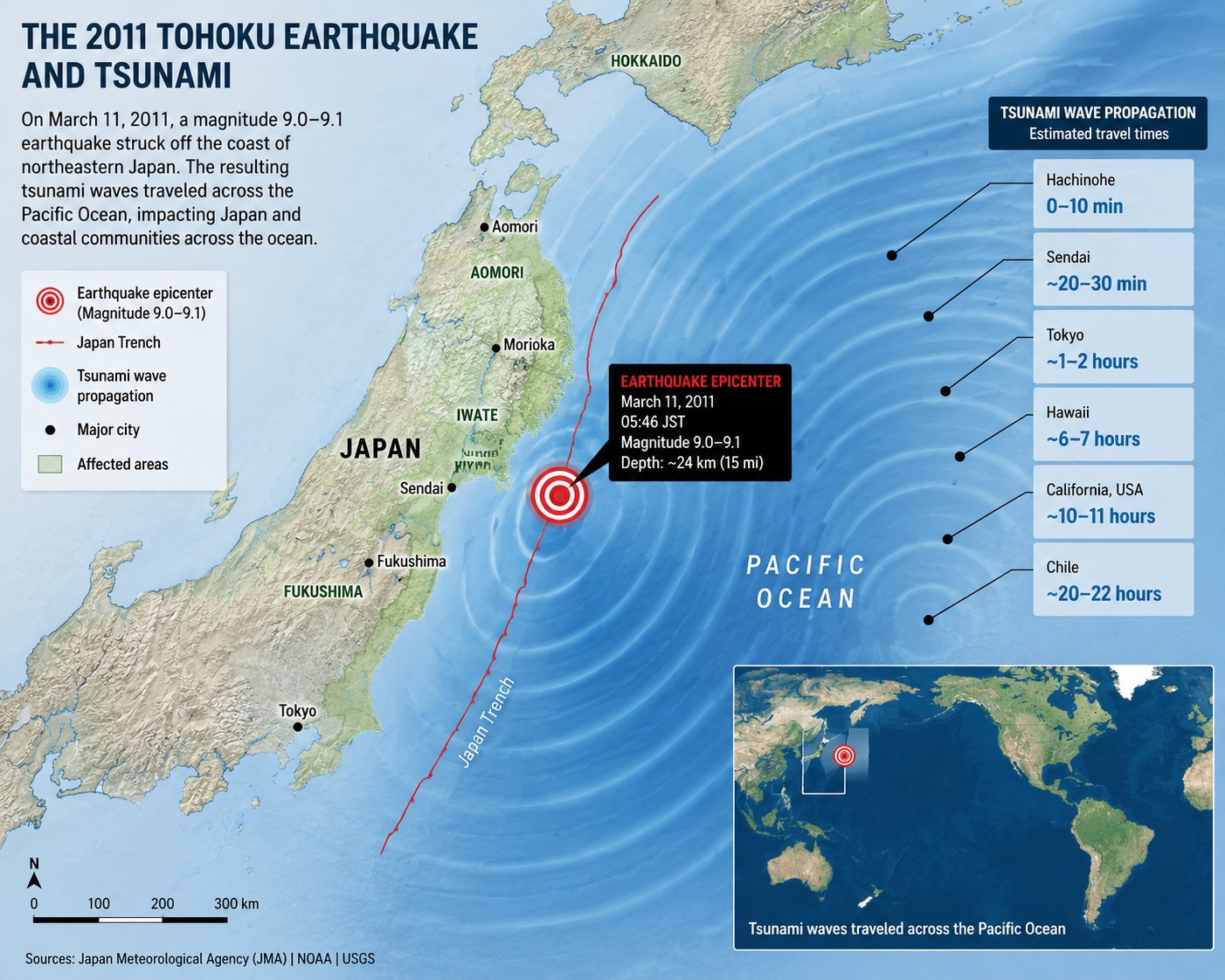
At 2:46 p.m. local time, a massive undersea earthquake occurred approximately 130 kilometres (80 miles) east of the city of Sendai. The earthquake measured magnitude 9.0, making it one of the largest earthquakes ever recorded and the most powerful in Japan's recorded history.
The earthquake occurred along a major tectonic plate boundary where the Pacific Plate is moving beneath the Okhotsk Plate. When the ocean floor suddenly shifted, enormous amounts of water were displaced, generating powerful tsunami waves that struck the Japanese coastline within minutes.
How Powerful Was the Earthquake?
The earthquake was extraordinary in scale. Scientists estimate that sections of the seafloor moved by several metres, portions of Japan shifted eastward, and the event slightly altered the Earth's rotation. The rupture extended hundreds of kilometres along the plate boundary and released an enormous amount of energy — comparable in scale to only a handful of earthquakes in recorded history.
How Large Was the Tsunami?
Wave heights varied significantly depending on location and local coastal geography. In many areas, tsunami heights exceeded 10 metres (33 feet). In certain narrow coastal inlets, funnelling effects caused wave heights to reach considerably greater levels.
The tsunami overwhelmed coastal defences, flooded towns and cities, destroyed infrastructure, and carried debris far inland. The event was a stark demonstration that even advanced coastal protection systems can be overwhelmed by extreme natural events.
Which Areas Were Most Affected?
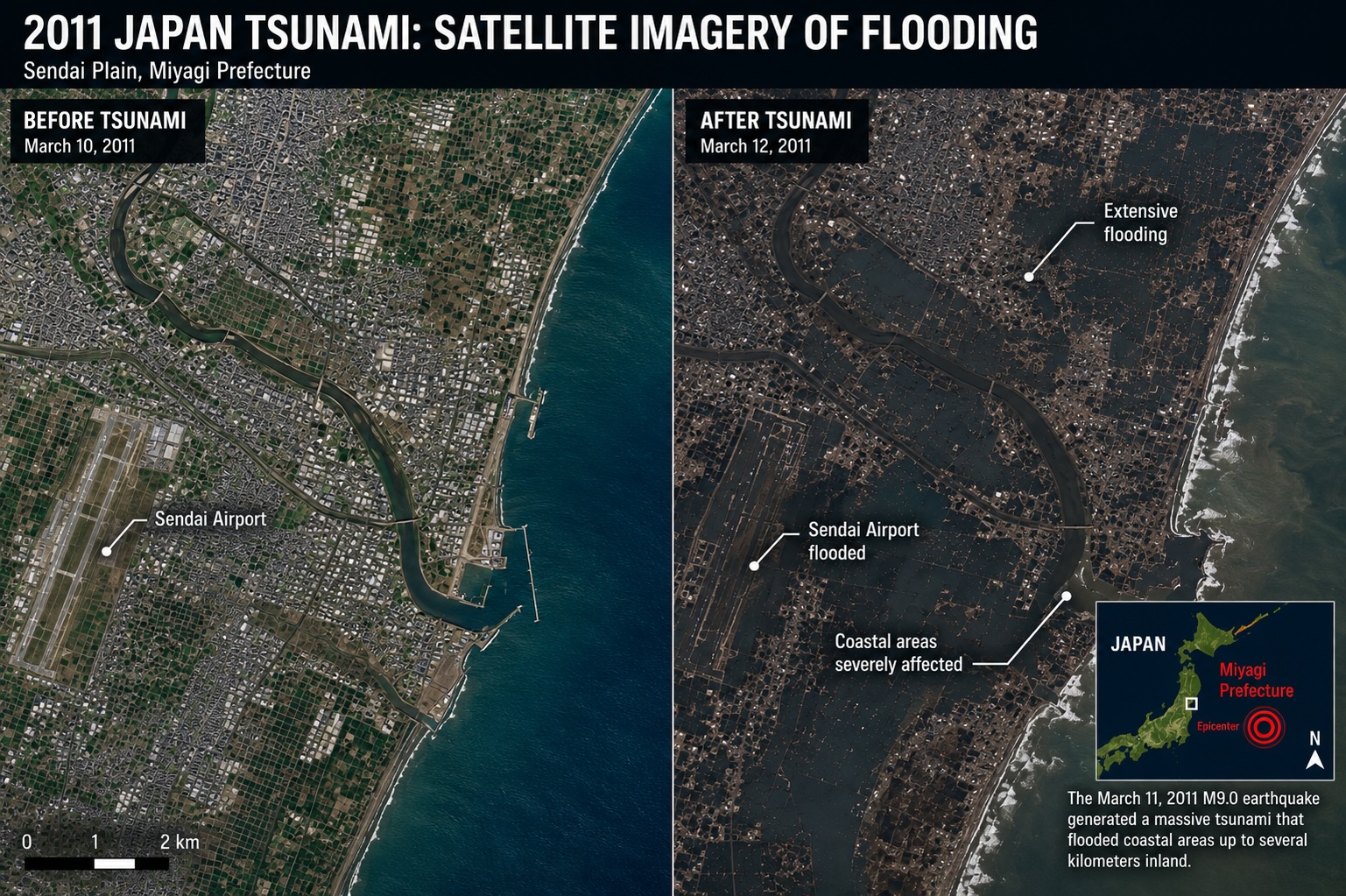
The northeastern coast of Honshu — Japan's main island — experienced the most severe impacts. Miyagi Prefecture, including the city of Sendai, experienced extensive flooding and destruction. Numerous coastal communities across Iwate Prefecture were heavily impacted. Fukushima Prefecture faced not only tsunami devastation but the additional consequences of severe damage to its nuclear power plant.
The Fukushima Nuclear Accident
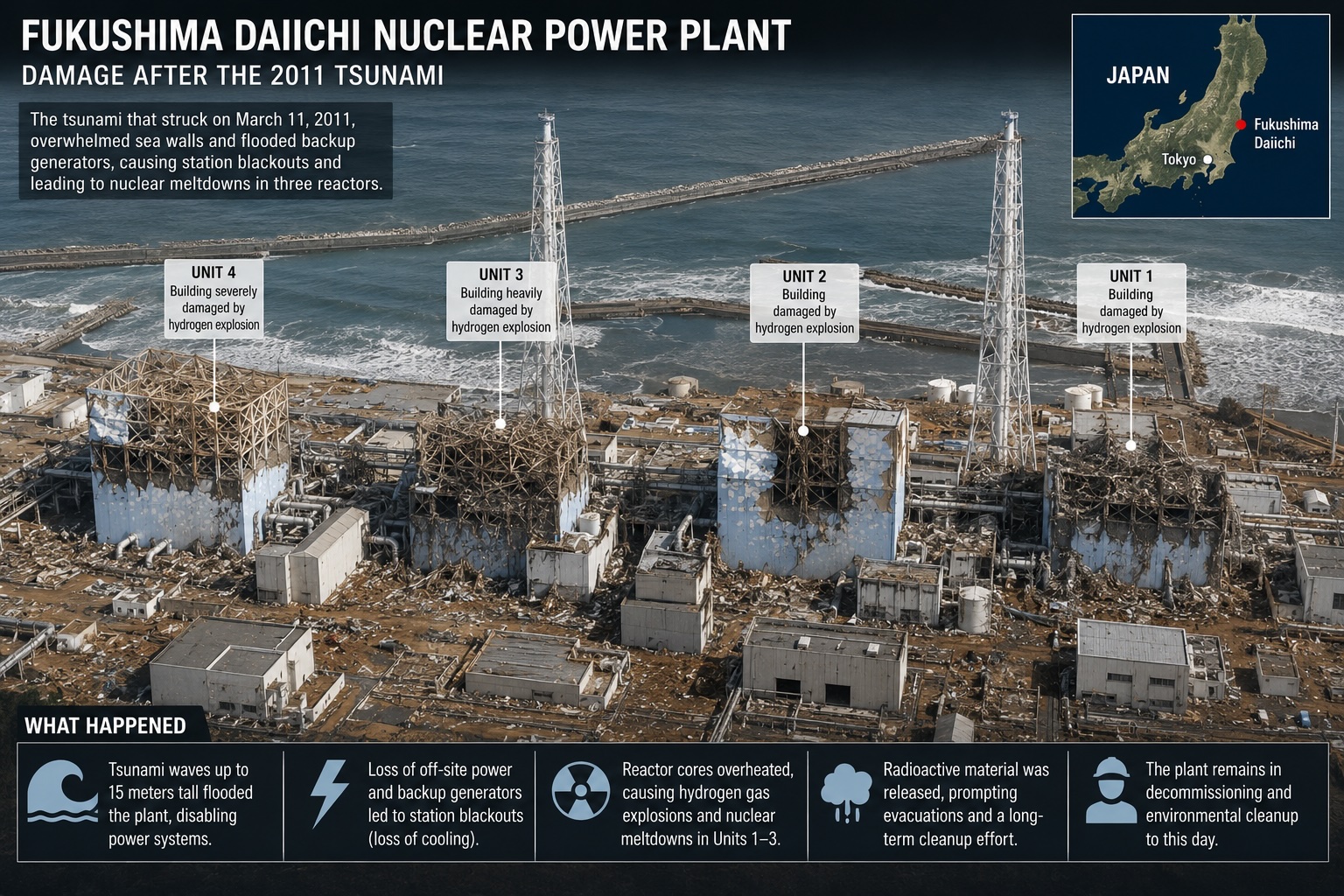
One of the most significant and far-reaching consequences of the disaster occurred at the Fukushima Daiichi Nuclear Power Plant. The tsunami disabled the plant's critical power and cooling systems, resulting in reactor failures, hydrogen explosions, and the evacuation of surrounding communities.
The event became one of the world's most serious nuclear accidents since Chernobyl, prompting a global reassessment of nuclear safety standards and the vulnerability of critical infrastructure to extreme natural hazards.
Critical Infrastructure Vulnerability
The Fukushima accident highlighted how extreme tsunami events can cascade into secondary disasters far beyond immediate coastal destruction. It prompted global reviews of nuclear facility siting, sea wall specifications, and emergency power backup requirements.
Why Was the Disaster So Significant?
Several factors made the 2011 disaster particularly notable in the history of natural hazards. Magnitude 9.0 earthquakes are extremely rare. The resulting tsunami caused widespread flooding across large, densely populated areas of one of the world's most developed nations. Millions of people were affected across multiple prefectures, and transportation, communication, energy, and industrial systems were severely disrupted.
Beyond Japan, the event generated tsunami activity across the Pacific Ocean, affecting harbours and coastlines in the United States, Canada, Chile, New Zealand, Australia, and Pacific island nations — demonstrating how tsunamis can reach coastlines thousands of miles from their source.
Did Japan Have Warning Systems?
Yes. Japan possessed some of the world's most advanced earthquake and tsunami monitoring systems at the time. Warnings were issued rapidly following the earthquake, and many coastal residents had practised evacuation procedures.
Despite these systems, the 2011 event demonstrated that extremely large disasters can exceed prior assumptions about hazard magnitude. It reinforced that warning systems, while essential, must be complemented by public preparedness, community education, and regular evacuation drills.
Lessons Learned From the 2011 Japan Tsunami
The disaster reinforced several important lessons that continue to shape tsunami preparedness worldwide. Communities that understood evacuation procedures and took warnings seriously generally responded more effectively. The event demonstrated that extreme natural events can exceed previous modelling assumptions — and that preparedness planning must account for worst-case scenarios, not just historical averages.
Multiple layers of protection are needed: monitoring systems, evacuation planning, public education, and resilient infrastructure all play essential roles. No single measure is sufficient on its own.
How the Disaster Changed Tsunami Preparedness
Following the disaster, tsunami hazard maps were updated, evacuation procedures improved, monitoring systems enhanced, and international cooperation expanded. Public awareness campaigns grew significantly in scope across the Asia-Pacific region.
The event influenced coastal preparedness planning around the world, prompting many nations to reassess their tsunami risk assumptions and invest in stronger early warning infrastructure.
A Catalyst for Global Change
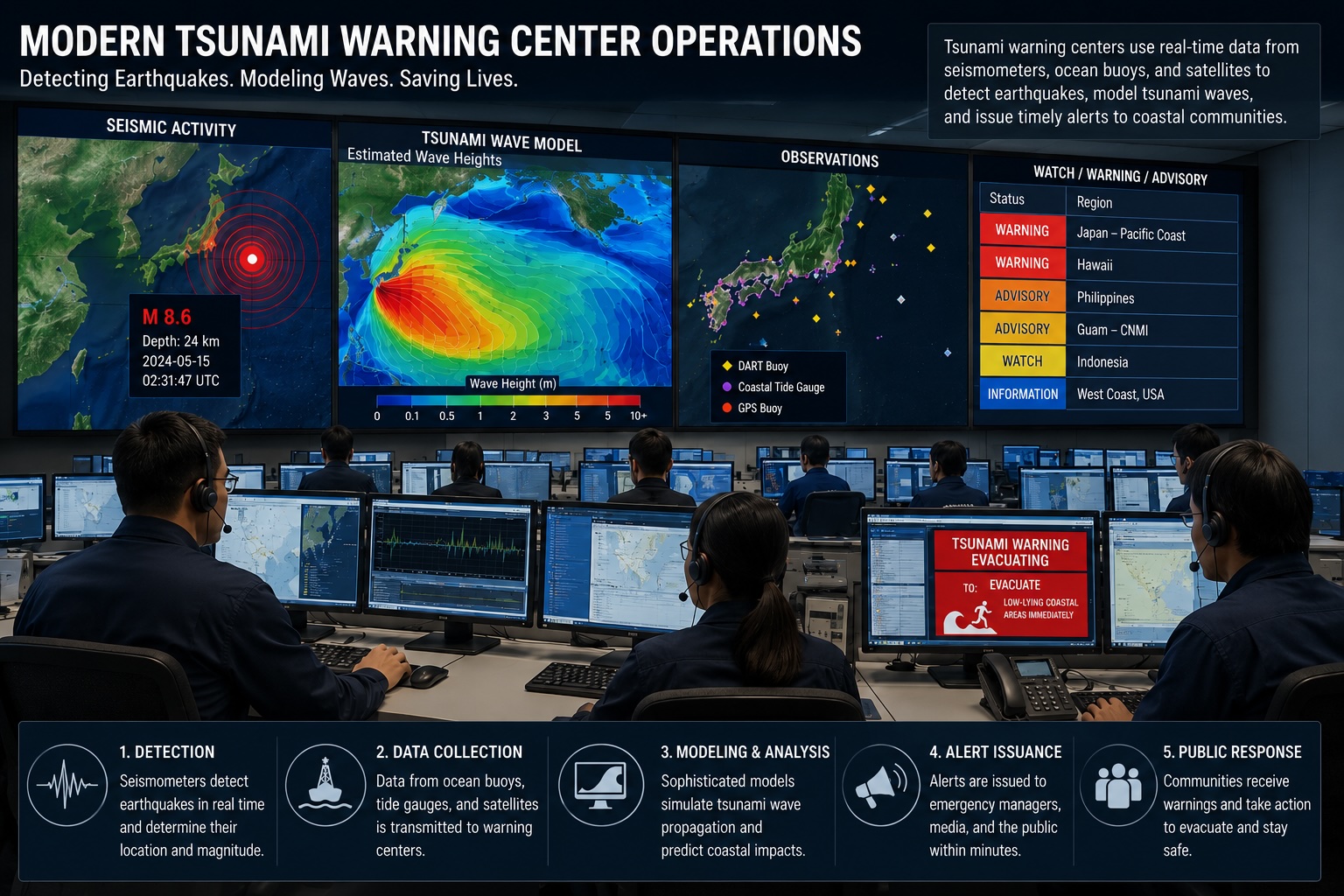
The 2011 Japan tsunami accelerated improvements to [tsunami warning systems](/blog/how-tsunami-warning-systems-work) across the Pacific and Indian Oceans, and prompted major updates to coastal hazard maps in countries from New Zealand to the United States.
Could a Similar Event Happen Again?
Large undersea earthquakes remain possible in many regions of the world, including along the Pacific Ring of Fire, the Cascadia Subduction Zone, and other major fault systems. Although exact prediction remains impossible, modern monitoring systems continuously track earthquakes, ocean conditions, sea-level changes, and tsunami activity. Preparedness and awareness remain essential components of coastal safety.
How Tsunami Shield Supports Awareness
Tsunami Shield helps users stay informed through official tsunami alerts, earthquake monitoring, saved location monitoring, regional monitoring, and preparedness resources. Timely information and awareness support more informed decisions during coastal emergencies — whether you are at home, travelling, or monitoring locations for family and friends.
Know Before the Wave Arrives
Tsunami Shield delivers official tsunami alerts and earthquake monitoring to your phone — for your home, your family's locations, and every destination you travel to. Download the app and set up your first saved location in minutes.
Final Thoughts
The 2011 Japan tsunami was one of the most significant natural disasters of the modern era. It demonstrated both the immense power of earthquakes and tsunamis and the vital importance of preparedness, warning systems, and public education — even in one of the world's best-prepared nations.
Although natural hazards cannot be prevented, understanding events like the 2011 Japan tsunami helps communities improve their resilience and strengthen preparedness for the future.
Frequently Asked Questions
What caused the 2011 Japan tsunami?
The 2011 Japan tsunami was caused by a magnitude 9.0 undersea earthquake that struck approximately 130 kilometres east of Sendai. The earthquake ruptured a tectonic plate boundary where the Pacific Plate moves beneath the Okhotsk Plate, causing the seafloor to shift abruptly and generating powerful tsunami waves that struck the Japanese coastline within minutes.
How many people were killed in the 2011 Japan tsunami?
The 2011 Great East Japan Earthquake and Tsunami killed approximately 20,000 people, with thousands more reported missing. The majority of deaths were caused by drowning in the tsunami flooding. The northeastern coastal regions of Miyagi, Iwate, and Fukushima prefectures were the most severely affected.
What was the Fukushima nuclear accident?
The Fukushima Daiichi Nuclear Power Plant was struck by the tsunami, which disabled its power and cooling systems. This led to reactor failures, hydrogen explosions, and the release of radioactive material. Surrounding communities were evacuated. It became one of the most serious nuclear accidents in history and prompted a global review of nuclear safety standards.
How did the 2011 Japan tsunami change tsunami preparedness?
The disaster led to major updates in tsunami hazard maps, evacuation procedures, and monitoring systems in Japan and internationally. It accelerated improvements to warning infrastructure across the Pacific and Indian Oceans, expanded public education campaigns, and prompted governments worldwide to reassess their worst-case tsunami risk assumptions.
Read Next
Continue exploring related topics


