

Creating a Family Communication Plan for Emergencies: Simple Steps to Help Families Stay Connected
When emergencies occur, families want to know everyone is safe. A simple family communication plan can reduce uncertainty, improve connection, and bring real peace of mind.
When emergencies occur, one of the first questions people ask is: "Is everyone okay?"
Natural hazards such as earthquakes, tsunami warnings, and severe weather events can sometimes disrupt communications, transportation, and daily routines. During these situations, uncertainty can create additional stress.
Fortunately, creating a simple family communication plan does not need to be complicated. A few small preparations today can help families feel more informed, more connected, and better prepared if unexpected situations arise.
What Is a Family Communication Plan?
A family communication plan is a simple strategy that helps family members understand how to contact each other, where to meet if necessary, what information to share, and how to stay informed during emergencies.
The purpose is not to expect disasters. The goal is simply to reduce confusion and improve communication during stressful situations.
Why Communication Matters During Emergencies
Emergencies can sometimes affect phone services, internet connectivity, transportation, and access to information. People may temporarily be unable to contact one another.
Having a plan can help reduce uncertainty and provide reassurance. Preparedness often begins with communication.
Emergencies Affect Entire Families
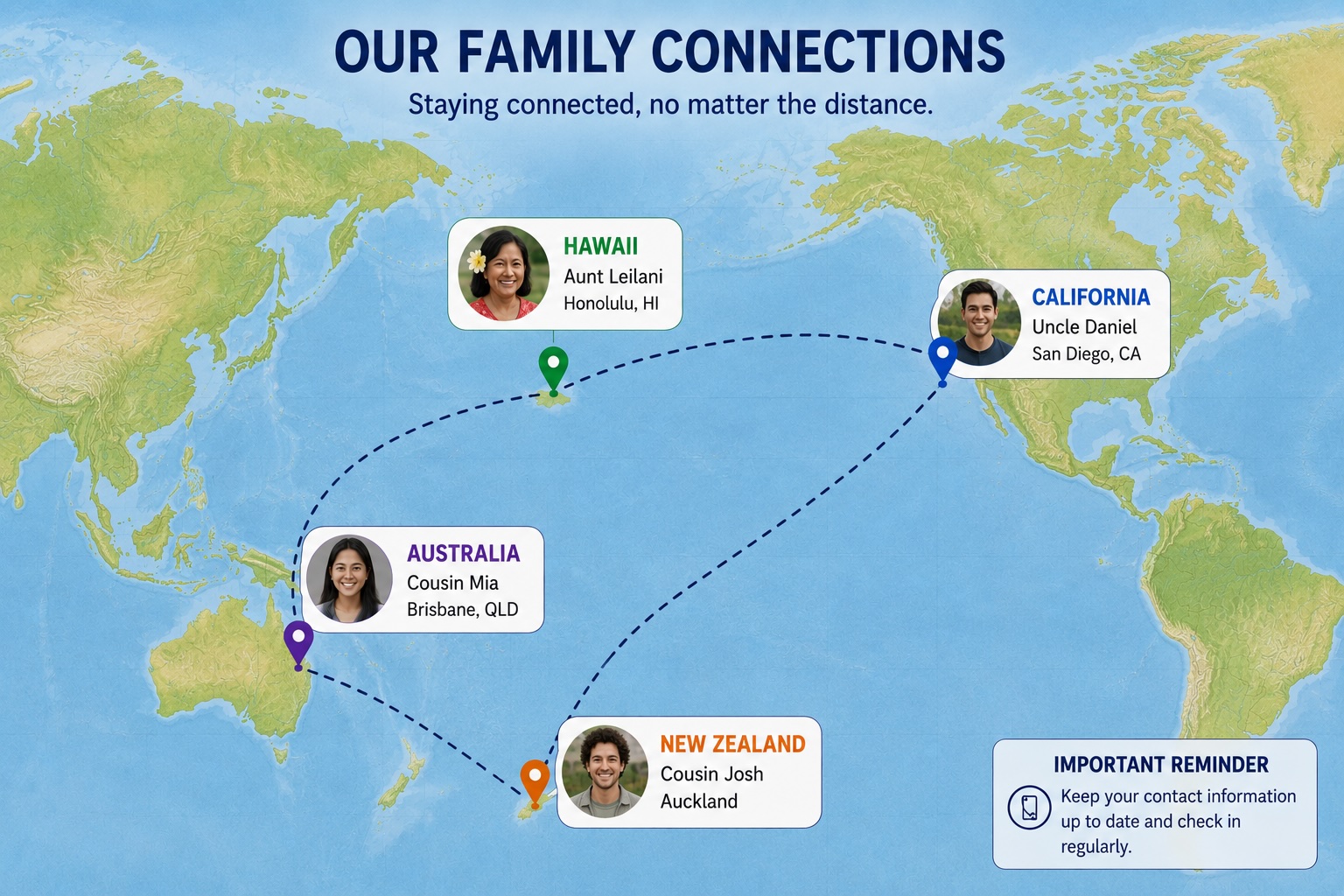
Natural hazards rarely affect only one person. Families may be spread across different cities, states, or countries. Loved ones may be at work, travelling, studying overseas, living in coastal communities, or vacationing in another country when an emergency occurs.
A communication plan helps everyone know what to do if communication becomes difficult.
Keep Important Contact Information Accessible
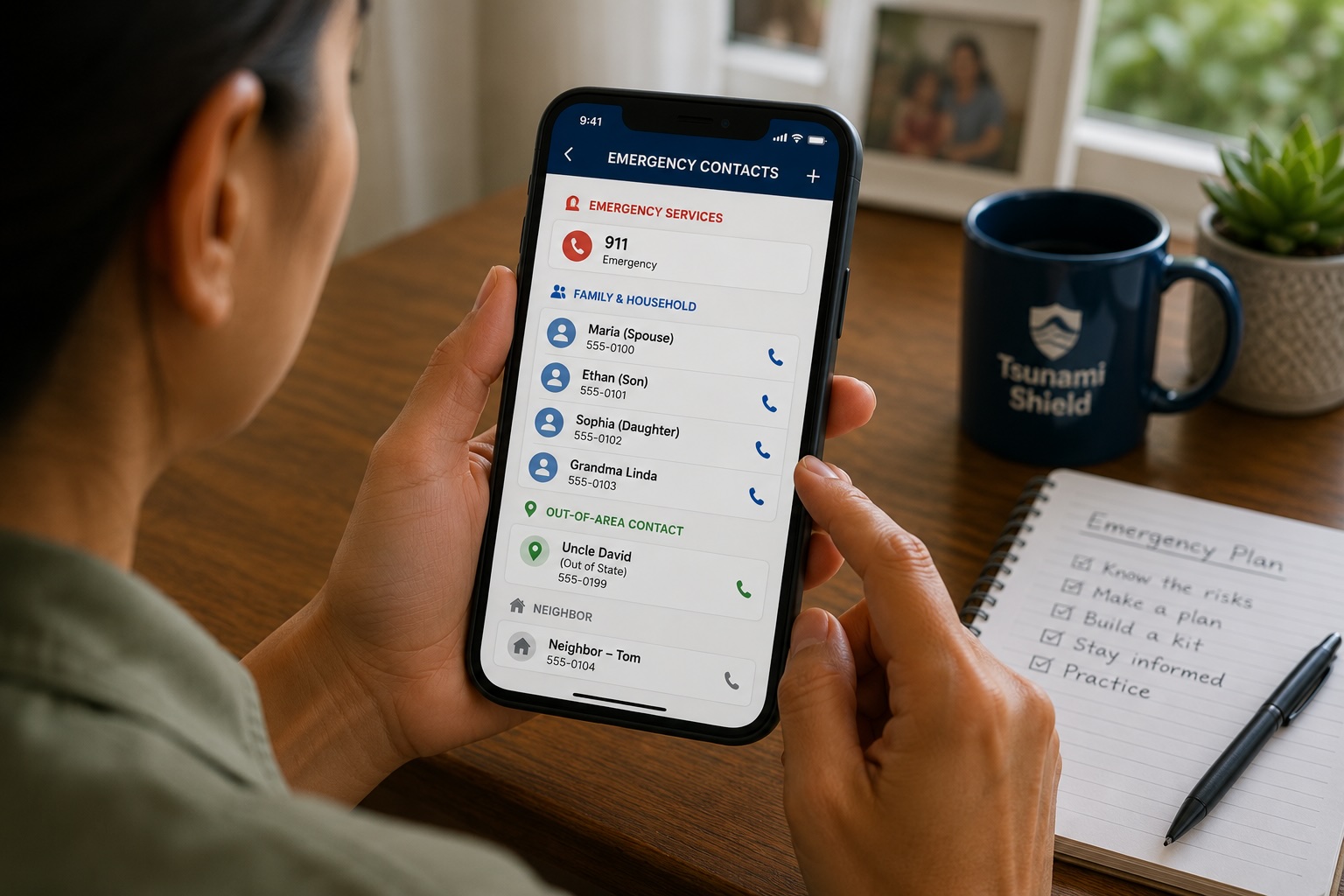
Consider maintaining copies of important contact information — including mobile phone numbers, home and work numbers, emergency contacts, and accommodation details while travelling. Store this information in multiple places: on your phone, in written form, and in an emergency go-bag.
Having information available across multiple formats can be helpful when technology is unavailable.
Emergency Contact Card
Write down your most important phone numbers on a small card and keep it in your wallet. If your phone is lost or out of battery during an emergency, this simple backup can make all the difference.
Designate a Family Contact Person
Some families choose a trusted friend or relative who lives outside the immediate area to serve as a central communication point. This person can receive updates from individual family members, help relay information, and act as a coordinating hub when direct communication is difficult.
Having a contact outside the affected region can help simplify communication during confusing situations.
Discuss Meeting Locations and Communication Priorities
If family members are together during an emergency, consider discussing a nearby meeting location, an alternative location, and locations outside hazard areas. Simple plans reduce uncertainty if people become separated.
During emergencies, prioritise safety first, then share clear, simple updates — your location, whether you are safe, where you are going, and how others can reach you. Avoiding unverified information helps reduce stress for everyone.
When Networks Are Congested
Following significant events, phone networks may become congested and text messages can go through more reliably than voice calls. If you cannot reach someone, try a short text before repeatedly calling.
Planning for All Family Members
Effective communication plans consider everyone. For children, keep discussions age-appropriate — cover emergency contact information, family meeting places, trusted adults, and basic safety instructions. Children often feel more reassured when they understand what to expect.
For older family members, plans may include medical information, medications, transportation needs, alternative contact methods, and emergency support networks.
For travellers, discuss accommodation information, local emergency numbers, communication expectations, and alternative ways to stay connected before departure. Preparedness can travel with you.
How Tsunami Shield Supports Family Preparedness
Tsunami Shield helps families stay informed through official tsunami alerts, earthquake monitoring, saved locations, regional monitoring, preparedness resources, and emergency information tools.
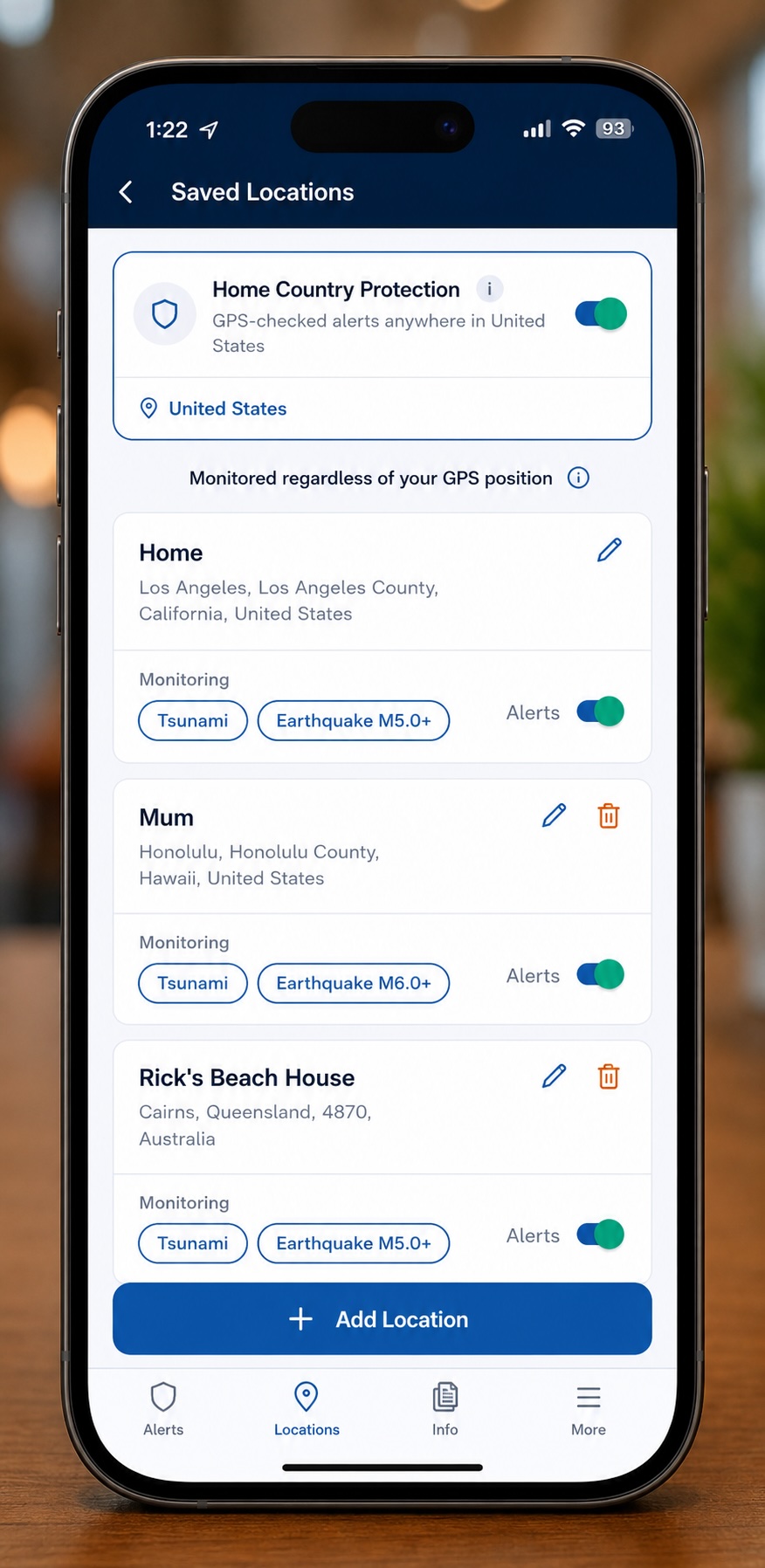
Families can monitor the locations that matter most — home, family members' addresses, and travel destinations — and remain informed about events affecting loved ones and important places. The goal is simple: help people stay informed and maintain greater peace of mind during coastal emergencies.
Monitor Every Location That Matters
Add your parents in Honolulu, your daughter in San Diego, your holiday home in Maui, and your son in Auckland. Tsunami Shield sends official alerts for every saved location — so you always know if the people and places you love are affected.
Your Family Communication Checklist
A complete family communication plan covers four areas:
Emergency Contacts: Mobile and home phone numbers for all family members, an emergency contact person outside the area, and accommodation details while travelling.
Meeting Plans: A local meeting place, an alternative location, and clear communication expectations if contact is lost.
Information Resources: Reliable information sources, local emergency numbers, and preparedness resources bookmarked before any emergency occurs.
Emergency Supplies: Charged mobile phones, portable power banks, and emergency go-bags ready to take at a moment's notice.
Review Your Plan Annually
Communication plans should be reviewed at least once a year — phone numbers change, family members move, and travel patterns evolve. A brief annual review keeps your plan current and effective.
Final Thoughts
Emergencies can be stressful and unpredictable. However, creating a simple family communication plan can help reduce uncertainty and improve confidence during challenging situations.
Preparedness does not need to be complicated. A few conversations today can help families feel more informed, more connected, and better prepared tomorrow.
Communication, awareness, and preparedness often work together to provide one of the most valuable things during emergencies: peace of mind.
Frequently Asked Questions
What is a family communication plan?
A family communication plan is a simple strategy that helps family members know how to contact each other, where to meet if separated, what information to share, and how to stay informed during emergencies. A few key decisions made in advance can significantly reduce confusion and stress.
What should be included in a family emergency contact list?
Include mobile, home, and work numbers for all family members, contact details for an emergency contact person outside your immediate area, and accommodation details for family members who travel. Store copies both digitally and in written form.
What should I do if I cannot reach family members during an emergency?
Try text messages if voice calls are not connecting — during network congestion, texts often go through more reliably. If you have a designated family contact person outside the affected area, reach out to them. Temporary communication delays do not necessarily mean loved ones are unsafe.
How can Tsunami Shield help my family stay connected during a coastal emergency?
Tsunami Shield lets you save multiple locations — your home, family members' addresses, and travel destinations — and receive official tsunami alerts and earthquake monitoring for all of them. This means you can stay informed about events affecting the people and places you care about, even when you are far away.
Read Next
Continue exploring related topics


