

How Tsunami Alerts Are Issued: From Earthquake Detection to Public Warning
When a major earthquake occurs beneath the ocean, how do authorities know whether a tsunami is coming — and how do warnings reach people so quickly? This article explains the full process, from seismic detection to public alert.
When a major earthquake occurs somewhere in the ocean, many people wonder: "How do authorities know whether a tsunami is coming?" And perhaps more importantly: "How do warnings reach people so quickly?"
Modern tsunami warning systems are the result of decades of scientific research, international cooperation, and sophisticated monitoring technology. Although no system can predict earthquakes before they occur, today's warning networks are capable of detecting major events and rapidly evaluating whether a tsunami threat may exist.
Understanding how tsunami alerts are issued can help people better appreciate the science behind modern warning systems and the importance of staying informed.
Step 1: An Earthquake Occurs
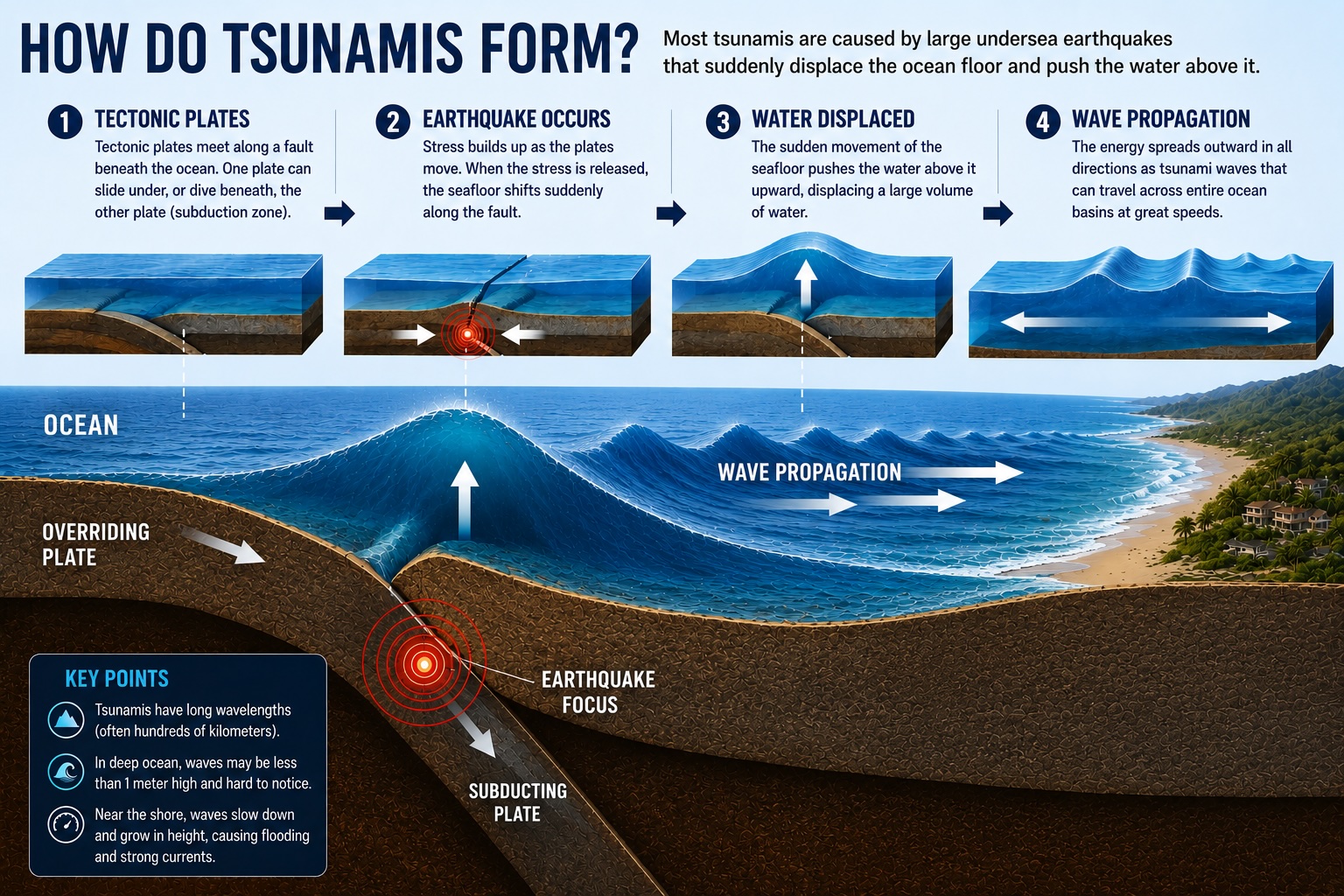
Most tsunamis are generated by underwater earthquakes. When a large earthquake occurs beneath the ocean floor, massive sections of the seabed can suddenly move upward or downward. This movement displaces enormous volumes of water and can sometimes generate tsunami waves.
Not every underwater earthquake creates a tsunami. Scientists must first determine the earthquake's location, magnitude, depth, and type of fault movement. These factors help determine whether a tsunami threat may exist.
Step 2: Seismic Monitoring Systems Detect the Earthquake
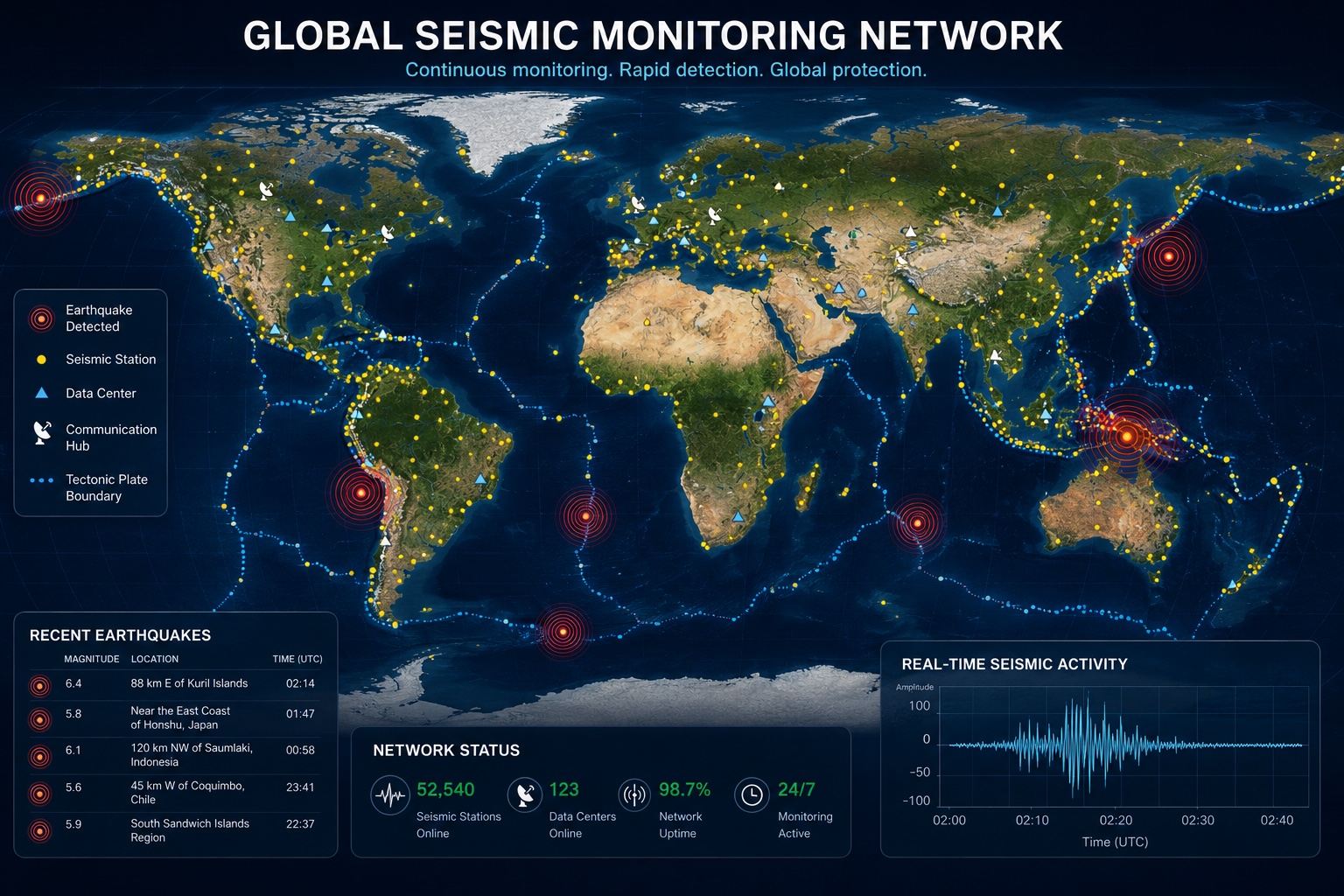
Thousands of seismic sensors continuously monitor earthquakes around the world. These networks can rapidly determine the earthquake's magnitude, epicentre location, depth, and initial event characteristics. Detection often occurs within minutes.
This information provides the first indication that further tsunami assessment may be necessary.
Step 3: Tsunami Warning Centres Evaluate the Event
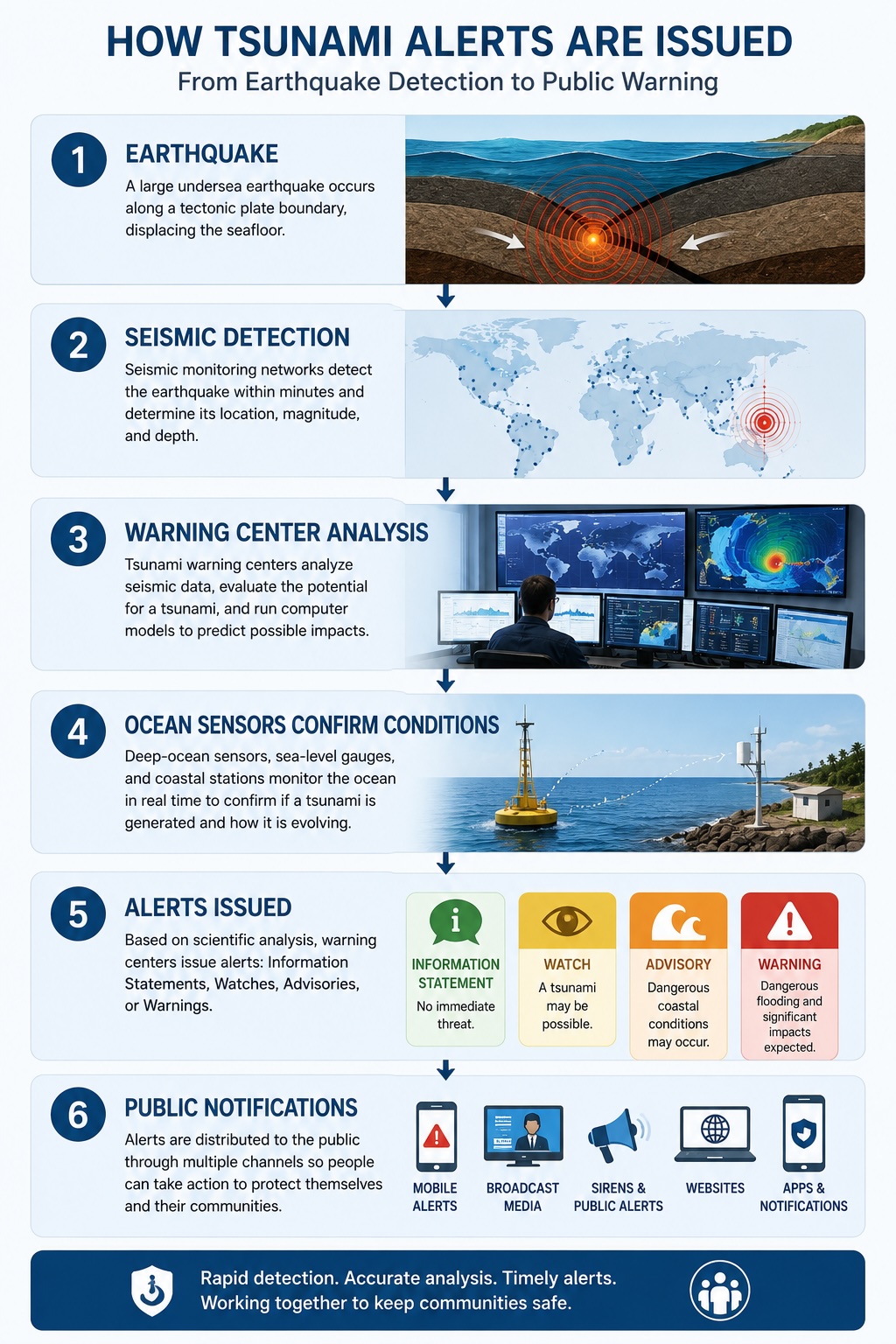
Following detection, tsunami warning centres begin analysing available information. Scientists evaluate the earthquake's size, location, tectonic setting, historical information, and potential ocean displacement.
Computer models may also help estimate whether tsunami waves could have been generated and which regions could potentially be affected.
Step 4: Ocean Monitoring Systems Confirm Conditions
Modern tsunami warning systems use multiple technologies to monitor actual ocean conditions. These systems may include deep-ocean pressure sensors, sea-level gauges, coastal monitoring stations, and observational data networks.
This information helps scientists better understand whether tsunami waves have formed and how conditions are evolving.
Step 5: Warnings and Alerts Are Issued
Based on scientific analysis, authorities may issue various information products at different levels of alert — see our full guide on the difference between a tsunami watch, advisory, and warning:
Information Statements — no immediate threat exists.
Watches — a tsunami may be possible.
Advisories — dangerous coastal conditions may occur.
Warnings — dangerous flooding and significant impacts are expected or occurring.
Different alert levels may require different actions. Always follow the instructions issued by local authorities.
Step 6: Information Reaches the Public
Once warnings are issued, information may be distributed through emergency management agencies, emergency alert systems, broadcast media, websites, mobile notifications, and preparedness applications.
The goal is simple: help people receive information as quickly as possible.
Why Warnings Sometimes Change
Tsunamis are complex events. As additional information becomes available, warning information may be upgraded, downgraded, expanded, or cancelled. This process is completely normal.
Updating information is an important part of scientific assessment and emergency management.
Why International Cooperation Matters
Tsunamis do not respect national borders. A major earthquake in one region may affect coastlines thousands of miles away. Modern warning systems rely heavily on international scientific cooperation — see the official data sources used by Tsunami Shield. Shared monitoring systems, communication networks, and coordinated emergency management efforts.
This cooperation helps improve preparedness worldwide.
How Tsunami Shield Supports Awareness
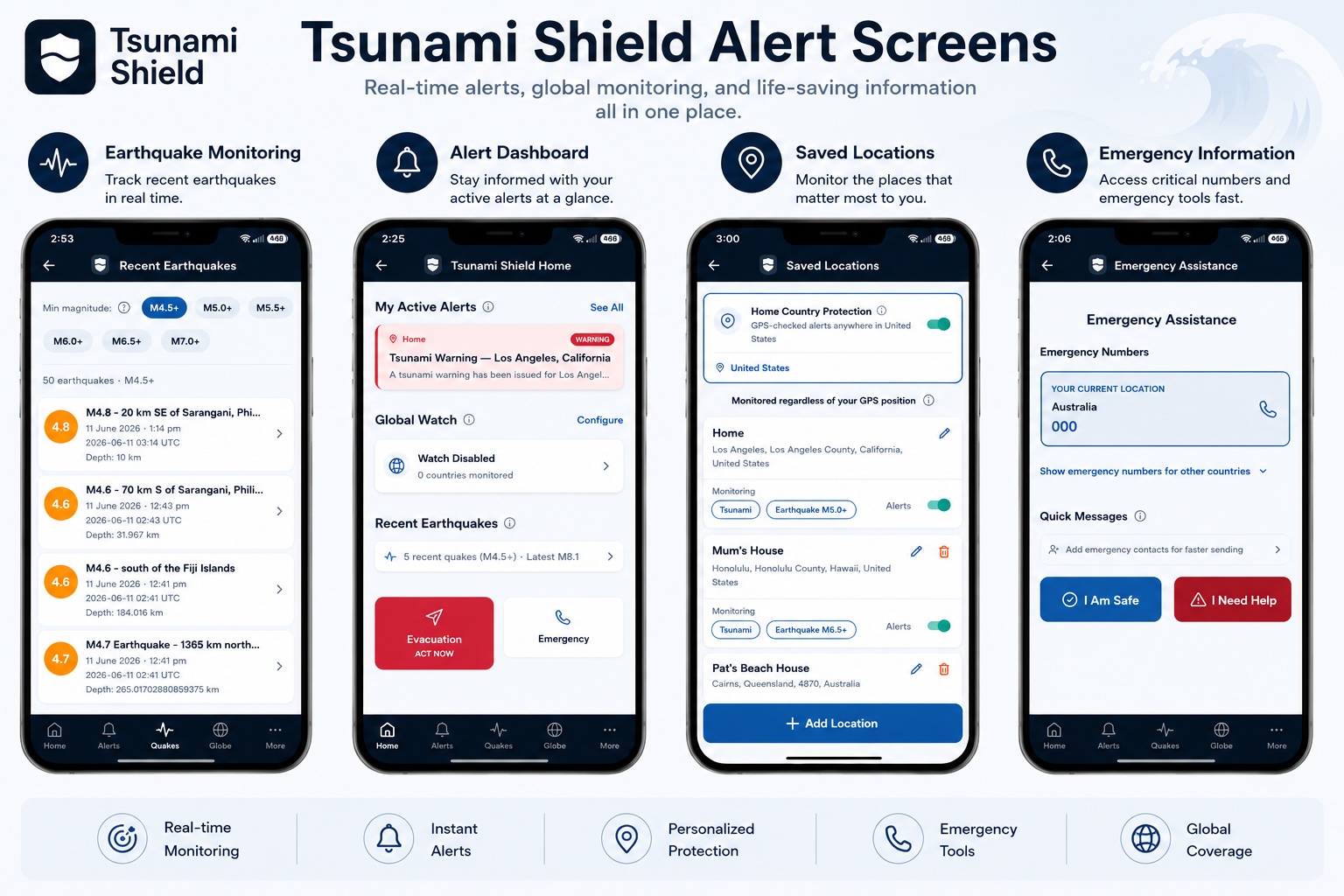
Tsunami Shield helps users stay informed through official tsunami alerts, earthquake monitoring, saved locations, regional monitoring, preparedness resources, and emergency information tools.
The goal is simple: help people stay informed about events affecting the places and people they care about.
Official Alerts, Directly to You
Tsunami Shield aggregates official tsunami alerts from monitoring agencies and delivers them directly to your device — for your saved locations, travel destinations, and regions you follow.
Final Thoughts
Modern tsunami warning systems represent one of the world's most impressive examples of international scientific cooperation. Although earthquakes cannot currently be predicted, monitoring technologies allow scientists to rapidly assess potential tsunami threats and communicate information to communities around the world.
Understanding how alerts are issued helps people better appreciate the importance of preparedness and staying informed during coastal emergencies.
Frequently Asked Questions
How quickly can a tsunami warning be issued after an earthquake?
Modern warning systems can issue initial tsunami alerts within minutes of a major earthquake being detected. Seismic networks identify the event rapidly, and warning centre scientists evaluate the data to determine whether a threat exists. However, the timeline varies depending on the location and magnitude of the earthquake.
What is the difference between a tsunami watch, advisory, and warning?
A tsunami watch means a tsunami is possible — authorities are monitoring the situation and you should stay informed and be ready to act. A tsunami advisory means dangerous coastal currents and conditions are expected — avoid shorelines and harbour areas. A tsunami warning is the most serious level — dangerous flooding and significant coastal impacts are expected or occurring, and protective action may be required immediately.
Why might a tsunami warning be changed or cancelled?
As additional ocean sensor data and scientific analysis become available, warning centres update their assessments. A warning may be upgraded if conditions are worse than initially thought, or downgraded and cancelled if ocean monitoring shows that significant waves did not form. Updating warnings is a normal part of the scientific process.
How does Tsunami Shield receive official tsunami alerts?
Tsunami Shield monitors official tsunami alerts issued by recognised warning agencies and delivers them directly to your device for your saved locations, travel destinations, and selected regions. Subscribers receive critical alert notifications that bypass silent mode and Do Not Disturb — so important warnings can reach you even while you sleep.
Read Next
Continue exploring related topics


