Can a Tsunami Reach Alaska? Understanding Alaska's Tsunami Risk
When people think about tsunamis, Alaska rarely comes to mind first. But Alaska is one of the most tsunami-prone regions in North America — with a history of powerful earthquakes and devastating waves that have reached coastlines thousands of miles away.
When people think about tsunamis, they often picture tropical islands or distant coastlines. However, Alaska is one of the most tsunami-prone regions in the United States. Its location along the Pacific Ring of Fire and its history of powerful earthquakes make Alaska particularly vulnerable to both local and Pacific-wide tsunami events.
Although major tsunamis are relatively rare, Alaska has experienced some of the most significant tsunami events in recorded history. Understanding Alaska's tsunami risk can help residents, travellers, and coastal communities better prepare for future events.
Does Alaska Experience Tsunamis?
Yes — Alaska regularly experiences tsunami activity. Most events are relatively small and produce little or no damage. However, Alaska has also experienced some of the world's most powerful and destructive tsunamis.
Because of its geological setting, Alaska remains one of North America's highest-risk tsunami regions. The same forces that give Alaska its dramatic landscapes also make it one of the most seismically active places on Earth.
Why Is Alaska at Risk?
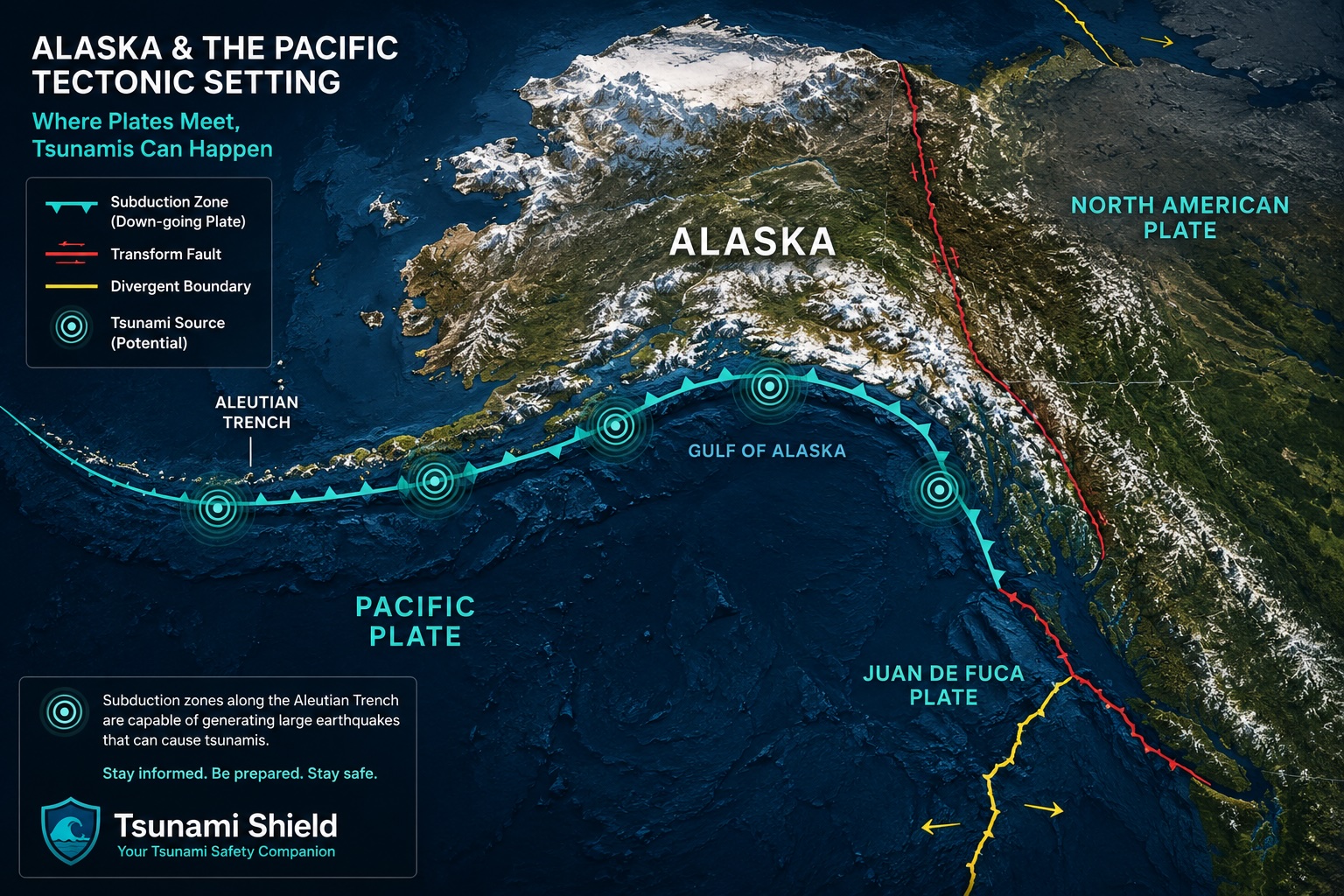
Alaska sits along the boundary where the Pacific Plate moves beneath the North American Plate — a process known as subduction. Subduction zones are capable of producing very large earthquakes, volcanic activity, underwater landslides, and tsunami-generating events.
The same geological forces that create Alaska's mountains and volcanoes also contribute directly to its tsunami risk.
The Pacific Ring of Fire Connection
Alaska forms an important part of the Pacific Ring of Fire — the belt of tectonic activity encircling the Pacific Ocean that contains approximately 75% of the world's active volcanoes and produces around 90% of global earthquakes. The Ring of Fire also generates many of the world's largest tsunamis.
Because Alaska sits directly on this highly active tectonic boundary, earthquake and tsunami hazards are an ever-present consideration for many coastal communities across the state.
The Great Alaska Earthquake of 1964
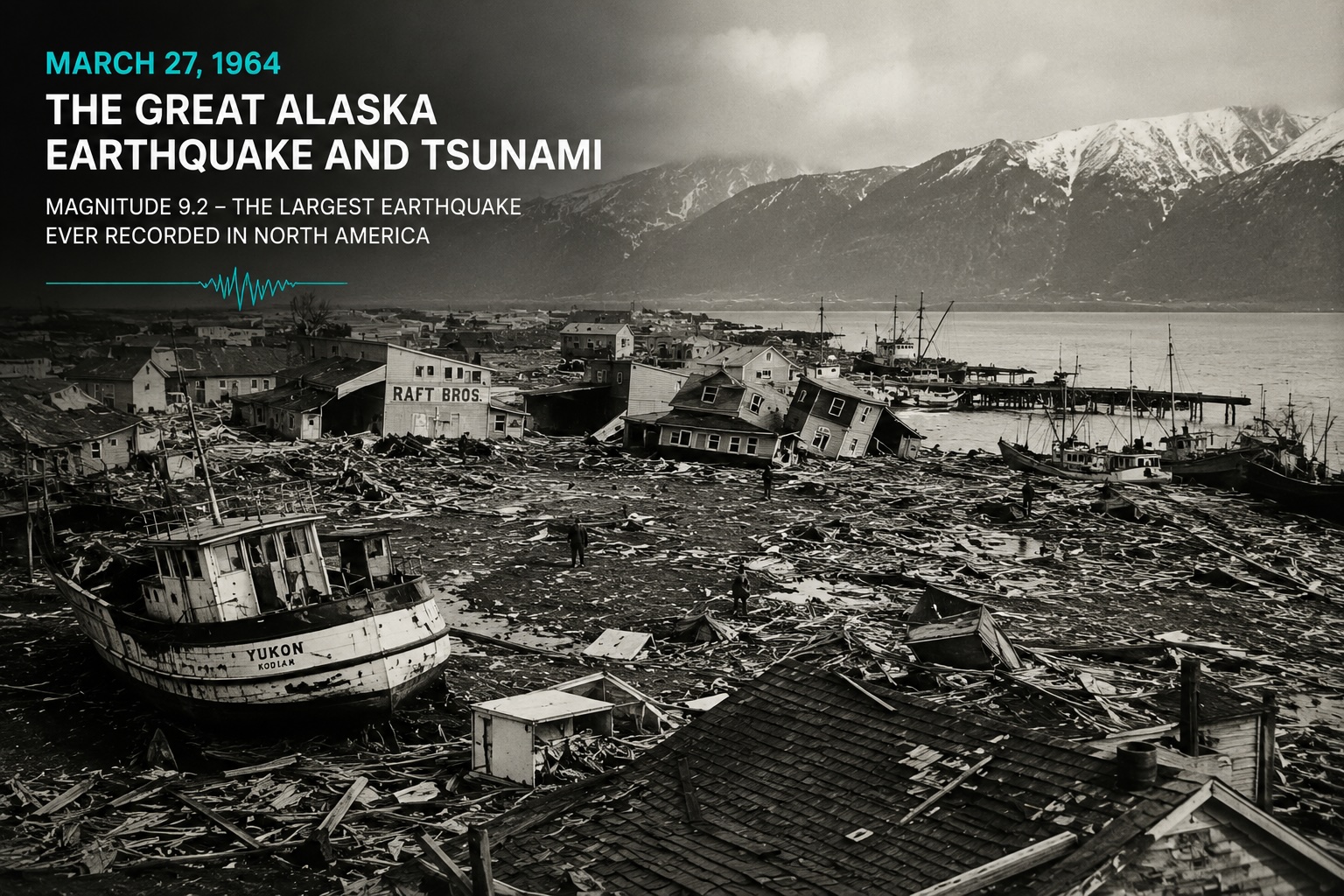
One of the most significant natural disasters in United States history occurred on March 27, 1964. The Great Alaska Earthquake measured magnitude 9.2 — the most powerful earthquake ever recorded in North America, and the second-largest ever recorded globally.
The earthquake lasted several minutes, caused widespread ground deformation, and generated major tsunamis that affected communities not just in Alaska but across the Pacific. Tsunami impacts occurred in British Columbia, Washington State, Oregon, California, and Hawaii. The event demonstrated clearly how tsunamis generated in Alaska can affect coastlines thousands of miles away.
Local Tsunamis Can Arrive With Very Little Warning
One of Alaska's unique challenges is that some tsunamis can arrive within minutes of a local earthquake. For nearby events, official warnings may follow shortly after the ground shaking — but there may not be enough time to wait for them.
This is why public education and awareness of natural warning signs are especially important in Alaska. Strong or prolonged ground shaking near the coast should be treated as a potential warning sign in itself. If you feel it, move to higher ground immediately — do not wait for an official alert.
Natural Warning: Feel Strong Shaking? Move Now
In Alaska, a large local earthquake may leave only minutes before tsunami waves arrive. If you are near the coast and feel strong or prolonged ground shaking, move immediately to higher ground without waiting for an official warning.
Landslide-Generated Tsunamis
Alaska has also experienced tsunamis generated by landslides rather than seafloor earthquakes. The state's steep terrain, glaciers, and coastal fjords can create conditions where large volumes of rock or ice suddenly enter the water, generating extremely high local waves and rapid flooding.
Although these events are often localised in their reach, they can be exceptionally dangerous for anyone near the source — and may occur with little or no seismic warning.
Which Parts of Alaska Are Most Vulnerable?
Risk levels vary considerably across Alaska's extensive coastline. Communities in the Gulf of Alaska face exposure to both local and distant tsunamis. The Aleutian Islands sit near major subduction zones and experience frequent earthquake activity. Southeast Alaska's coastal areas and fjords may face tsunami risks associated with both earthquakes and landslides. Harbours and low-lying coastal infrastructure throughout the state may be particularly vulnerable to flooding and strong currents during a tsunami event.
How Are Tsunami Threats Monitored in Alaska?
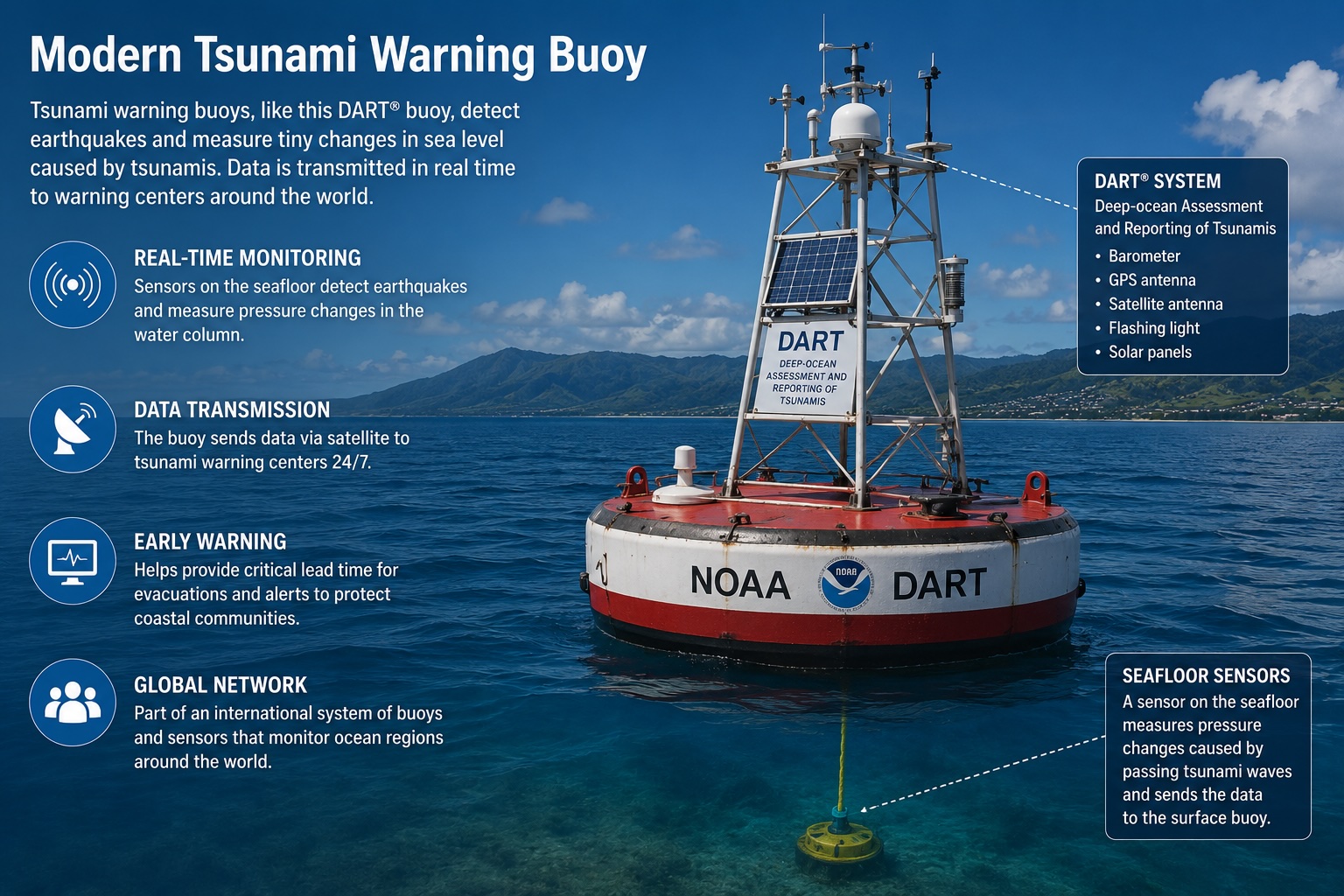
Alaska benefits from sophisticated monitoring systems that include earthquake monitoring networks, DART (Deep-ocean Assessment and Reporting of Tsunamis) buoys, tide gauges, satellite communications, and national warning centres. These systems continuously monitor seismic activity and ocean conditions throughout the Pacific region, providing the earliest possible warning to coastal communities.
Alaska's Warning Infrastructure
The National Tsunami Warning Center (NTWC), operated by NOAA and located in Palmer, Alaska, is responsible for issuing tsunami warnings for the United States and Canadian coastlines — including all of Alaska.
What Should Alaska Residents Do?
Preparedness can make a significant difference when time is short. Key steps include learning whether you live or work in a tsunami hazard zone, identifying the nearest evacuation routes to higher ground, and understanding that strong or prolonged ground shaking near the coast is itself a natural warning sign. Monitor official alerts from agencies such as the National Tsunami Warning Center and discuss evacuation and communication plans with your household before an emergency occurs.
Advice for Visitors to Alaska
Millions of people visit Alaska every year — many of them to coastal destinations, national parks, and fjords that sit within potential tsunami hazard zones. If you are visiting, take a few minutes to understand local hazards, identify evacuation routes from your accommodation and any activities planned near the water, and pay attention to any posted tsunami hazard zone signage. Preparation takes only minutes and can significantly improve your safety.
How Tsunami Shield Can Help
Tsunami Shield helps residents and visitors stay informed through official tsunami alerts, earthquake monitoring, saved location monitoring, and regional monitoring. Whether you live in Alaska or are visiting its coastal regions, timely information supports more informed decisions during emergencies.
Real-Time Alerts for Alaska's Coastline
Add your Alaska location — or any destination you're visiting — to Tsunami Shield to receive official tsunami alerts and earthquake monitoring in real time. Available for iOS and Android.
Final Thoughts
Yes, tsunamis can reach Alaska. In fact, Alaska is one of the most tsunami-prone regions in North America. Its location along the Pacific Ring of Fire and its history of major earthquakes mean tsunami hazards remain an important consideration for residents, travellers, and coastal communities.
Fortunately, modern monitoring systems, preparedness planning, and public awareness continue to improve safety and resilience throughout the region. Understanding the risk is the first step toward being ready.
Frequently Asked Questions
Can a tsunami reach Alaska?
Yes. Alaska is one of the most tsunami-prone regions in North America. It regularly experiences tsunami activity due to its location along the Pacific Ring of Fire, and has generated some of the largest tsunamis in recorded history, including the devastating 1964 Great Alaska Earthquake tsunami.
What caused the 1964 Alaska tsunami?
The 1964 Alaska tsunami was caused by the Great Alaska Earthquake, which measured magnitude 9.2 — the most powerful earthquake ever recorded in North America. The earthquake generated major tsunamis that affected communities across Alaska and caused damage as far away as California and Hawaii.
How quickly can a tsunami arrive in Alaska after an earthquake?
For local earthquakes near Alaska's coastline, tsunami waves can arrive within minutes — sometimes before official warnings can be issued. This is why strong or prolonged ground shaking near the coast should be treated as a natural warning sign to move immediately to higher ground without waiting for an official alert.
Which parts of Alaska are most at risk from tsunamis?
The Gulf of Alaska coastline, the Aleutian Islands, and Southeast Alaska coastal communities face the highest tsunami risk. Low-lying harbours and coastal infrastructure throughout the state are also particularly vulnerable to tsunami flooding and strong currents.
Read Next
Continue exploring related topics