
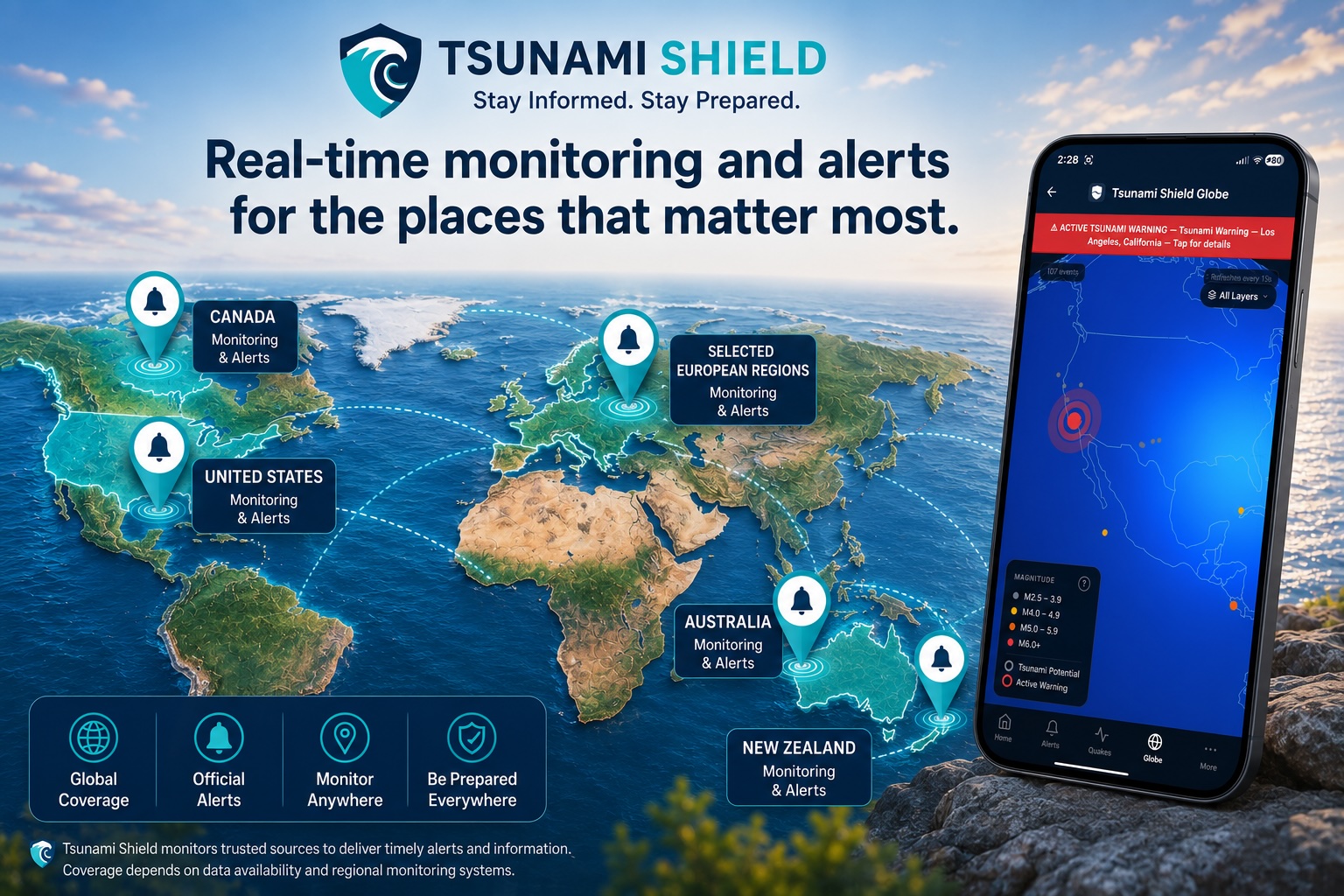
Coverage Across Supported Regions: Where Tsunami Shield Provides Monitoring and Alerts
One of the first questions people ask before downloading a preparedness app is: will it work where I live — or where I'm travelling? Here is where Tsunami Shield currently provides monitoring and alert coverage.
One of the first questions many people ask before downloading an emergency preparedness app is: "Will it work where I live?" Another common question is: "Will it work where I'm travelling?"
Understanding where monitoring and alert information is available helps users make informed decisions about how they use preparedness tools. Tsunami Shield is designed to help users stay informed by monitoring information from recognised scientific and warning organisations and delivering alerts and preparedness information through a simple mobile experience. As the platform evolves, supported regions and monitoring capabilities will continue to grow.
Why Regional Coverage Matters
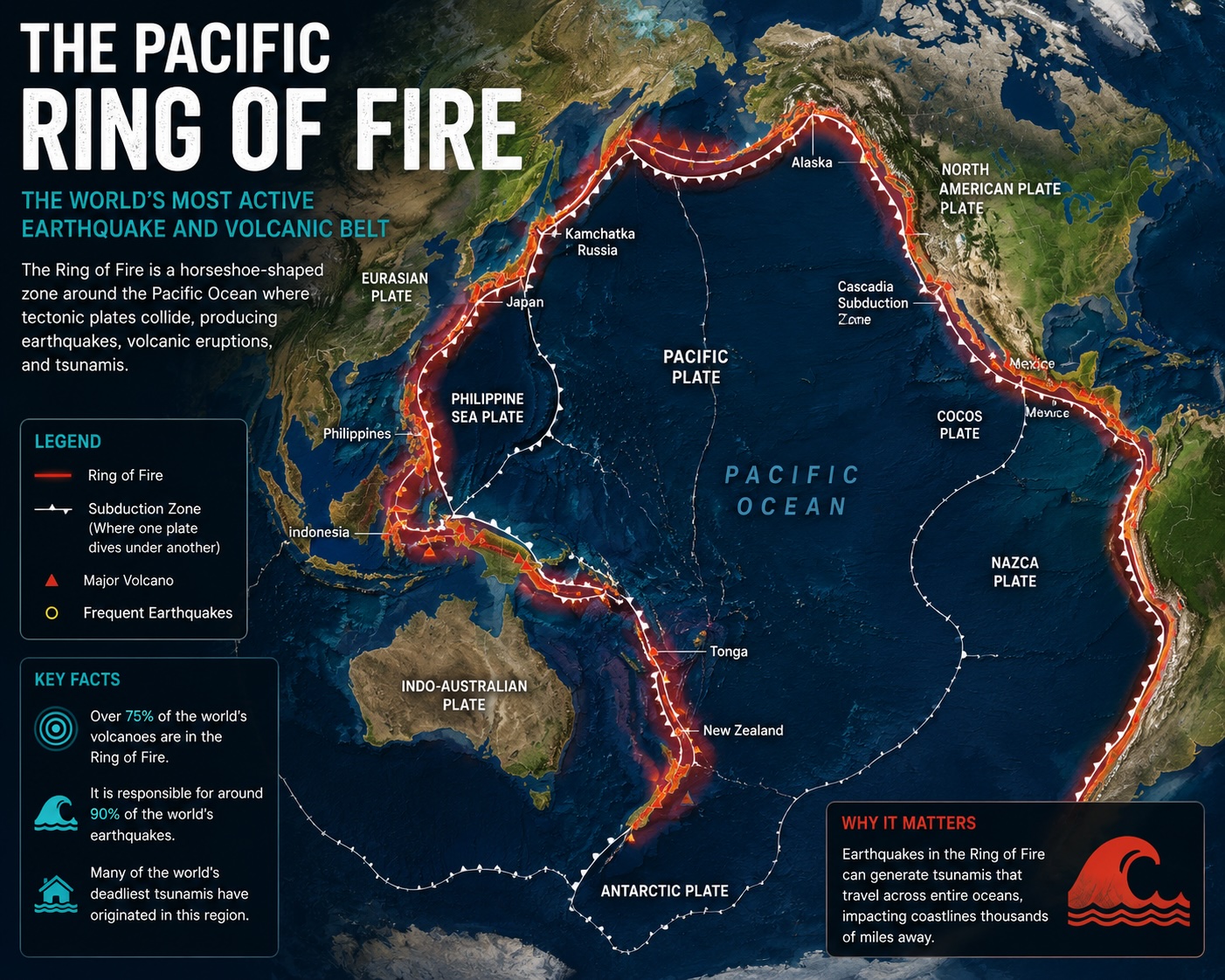
Tsunami hazards vary significantly around the world. Some regions experience frequent earthquakes, sit near major tectonic plate boundaries, maintain advanced monitoring systems, and have extensive coastal populations. Other regions may have more limited monitoring infrastructure, evolving warning systems, or fewer public data integrations.
Because tsunami monitoring systems differ by country and region, understanding coverage is an important part of choosing and using a preparedness tool effectively.
United States
The United States contains several regions that face significant tsunami risk, particularly along the Pacific coast. Hawaii, Alaska, California, Oregon, and Washington State all benefit from sophisticated monitoring systems and well-established tsunami warning programmes.
Tsunami Shield supports monitoring information and alerts for supported United States regions, drawing on data from official agencies including NOAA's National Tsunami Warning Center and the Pacific Tsunami Warning Center.
Canada
Canada's Pacific coast also experiences tsunami risk. British Columbia has experienced tsunami impacts throughout history and benefits from tsunami monitoring programmes and emergency management systems.
Users can monitor supported Canadian regions and receive information relating to significant events affecting areas they care about.
Australia
Although destructive tsunamis are relatively uncommon in Australia, the country maintains tsunami monitoring and emergency management capabilities through agencies including Geoscience Australia. Australia's extensive coastline and close connections with the Pacific and Indian Oceans make coastal awareness important for many communities.
Tsunami Shield supports monitoring information for supported Australian regions and coastal events.
New Zealand
New Zealand sits directly within the Pacific Ring of Fire and experiences frequent earthquakes, volcanic activity, and periodic tsunami hazards. Because of its location, preparedness and awareness remain important for many coastal communities across both the North and South Islands.
Tsunami Shield supports monitoring information and alerts for supported New Zealand regions, drawing on data from GeoNet and other official agencies.
Selected European Regions
Certain European coastlines may experience tsunami hazards, although the risk generally differs from many Pacific regions. The Mediterranean and Atlantic coastlines have historical records of tsunami events, and monitoring continues to improve in these areas.
Tsunami Shield supports monitoring information for selected European regions where monitoring data and integrations are available. Coverage may continue to evolve as additional monitoring capabilities become available.
Why Regional Monitoring Is Important
Natural hazards do not respect borders. A significant earthquake in one country may affect coastlines thousands of miles away. Alaska earthquakes have generated waves that reached Hawaii and California. Japan earthquakes have sent waves to North America. Chile earthquakes have affected coastlines across the entire Pacific basin.
Understanding regional monitoring helps users appreciate how interconnected tsunami hazards can be — and why monitoring coverage across multiple regions matters.
Monitoring Locations That Matter to You
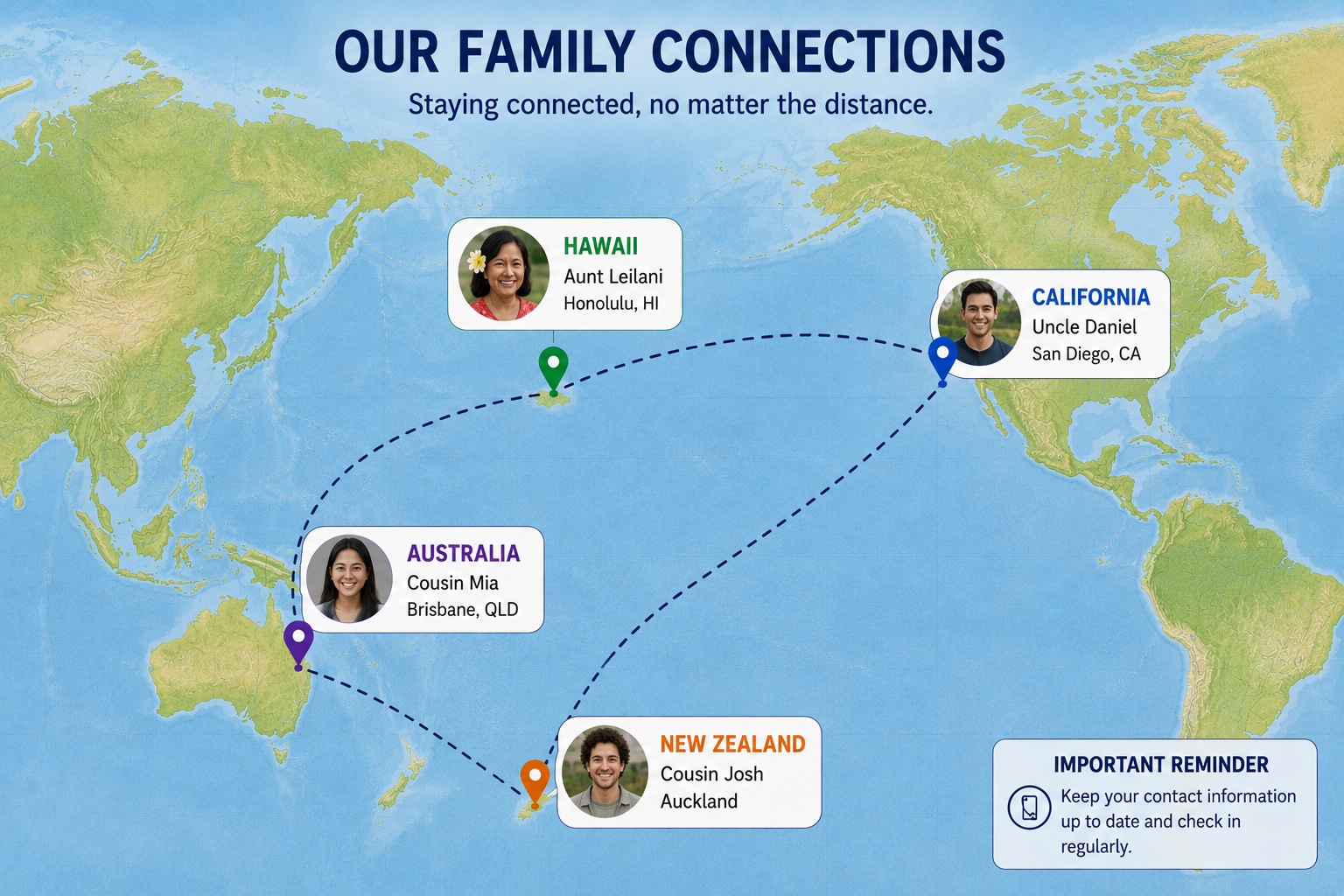
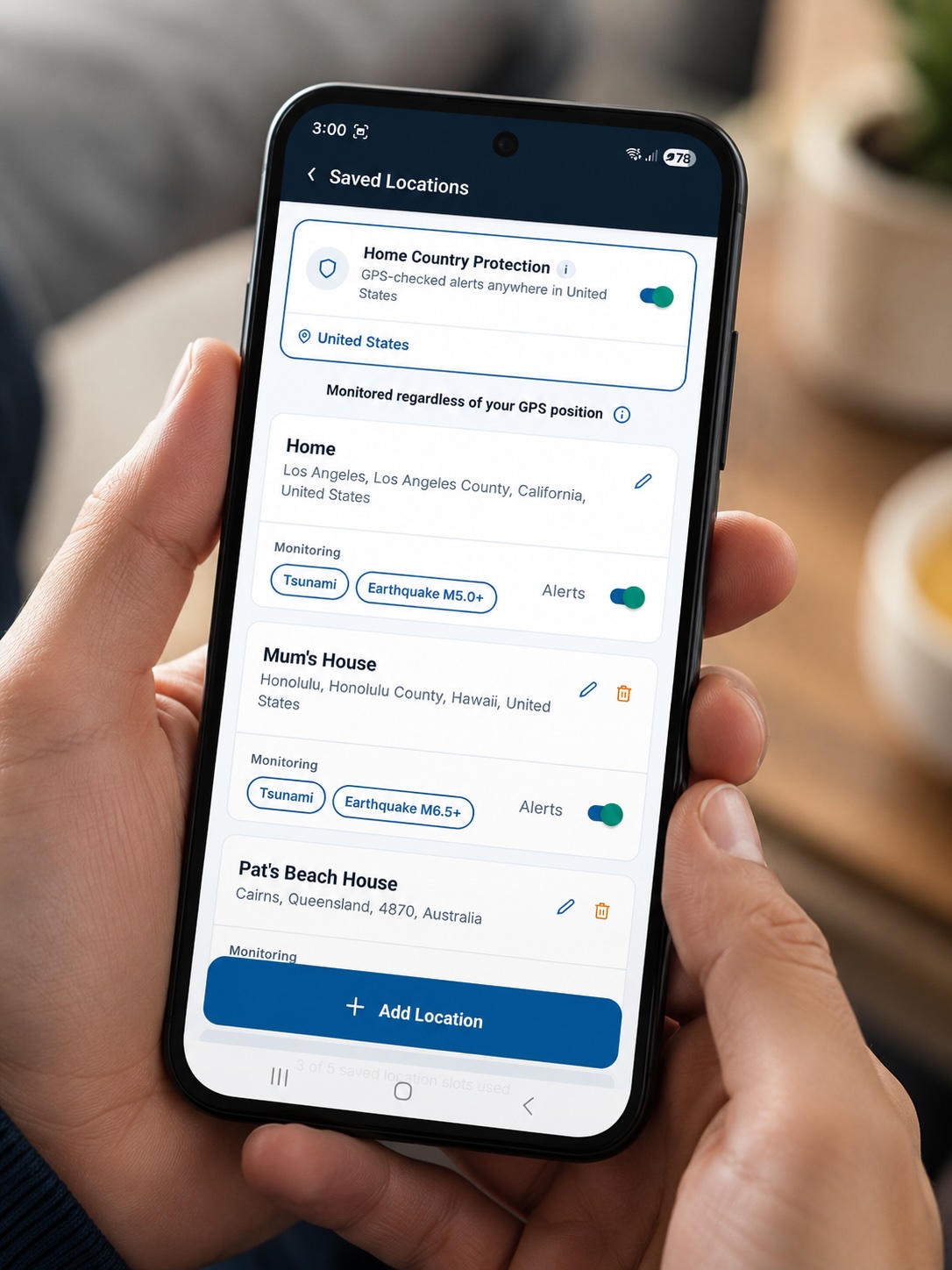
Preparedness is often personal. People may want information about their home, their parents' location, their children's study destination, a family holiday destination, or frequently visited coastal communities. Tsunami Shield's monitoring features are designed to help users stay informed about the places that matter most — not just where they happen to be right now.
Traveling to Supported Regions
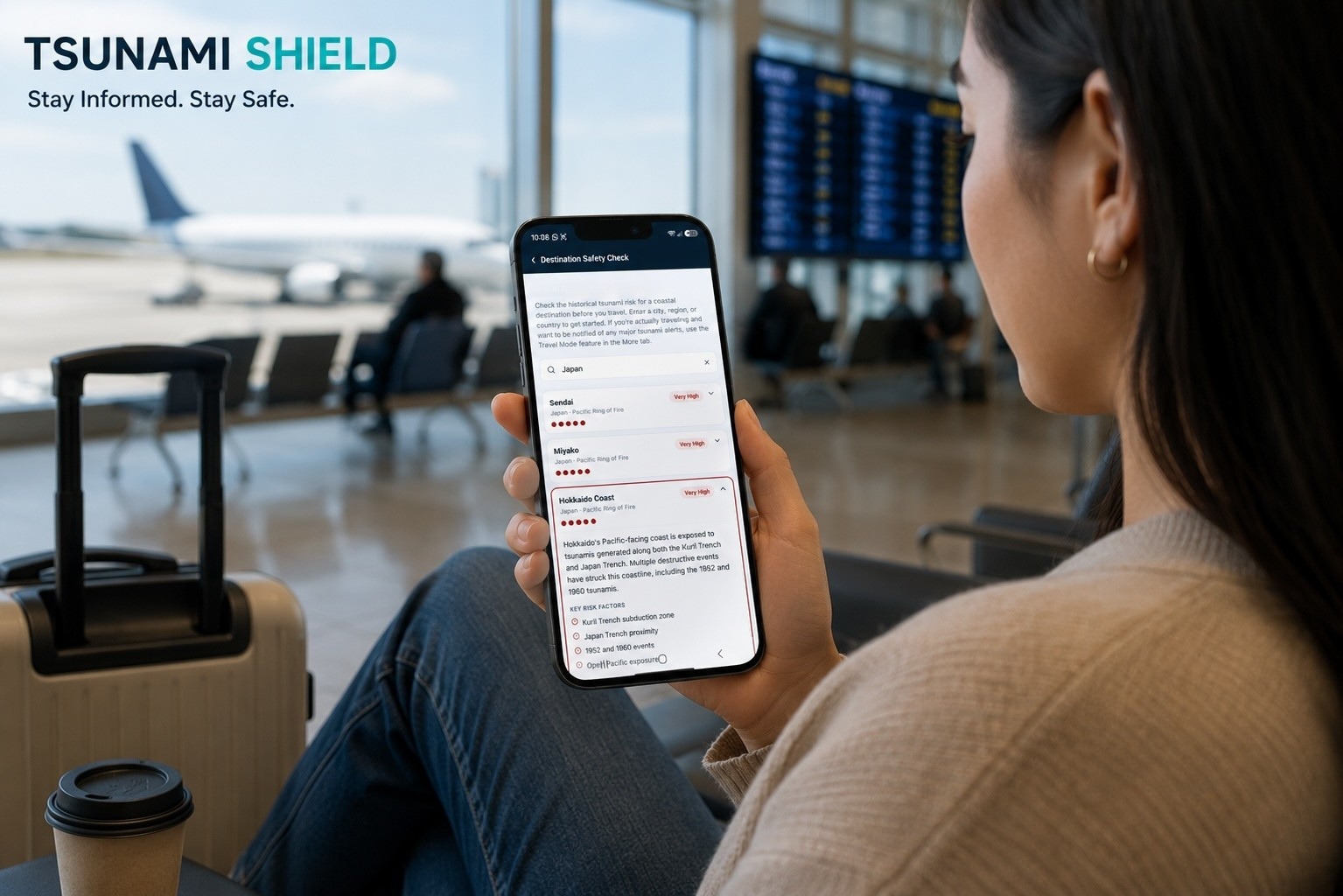
Many users travel frequently — for family holidays, business travel, study abroad, visiting relatives, or cruises and coastal tourism. Tsunami Shield allows users to monitor supported locations that matter to them, even when they are away from home.
This may include your current location, future travel destinations, locations where loved ones live, or favourite coastal regions. Preparedness can travel with you.
How Tsunami Shield Supports Awareness
Tsunami Shield combines official tsunami alerts, earthquake monitoring, saved locations, regional monitoring, preparedness resources, and emergency information tools into a single mobile experience. The goal is straightforward: help users stay informed about the locations that matter to them — wherever those locations are.
Monitor Every Location That Matters
Add up to five saved locations — your home, your family's addresses, or any coastal destination — and Tsunami Shield will deliver official tsunami alerts and earthquake monitoring for each one.
Our Approach to Future Expansion
Our long-term vision is to continue improving regional monitoring capabilities wherever reliable information and integrations are available. As monitoring systems evolve and additional opportunities emerge, we will continue exploring ways to expand support for additional regions and improve the overall experience.
Preparedness is an ongoing journey — and so is our commitment to helping users stay informed.
Final Thoughts
Natural hazards can affect people where they live, work, and travel. Understanding where monitoring information is available is an important part of preparedness planning.
Whether you live in Hawaii, travel to New Zealand, have family in California, or regularly visit coastal communities, staying informed about the places that matter to you can provide valuable awareness and peace of mind. Tsunami Shield was built to help make that information easier to access — wherever your journey takes you.
Frequently Asked Questions
Which countries does Tsunami Shield currently support?
Tsunami Shield currently supports monitoring and alerts for the United States (including Hawaii, Alaska, California, Oregon, and Washington State), Canada (including British Columbia), Australia, New Zealand, and selected European regions. Coverage continues to expand as additional monitoring integrations become available.
Can I use Tsunami Shield when I travel internationally?
Yes. You can add any supported location as a saved location in the app — including travel destinations, family members' addresses, and favourite coastal regions. Tsunami Shield will deliver official alerts and earthquake monitoring for each saved location, whether you are home or abroad.
Does Tsunami Shield cover locations outside the Pacific Ocean?
Yes. In addition to Pacific-facing regions such as Hawaii, Alaska, California, and New Zealand, Tsunami Shield supports monitoring for Australia (Indian and Pacific Ocean exposure) and selected European regions where monitoring data is available. Coverage is continuing to grow.
Why is coverage different in different regions?
Tsunami monitoring systems, public information availability, and technical integrations vary significantly between countries. In regions with well-established official monitoring agencies and public data feeds, coverage is more comprehensive. In regions with less mature monitoring infrastructure, coverage may be more limited but is expected to expand over time.
Read Next
Continue exploring related topics


