Can a Tsunami Reach California? Understanding the Real Risk
California is famous for its coastline — but is it also at risk from tsunamis? Here is what the historical record and hazard science actually show.
California is famous for its beautiful coastline, beaches, and coastal communities. However, many people wonder whether the state is also at risk from tsunamis.
The answer is yes. Although major tsunamis are relatively rare, California has experienced tsunami impacts in the past and remains vulnerable to future events generated both locally and across the Pacific Ocean.
Understanding California's tsunami risk can help residents, travellers, and coastal property owners make informed preparedness decisions.
Has California Ever Experienced a Tsunami?
Yes. California has experienced numerous tsunamis throughout recorded history. Many of these events were generated by large earthquakes elsewhere in the Pacific Ocean. Notable tsunami events affecting California include:
**1964 Alaska Earthquake and Tsunami** — A magnitude 9.2 earthquake off Alaska generated tsunami waves that reached California. Several coastal communities experienced flooding and damage.
**2011 Japan Earthquake and Tsunami** — The magnitude 9.0 Tōhoku earthquake in Japan generated tsunami waves that crossed the Pacific Ocean. California experienced strong currents, harbour damage, and coastal impacts despite being thousands of miles away.
**Localized Tsunami Events** — Smaller tsunami events have also occurred throughout California's history due to earthquakes and underwater landslides.
Why Is California at Risk?
California sits along the Pacific Ocean, which contains some of the world's most active earthquake zones. Several factors contribute to tsunami risk.
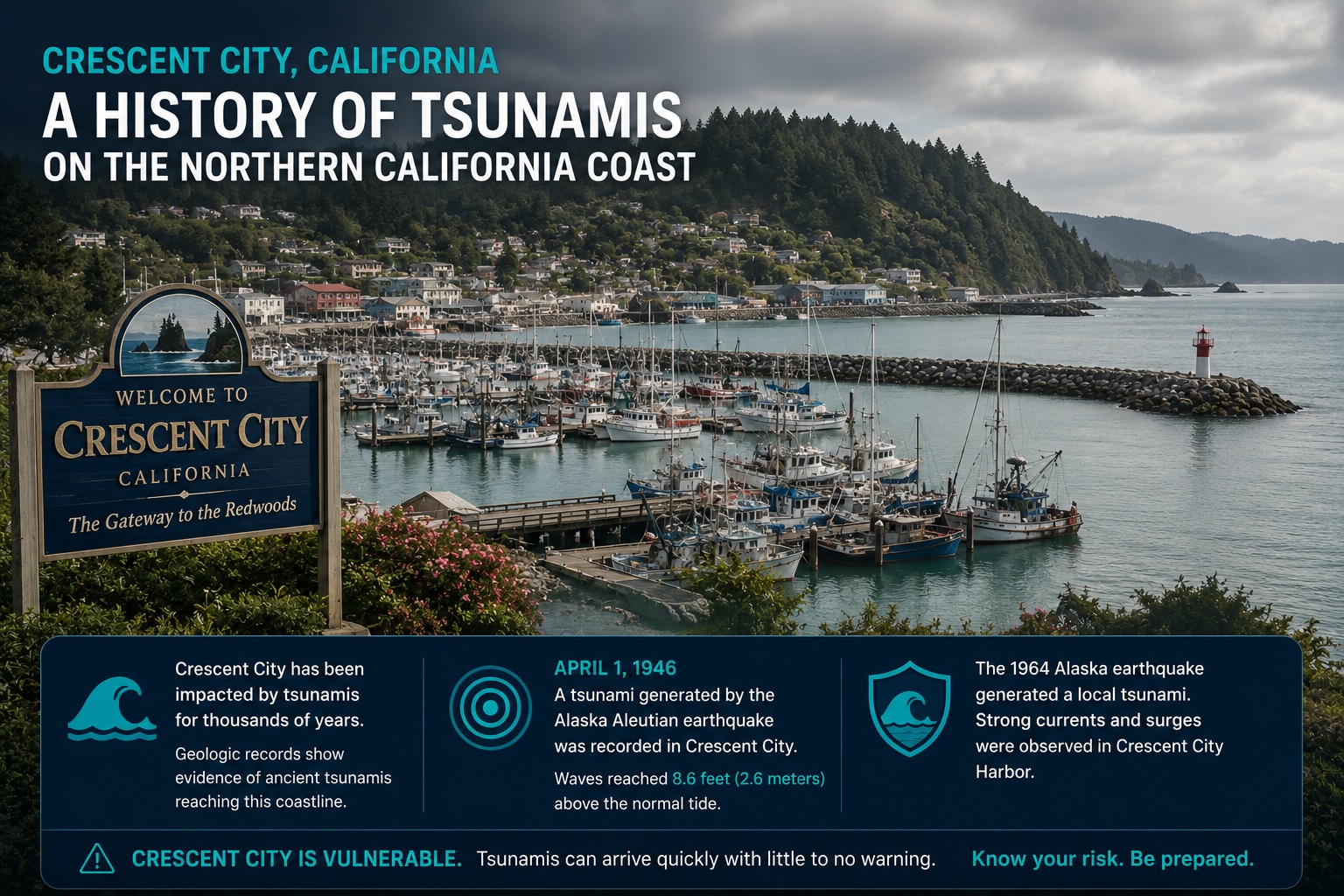
Pacific Ring of Fire — The Pacific Ocean is surrounded by major tectonic plate boundaries. Many of the world's largest earthquakes occur within this region, and large undersea earthquakes can generate tsunamis that travel across the entire Pacific Basin.
Nearby Seismic Activity — California itself experiences frequent seismic activity. Although most earthquakes do not generate tsunamis, certain offshore events could create localized hazards.
Distant Tsunami Sources — One unique aspect of tsunami risk is that dangerous waves can originate thousands of miles away. Earthquakes in Alaska, Japan, Chile, Russia, and Indonesia all have the potential to affect California coastlines.
Which Parts of California Are Most Vulnerable?
Not all coastlines experience the same level of risk. Certain locations are more susceptible due to local geography. Areas often highlighted in tsunami hazard assessments include:
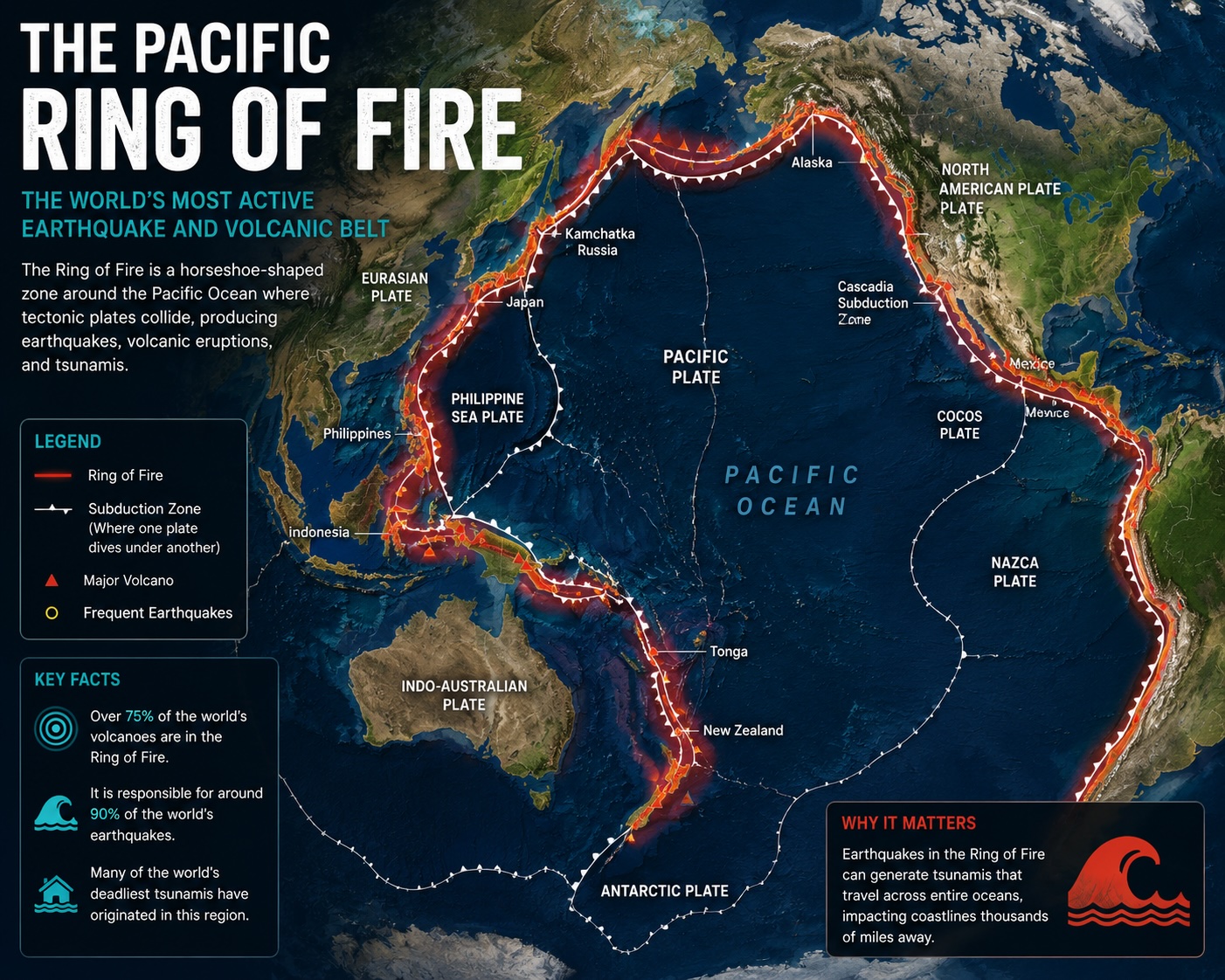
Northern California — Communities near Crescent City have historically experienced some of California's most significant tsunami impacts.
Humboldt Bay Region — Low-lying coastal areas may be vulnerable to tsunami flooding.
Coastal Harbors and Marinas — Harbours can experience strong currents and damaging surges even when tsunami wave heights appear relatively modest.
River Mouths and Estuaries — Tsunami energy can travel inland through connected waterways, extending the hazard zone beyond the immediate shoreline.
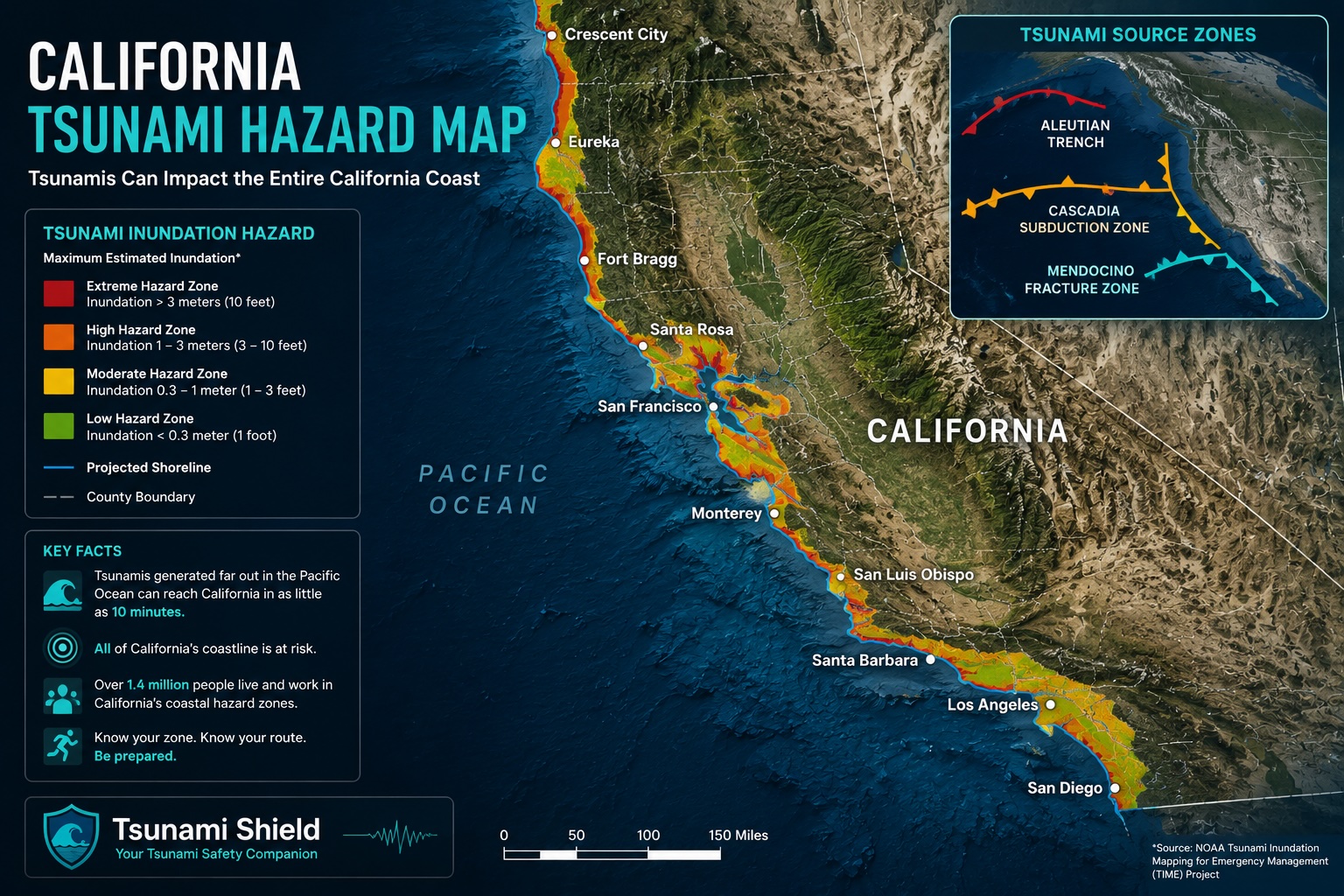
What Would a California Tsunami Look Like?
Many people imagine a giant breaking wave approaching the shore. In reality, tsunamis often appear differently. Possible effects include rapidly rising water levels, powerful currents, repeated surges, harbour flooding, and coastal inundation.
The greatest danger is often the movement of water itself rather than a single dramatic wave — strong currents in harbours and marinas can be just as destructive as flooding on open beaches.
How Much Warning Would California Receive?
Warning times depend heavily on where the tsunami originates.
Distant Pacific tsunamis — Events originating from Alaska, Japan, or South America may provide several hours of warning.
Regional events — Closer events may provide less warning time.
Local events — If a tsunami is generated near the California coast itself, available warning times could be significantly shorter — potentially only minutes.
This range in warning time is exactly why preparedness and awareness remain important regardless of where a threat originates.
Local Sources Mean Less Warning
If an earthquake occurs very close to the California coast, official warnings may arrive with very little lead time. In these cases, natural warning signs — strong shaking, unusual ocean behaviour — should prompt immediate action toward higher ground.
How Tsunami Warnings Are Issued
California benefits from sophisticated monitoring systems. Warning agencies use earthquake monitoring networks, DART tsunami buoys, tide gauges, and computer modelling to assess tsunami threats.
Official alerts may include Information Statements, Watches, Advisories, and Warnings — each representing a different level of urgency. Residents should always follow instructions from local authorities and official warning agencies.
What Should California Residents Do?
Preparedness does not require constant worry. Simple actions can make a significant difference:
- Know your evacuation routes — understand local evacuation plans if you live or work near the coast
- Learn hazard zones — many communities publish tsunami hazard maps
- Monitor official alerts — stay informed through trusted warning systems
- Have an emergency plan — discuss evacuation procedures and communication plans with your family
What About Visitors and Tourists?
California attracts millions of visitors every year. If you are visiting coastal areas, understand local evacuation routes, pay attention to posted tsunami signage, monitor local alerts, and avoid beaches during warnings.
Preparedness is important even during short visits — you don't need to live somewhere permanently to benefit from knowing the basics before you arrive.
How Tsunami Shield Can Help
Tsunami Shield helps users stay informed about official tsunami alerts, earthquake activity, coastal monitoring, saved locations, and preparedness resources. Whether you live near the California coast or are visiting, access to timely information can support better decision-making during emergencies.
Monitor California Before You Arrive
Add California destinations to your saved locations or Travel Mode in Tsunami Shield to receive official alerts and earthquake monitoring for the region — whether you're a resident or just visiting.
Final Thoughts
Yes, a tsunami can reach California. The state has experienced tsunami impacts in the past and will likely experience future events generated by both local and distant earthquakes.
While major tsunamis remain relatively uncommon, understanding the risk and preparing in advance can help improve safety and peace of mind. Awareness, preparedness, and access to reliable information remain the most effective tools for coastal safety.
Frequently Asked Questions
Has California ever had a major tsunami?
Yes. California has experienced tsunami impacts from events including the 1964 Alaska earthquake, which caused flooding and damage in coastal communities, and the 2011 Japan earthquake, which caused strong currents and harbour damage despite the source being thousands of miles away. Smaller localized tsunamis have also occurred due to nearby earthquakes and underwater landslides.
Which part of California is most at risk from tsunamis?
Northern California, particularly communities near Crescent City, has historically experienced some of the state's most significant tsunami impacts. The Humboldt Bay region, coastal harbours and marinas, and river mouths and estuaries are also highlighted as vulnerable areas in tsunami hazard assessments.
How much warning time would California get before a tsunami?
Warning time depends on the source. Distant Pacific tsunamis from Alaska, Japan, or South America may provide several hours of warning. Tsunamis generated closer to California would provide less time, and a tsunami generated very close to the coast could leave only minutes of warning.
Can a tsunami from Japan or Alaska really reach California?
Yes. Tsunamis can travel thousands of miles across the Pacific Ocean. The 1964 Alaska earthquake and the 2011 Japan earthquake both generated tsunami waves that reached California, causing flooding, strong currents, and harbour damage despite the distance from their source.
Read Next
Continue exploring related topics