Traveling With Tsunami Shield: Staying Informed Before, During, and After Coastal Travel
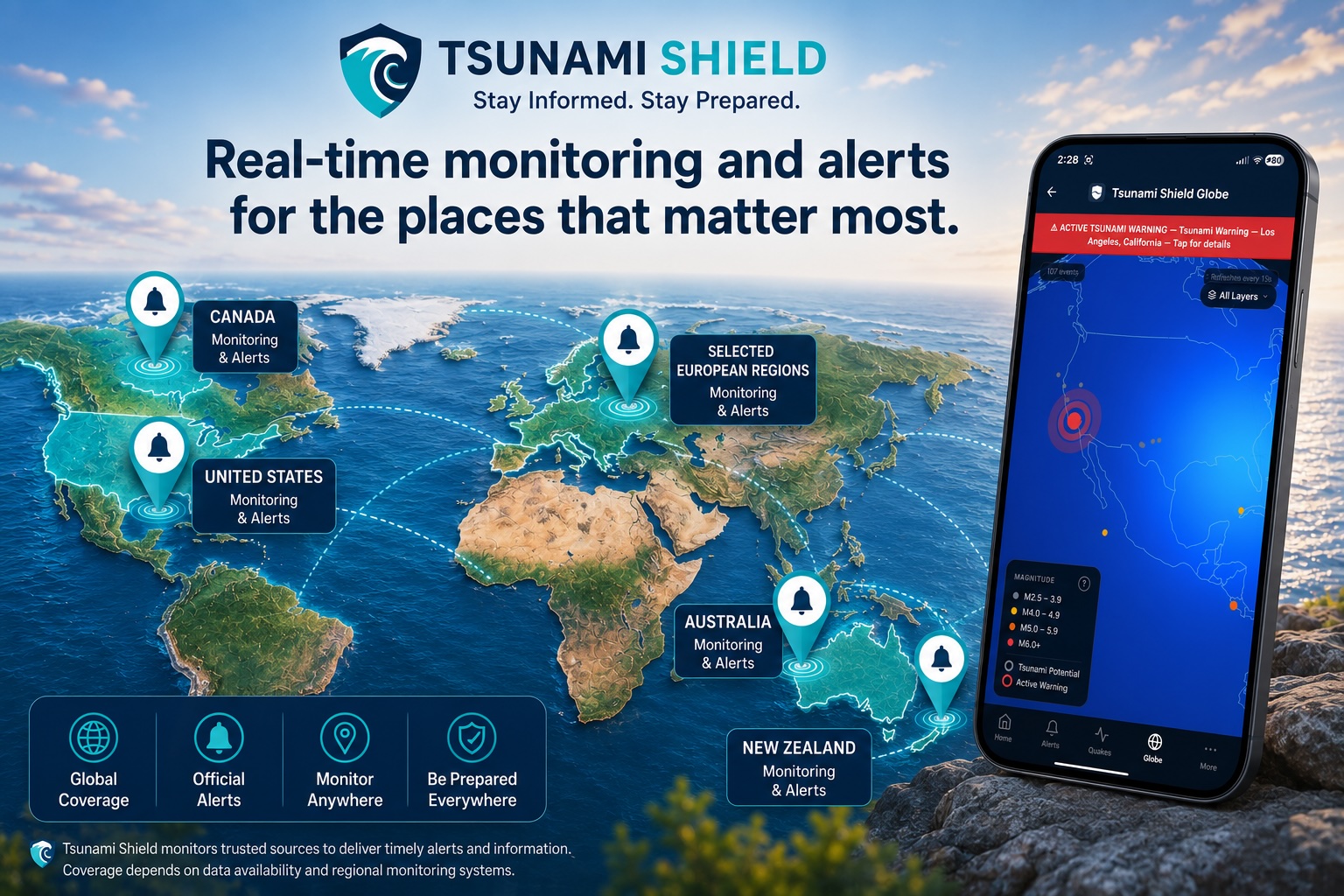
Travel should be exciting, relaxing, and memorable. Here is how Tsunami Shield helps travelers stay informed before, during, and after coastal travel, wherever their journey takes them.
Travel should be exciting, relaxing, and memorable. Whether you're heading to Hawaii, exploring New Zealand, visiting California, or taking a cruise through the Pacific, most trips are enjoyable and uneventful.
However, travel often places people in unfamiliar environments. You may not know local hazards, emergency procedures, evacuation routes, emergency contact numbers, or where to find reliable information.
Preparedness does not mean expecting something to go wrong. It simply means feeling informed and confident wherever your travels take you. Tsunami Shield was designed to help travelers stay aware of coastal events affecting the places they visit and the people they care about.
Why Preparedness Matters When Traveling
When we travel, we temporarily become unfamiliar with our surroundings. Questions may include: Where is the nearest hospital? What emergency systems exist here? What would happen during a natural hazard? How would I receive information? Where would I go if an evacuation occurred?
Most travelers never need emergency information. However, having access to reliable information can provide valuable peace of mind.
Popular Coastal Destinations Face Natural Hazards
Many of the world's most popular destinations sit near coastlines. Examples include Hawaii, California, Alaska, New Zealand, Australia, and Pacific island destinations — see all countries covered by Tsunami Shield.
These regions attract millions of visitors every year. They also have varying levels of exposure to earthquakes, tsunamis, severe weather, coastal flooding, and volcanic activity.
Preparedness begins with awareness.
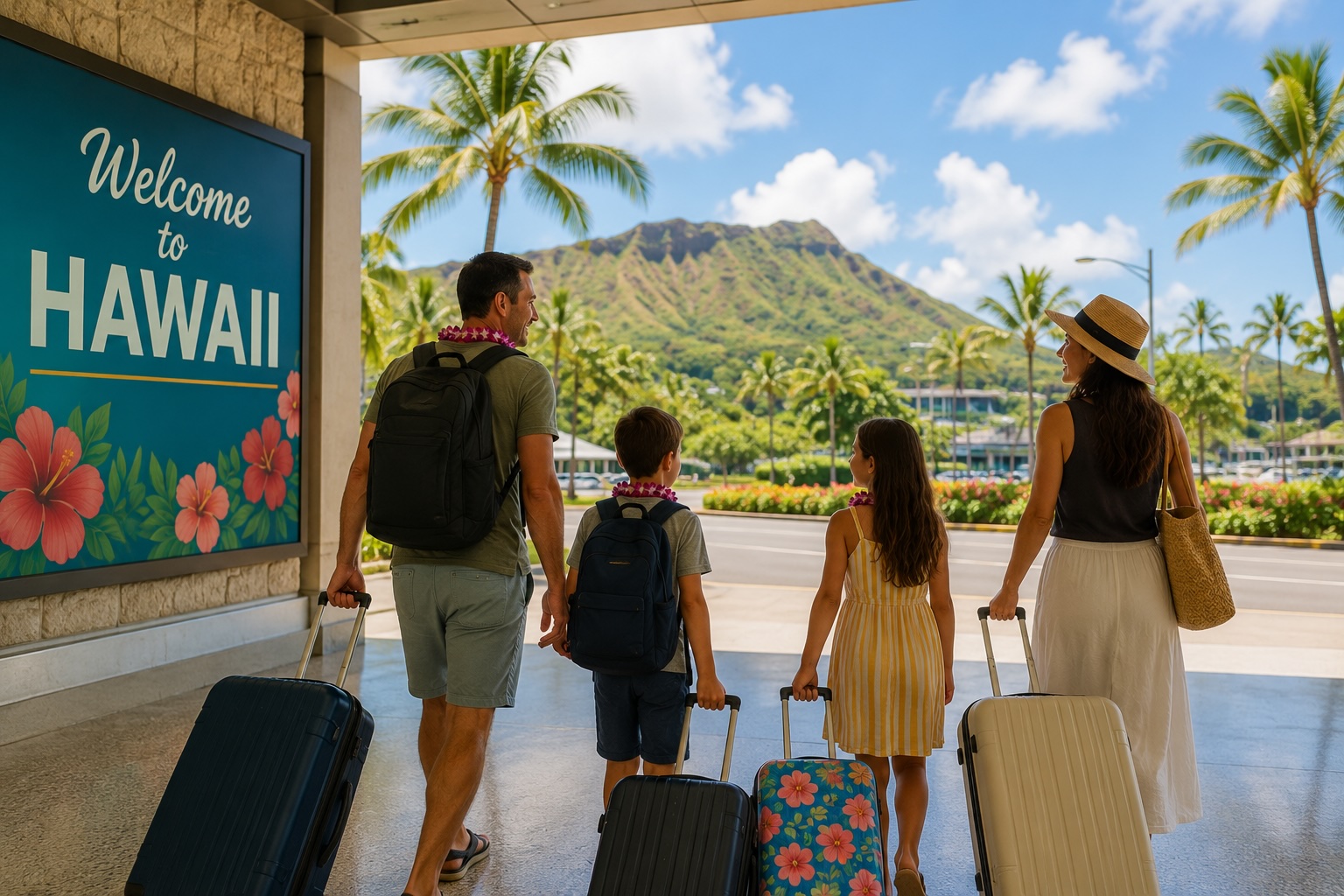
Before You Travel
A few simple preparations before leaving home can help improve confidence. Consider:
- Understanding Local Hazards — learn about the destination you are visiting
- Saving Important Locations — know where you will be staying
- Reviewing Emergency Information — become familiar with local emergency procedures
- Sharing Travel Plans — let family members know your itinerary
During Your Trip
Preparedness should never interfere with enjoying your holiday. Instead, it should work quietly in the background. Simple habits include staying informed, knowing where you are staying, noticing emergency signage, understanding local information sources, and knowing how to access help if required.
Preparedness and relaxation can coexist.
Monitoring Locations That Matter
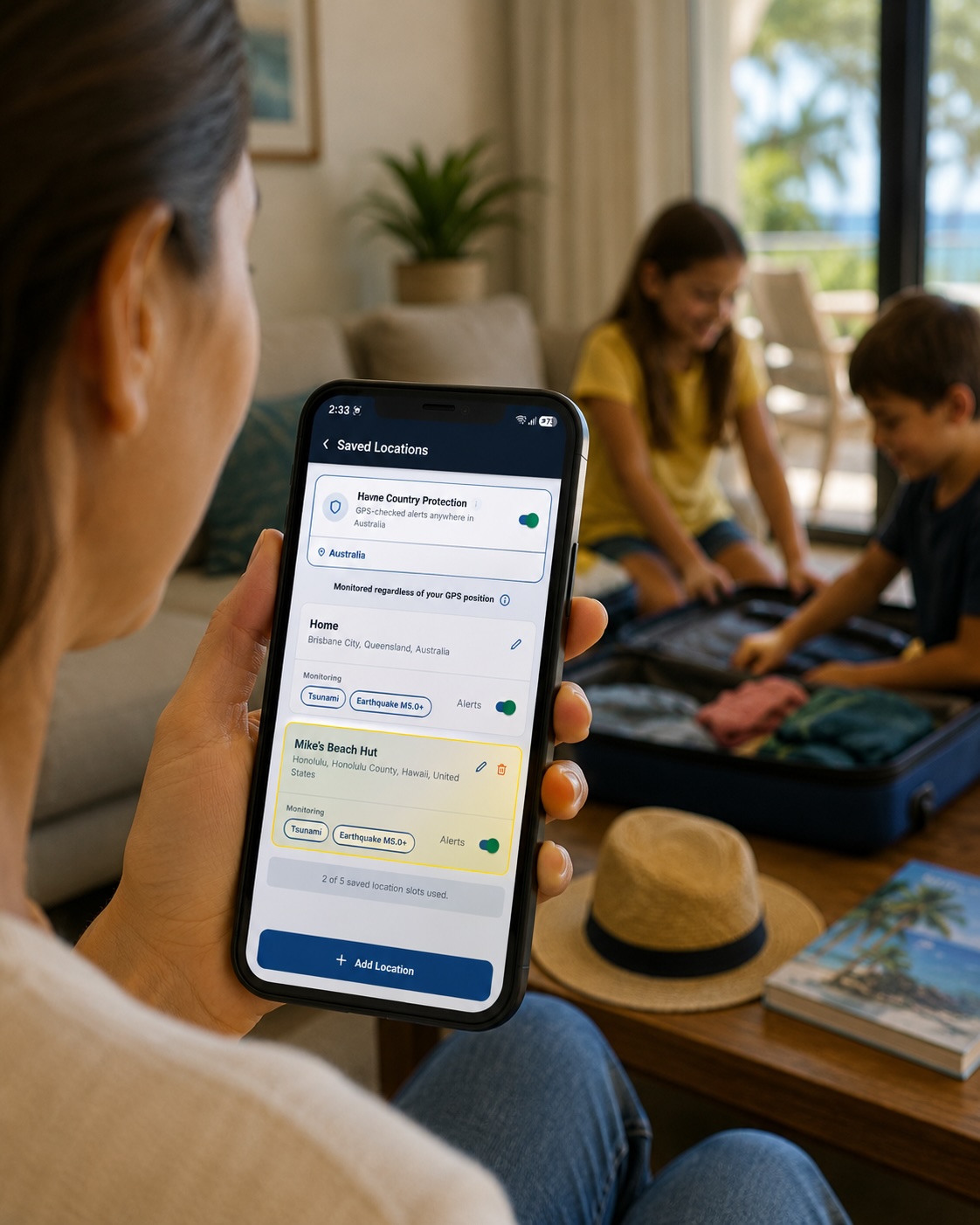
Travel often involves multiple locations. Examples may include your hotel, nearby beaches, neighboring islands, places family members are visiting, and locations you plan to explore.
Monitoring locations important to your trip can help you remain informed about developing situations.
Tsunami Shield Feature: Travel Mode
Add any country to Travel Mode before your trip and receive real-time tsunami warnings for that destination — even when your phone is on silent or Do Not Disturb.
Traveling With Family
Family holidays introduce additional considerations. Parents may think about children's safety, medical resources, communication plans, transportation arrangements, and emergency contacts.
Preparedness can help families feel more comfortable when traveling in unfamiliar places.
Traveling Internationally
International travel often means unfamiliar emergency numbers, different warning systems, language differences, unfamiliar geography, and unfamiliar emergency procedures.
Having access to information that helps explain local conditions can be reassuring during travel.
If a Significant Event Occurs
If a significant earthquake or tsunami warning occurs:
- Stay Calm — remain calm and avoid rushing to conclusions
- Monitor Reliable Information — follow updates from official sources
- Follow Local Instructions — local authorities understand conditions in their communities
- Stay Connected — communicate with family and friends when possible
- Avoid Rumors — reliable information is particularly important during rapidly evolving situations
Helping Loved Ones Stay Informed
Travel affects more than the traveler. Parents, spouses, children, and friends often want reassurance that loved ones are safe. Learn more about monitoring the safety of family members in coastal regions. Monitoring locations important to family members can help improve awareness, reduce uncertainty, support communication, and provide peace of mind.
Preparedness is often about relationships.
How Tsunami Shield Supports Travelers
Tsunami Shield helps travelers stay informed through official tsunami alerts, earthquake monitoring, saved locations, regional monitoring, preparedness resources, and emergency information tools.
Travelers can monitor destinations that matter to them and better understand significant events affecting places they are visiting. The goal is simple: help travelers stay informed and enjoy greater peace of mind before, during, and after their journey.
Preparedness Without Fear
Preparedness should feel empowering, not frightening. Most trips will never involve emergencies. However, understanding where to find information and having access to preparedness tools can help people feel more confident while traveling.
Preparedness allows people to focus on enjoying experiences rather than worrying about unknowns.
The Tsunami Shield app includes an Emergency Assistance feature where you can instantly see the country's local emergency number (automatically detected from your location), access emergency numbers, and contact loved ones advising you are safe — or that you need help — quickly and easily.
Final Thoughts
Travel often takes us to beautiful coastal destinations around the world. Although natural hazards occasionally occur, reliable information and simple preparations can help travelers feel more informed and more confident.
Preparedness is not about expecting emergencies. It is about understanding your surroundings, knowing where information can be found, and enjoying greater peace of mind wherever your travels take you.
Tsunami Shield was created to help travelers stay informed about the places and people that matter most, so they can focus on making memories and enjoying their journey.
Frequently Asked Questions
How does Tsunami Shield help me while I am traveling?
Tsunami Shield lets you add destination countries to Travel Mode before or during your trip, so you receive official tsunami alerts and earthquake monitoring for the places you are visiting — even when your phone is on silent or Do Not Disturb.
Can I monitor more than one location while traveling?
Yes. You can monitor multiple locations that matter to your trip, such as your hotel, nearby beaches, neighboring islands, or places family members are visiting, so you stay informed about developing situations across your whole itinerary.
What should I do before I travel to a coastal destination?
Learn about local hazards at your destination, save important locations like your hotel, review local emergency information, and share your travel plans with family members before you leave.
How can Tsunami Shield help my family stay informed while I travel?
Family members can monitor the locations you are visiting, which helps improve awareness, reduce uncertainty, support communication, and provide peace of mind while you are away.
Read Next
Continue exploring related topics