
Travel Safety for Japan Visitors: Understanding Earthquakes, Tsunamis, and Preparedness While Visiting Japan
Japan is one of the world's most fascinating travel destinations. Here is what every visitor needs to know about earthquakes, tsunamis, and simple preparedness while exploring the country.
Japan is one of the world's most fascinating travel destinations. From Tokyo's vibrant city life and Kyoto's historic temples to Hokkaido's mountains and Okinawa's beaches, millions of people visit Japan every year.
Most visits are safe, enjoyable, and completely uneventful. However, Japan also experiences natural hazards, including earthquakes, tsunamis, volcanic activity, and severe weather events.
Understanding a few simple preparedness concepts can help travelers feel more informed and more confident while exploring the country. Preparedness is not about expecting something to go wrong. It is simply about understanding your surroundings and knowing where to find information if unexpected situations occur.
Why Does Japan Experience So Many Earthquakes?
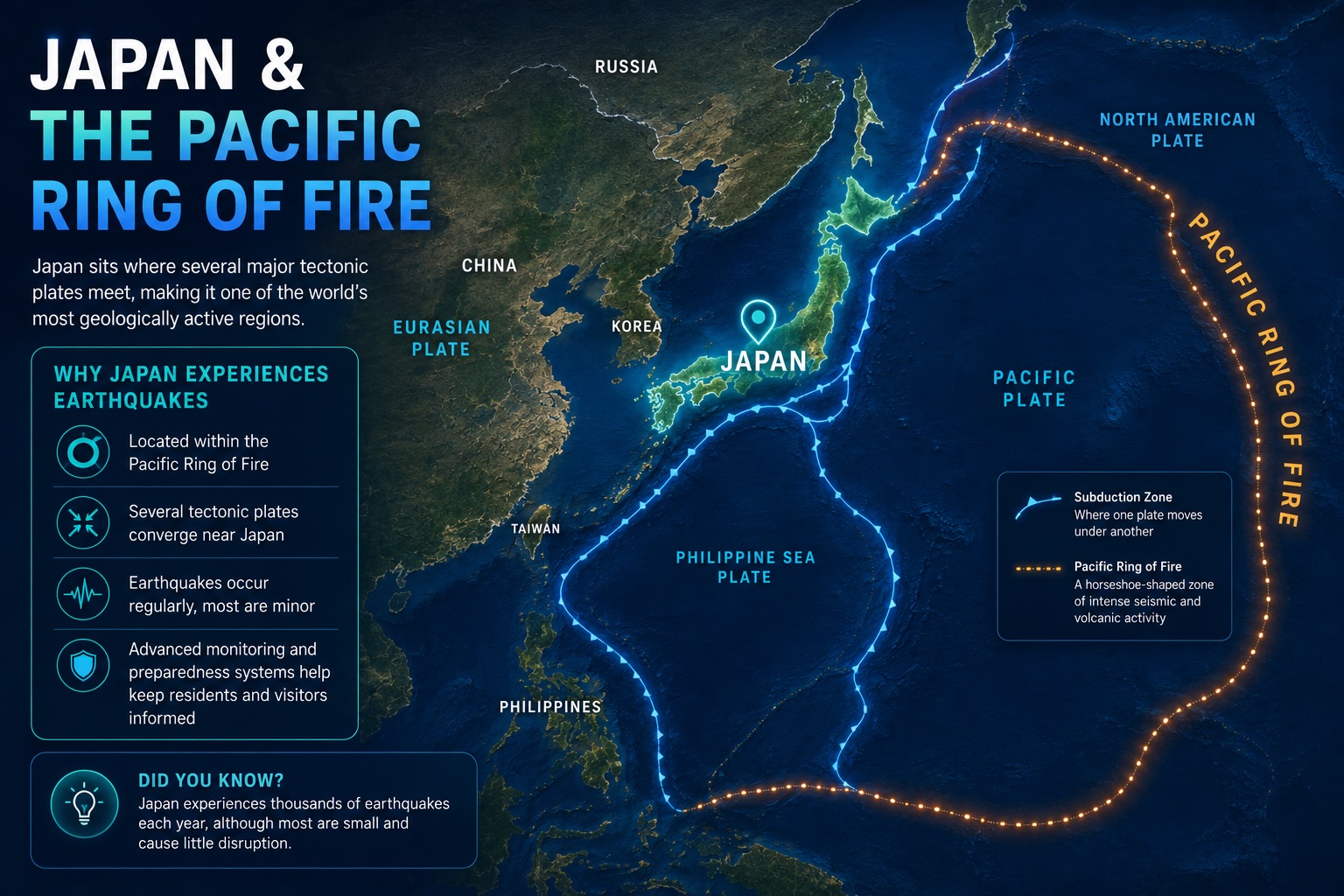
Japan sits within the Pacific Ring of Fire, one of the world's most active geological regions. Several tectonic plates meet near Japan, including the Pacific Plate, Philippine Sea Plate, Eurasian Plate, and North American Plate.
These moving plates make Japan one of the world's most seismically active countries. As a result, earthquakes occur regularly. Most are minor and cause little disruption.
Does Japan Experience Tsunamis?
Yes. Japan has experienced tsunamis throughout its history. Because Japan sits along major tectonic plate boundaries, some earthquakes have generated significant tsunami events. The 2011 Great East Japan Earthquake and Tsunami remains one of the most significant natural disasters in modern history.
Although major tsunamis are uncommon, Japan maintains extensive monitoring and preparedness systems.
Should Tourists Be Concerned?
No. Millions of people visit Japan every year without experiencing any emergency situations. Japan is widely regarded as one of the world's safest and best-prepared countries for natural hazards.
Preparedness should be viewed similarly to learning local transportation systems, understanding weather conditions, and carrying travel insurance. Simple awareness can help travelers feel more comfortable and prepared.
What Happens During an Earthquake?
Small earthquakes occur frequently in Japan. Many are minor enough that visitors may not notice them. If you do feel an earthquake:
- Stay Calm — most earthquakes are brief
- Follow Local Instructions — Japan's emergency procedures are highly organized
- Protect Yourself — move away from objects that could fall if necessary
- Monitor Information — follow official guidance and information sources
Understanding Tsunami Warnings in Japan
Japan has one of the world's most advanced tsunami warning systems. Alerts generally communicate expected conditions, potentially affected regions, and recommended actions.
If you are near the coast and a tsunami warning is issued, follow official instructions, move away from hazardous coastal areas if instructed, avoid beaches and waterfronts, and monitor updates.
Warnings should always be taken seriously.
Take All Warnings Seriously
If a tsunami warning is issued while you are near the Japan coast, act immediately. Do not wait to observe conditions before moving to higher ground.
Understanding Tsunami Evacuation Signs
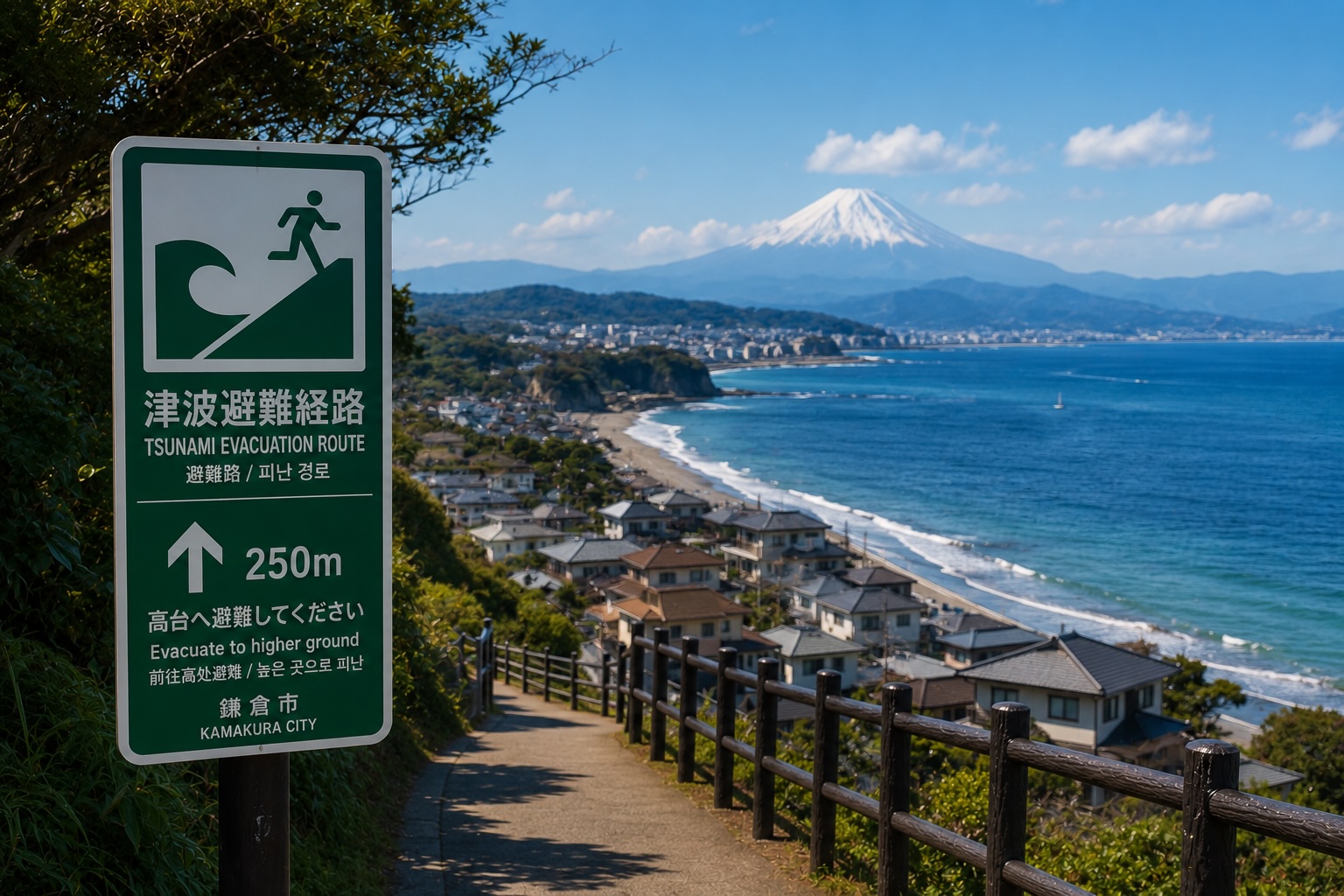
Visitors often notice tsunami evacuation signs throughout Japan. Examples include tsunami evacuation route signs, hazard zone maps, and directional signs toward higher ground.
These signs are designed to help both residents and visitors understand where safer locations may be found. Taking a few moments to notice these signs can improve confidence while traveling.
If You Are Staying Near the Coast
Japan's coastline offers incredible destinations, including Okinawa, Hokkaido, Kamakura, coastal areas near Tokyo, and numerous island destinations.
If staying near the coast, become familiar with your surroundings, notice evacuation signage, understand hotel emergency information, and know where higher ground may be located.
Preparedness often begins with simple awareness.
What About Language Barriers?
Many visitors worry about understanding local instructions, interpreting signs, and finding information.
Fortunately, many signs use internationally recognized symbols, major tourist destinations often provide multilingual information, hotels can usually assist travelers, and emergency information is increasingly accessible.
Preparedness becomes easier when travelers understand where information can be found.
Helping Family Members Stay Informed
Travel often affects more than the traveler. Family members at home frequently want reassurance that you are safe, that they understand developing situations, and that they can follow important information.
Having access to reliable information can help reduce uncertainty and improve communication during travel.
How Tsunami Shield Supports Travelers Visiting Japan
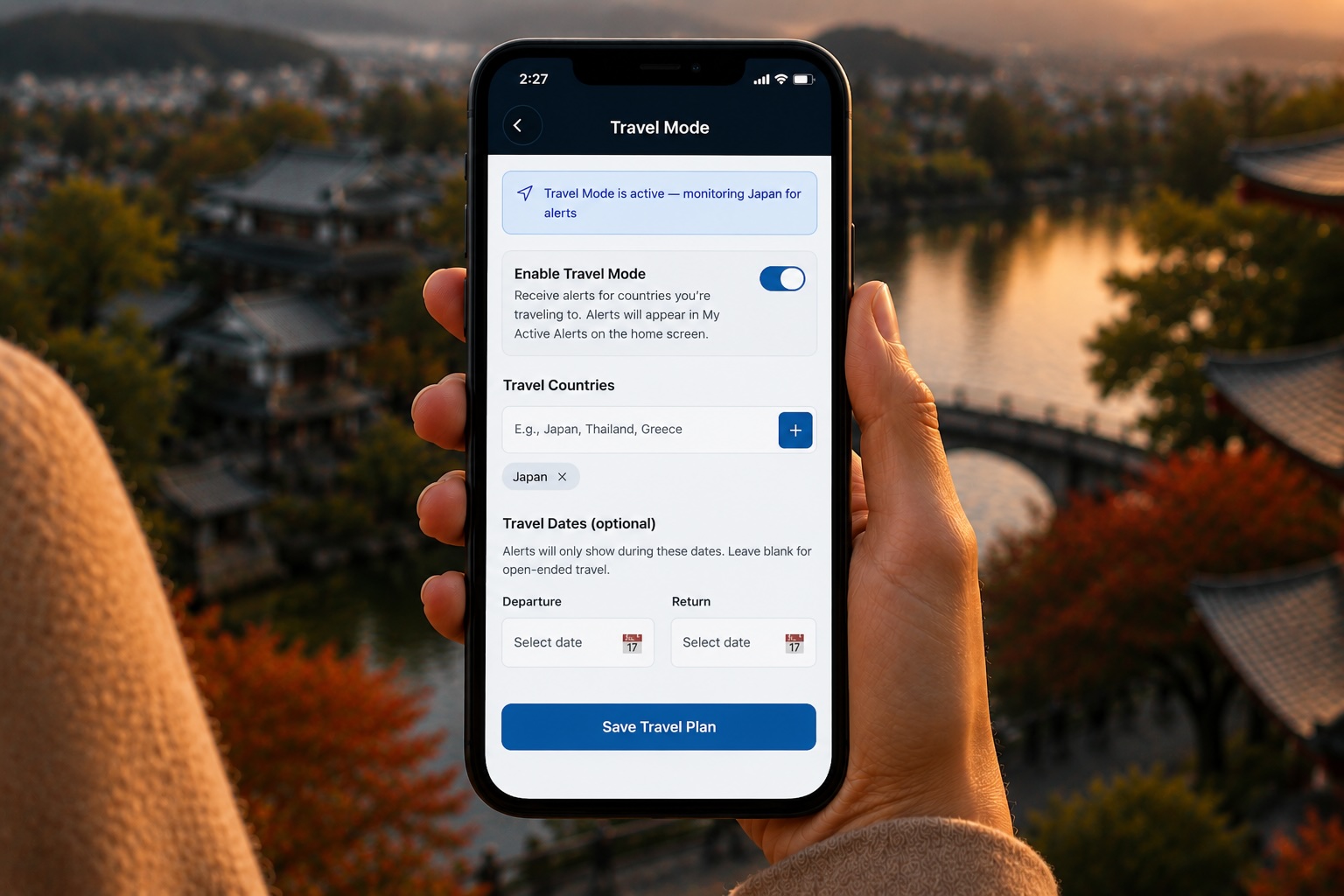
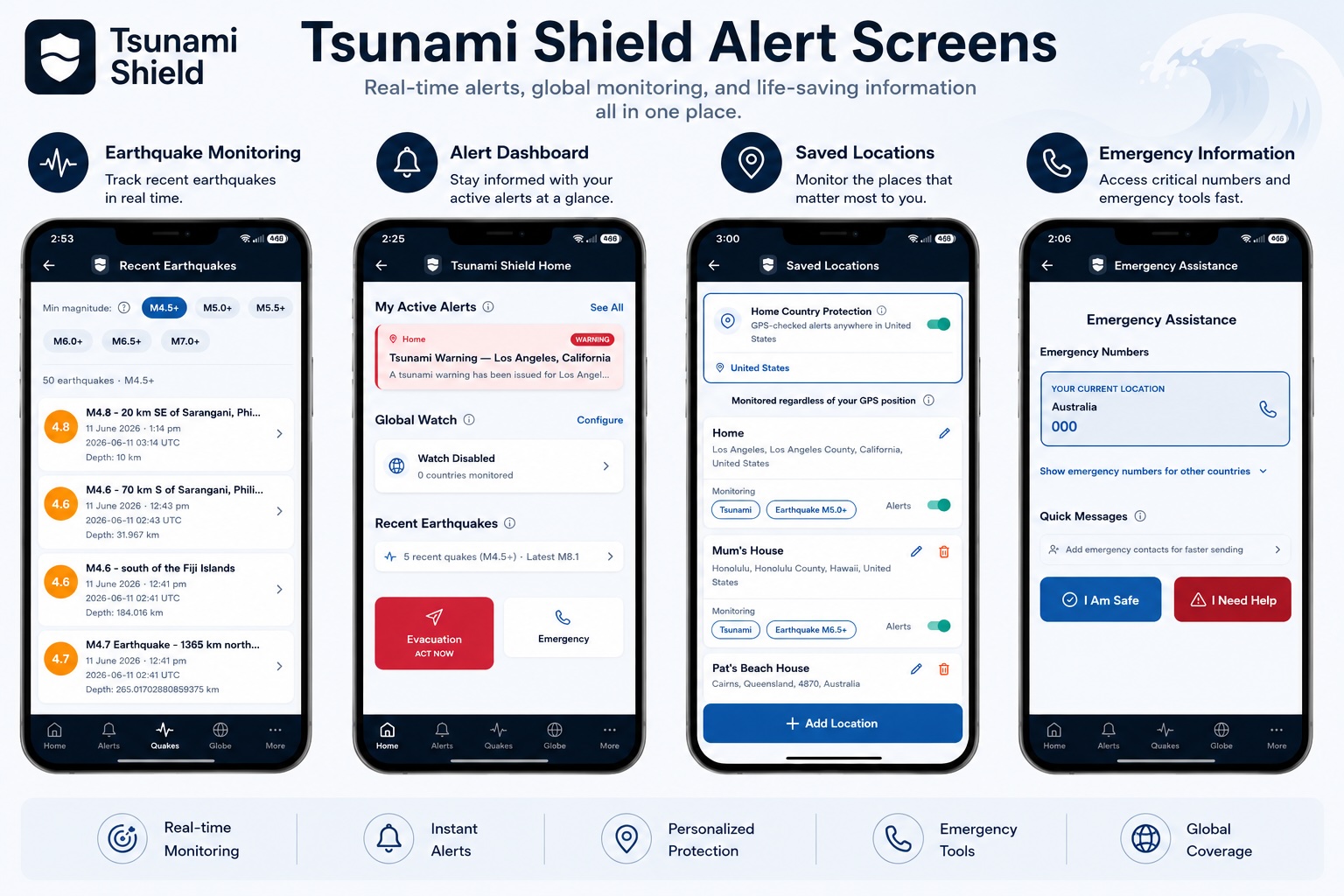
Tsunami Shield helps travelers stay informed through official tsunami alerts, earthquake monitoring, saved locations, regional monitoring, preparedness resources, and emergency information tools.
Travelers can monitor locations that matter to them and remain informed about significant events affecting their destination. The goal is simple: help travelers stay informed and enjoy greater peace of mind while visiting coastal destinations.
Save Your Japan Destinations
Add Tokyo, Osaka, Okinawa, Hokkaido, or Kyoto to your saved locations in Tsunami Shield to receive official alerts and earthquake monitoring throughout your trip.
Preparedness Without Fear
Preparedness should never reduce enjoyment. Most visitors will never experience a significant natural hazard during their trip to Japan. Understanding local conditions simply helps travelers feel more informed, more comfortable, more confident, and better prepared.
Preparedness and travel enjoyment can comfortably exist together.
Final Thoughts
Japan remains one of the world's most extraordinary destinations and one of the most prepared countries when it comes to natural hazards. Understanding basic earthquake and tsunami preparedness concepts can help travelers feel more confident while exploring the country.
Preparedness does not mean expecting emergencies. It means understanding your surroundings, knowing where information can be found, and enjoying greater peace of mind while making unforgettable memories. Tsunami Shield was designed to help travelers stay informed about the places and people that matter most, wherever their journey takes them.
Frequently Asked Questions
Is Japan safe from earthquakes and tsunamis?
Japan experiences earthquakes regularly, most of which are minor, and while it has experienced significant tsunami events historically, Japan is widely regarded as one of the world's safest and best-prepared countries for natural hazards. Millions of travelers visit Japan every year without experiencing any emergency situations.
What should I do if I feel an earthquake in Japan?
Stay calm, since most earthquakes are brief. Follow local instructions, as Japan's emergency procedures are highly organized. Move away from objects that could fall if necessary, and monitor official guidance and information sources.
What do tsunami evacuation signs in Japan look like?
Visitors often notice tsunami evacuation route signs, hazard zone maps, and directional signs toward higher ground throughout Japan. These signs are designed to help both residents and visitors understand where safer locations may be found.
How can Tsunami Shield help me while visiting Japan?
Tsunami Shield lets you save popular Japan destinations like Tokyo, Osaka, Okinawa, Hokkaido, and Kyoto to receive official tsunami alerts, earthquake monitoring, and regional preparedness resources throughout your trip.
Read Next
Continue exploring related topics


