What To Do During a Tsunami Warning: A Practical Safety Guide
Receiving a tsunami warning can be frightening. Knowing what to do before it happens can help you act quickly and confidently. Here is a practical safety guide.
Receiving a tsunami warning can be frightening, especially if you live near the coast or are visiting an unfamiliar area. Fortunately, knowing what to do before an emergency occurs can help you act quickly and confidently if a warning is issued.
This guide explains what a tsunami warning means, the actions you should take immediately, and how to prepare yourself and your family for coastal emergencies.
What Is a Tsunami Warning?
A tsunami warning is the highest level of tsunami alert issued by warning agencies. It means dangerous tsunami waves and coastal flooding are expected or already occurring.
Unlike watches or advisories, a warning indicates that protective action may be required immediately. If local authorities issue evacuation instructions, they should be followed without delay.
A Warning Means Act Now
A tsunami warning is not a watch or advisory. It means dangerous waves are expected or occurring. When a warning is issued for your area, begin your evacuation plan immediately — do not wait for waves to become visible.
Stay Calm and Act Quickly
The first step during any emergency is to remain calm. Panic can slow decision-making and make it harder to respond effectively. Instead, focus on official information, follow local instructions, and begin your evacuation plan immediately if required.
Remember that tsunami warnings are issued precisely to give people time to act. Use that time wisely.
Move Away From the Coast
If you are in a tsunami warning area, move inland as soon as possible. Avoid beaches, marinas, harbours, river mouths, and coastal roads.
Tsunamis can travel far up rivers and estuaries, affecting areas well beyond the immediate shoreline. The goal is distance from the water and elevation — both matter.
Seek Higher Ground
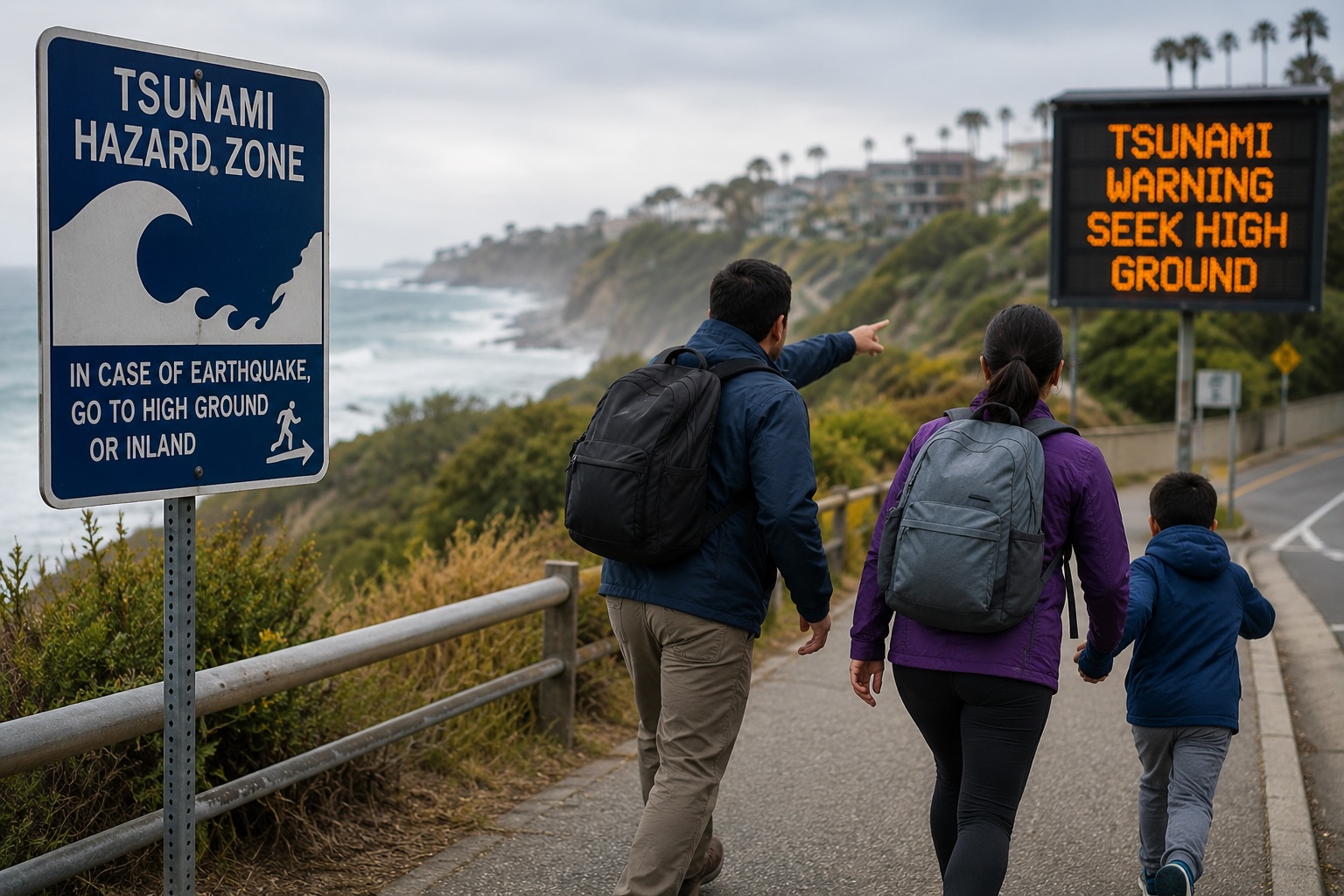
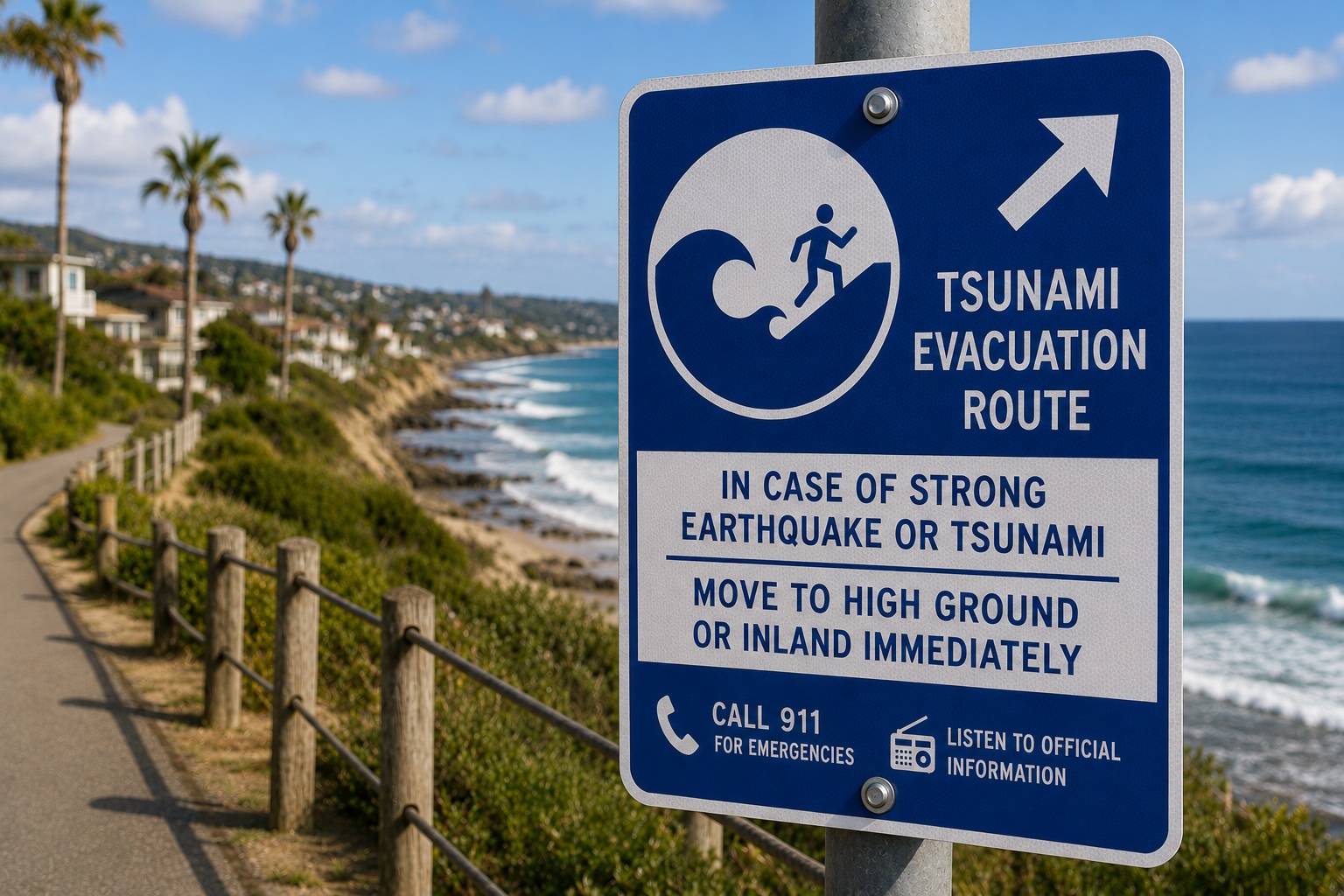
Elevation is one of the most effective protections during a tsunami. If evacuation routes exist in your area, follow posted signs and move to designated safe zones. In many coastal communities, tsunami evacuation routes are clearly marked — familiarise yourself with these before an emergency occurs, not during one.
Follow Official Evacuation Orders
Always follow instructions from emergency management agencies, police, local government authorities, and tsunami warning centres. Do not rely on rumours or unverified social media reports.
Official guidance is based on scientific monitoring and ongoing assessment by trained specialists. It represents the best available information about what is happening and what you should do.
Avoid the Shoreline
Many people make the dangerous mistake of going to the beach to watch incoming waves. This can be extremely hazardous. Tsunamis may arrive as rapidly rising water, powerful currents, multiple surges, or unexpected flooding — often not as the dramatic breaking waves people imagine.
Importantly, the first wave may not be the largest. Stay away from coastal areas until authorities officially declare them safe.
Be Prepared for Multiple Waves
Tsunamis often consist of a series of waves arriving over several hours. Conditions can remain dangerous long after the initial arrival. Do not assume the danger has passed simply because the first wave appears small or conditions seem to have calmed.
Continue monitoring official alerts and wait for an all-clear from authorities before returning to coastal areas.
Monitor Official Alerts
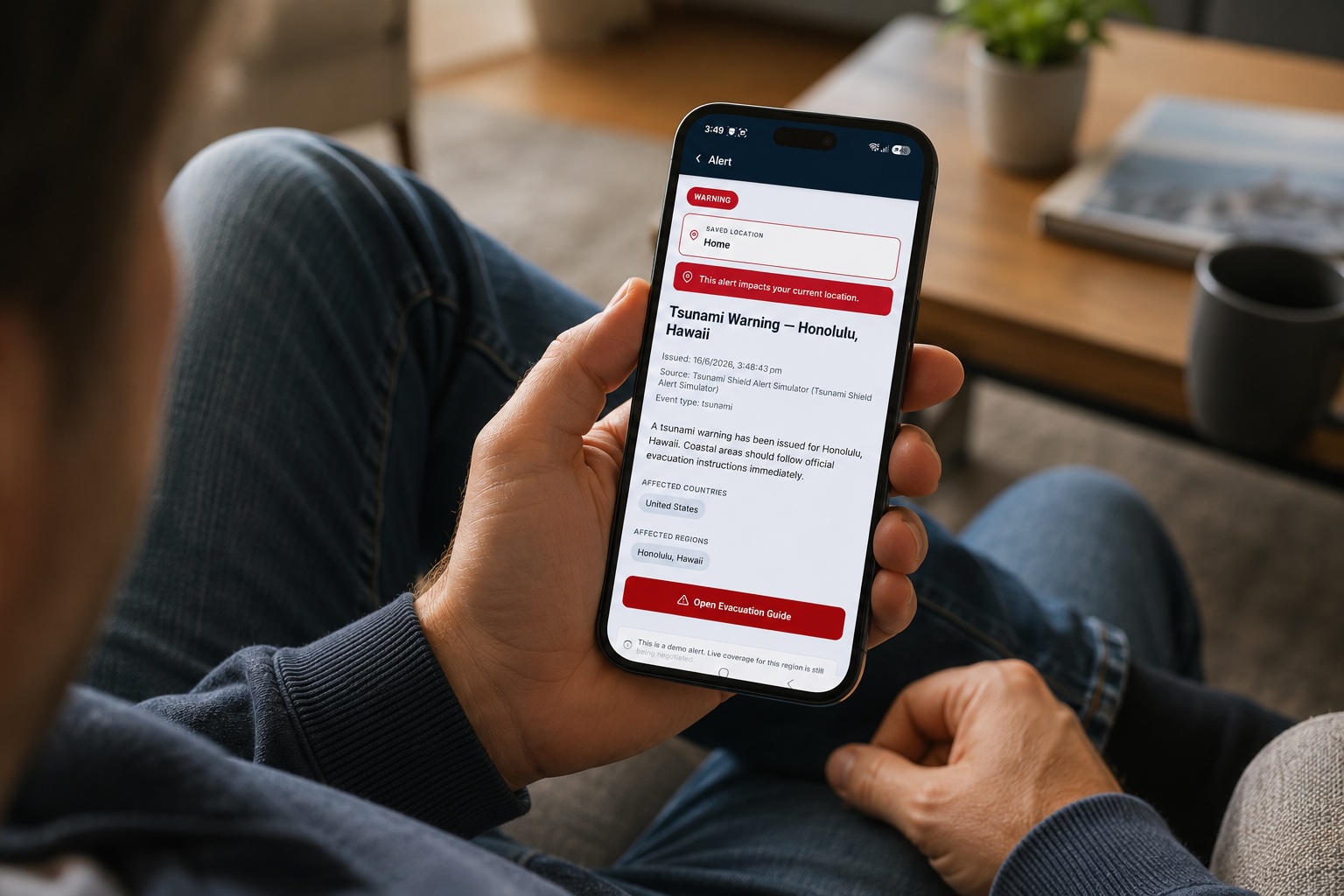
Keep informed through trusted sources throughout the event. Monitor emergency broadcasts, official warning agencies, local authorities, and emergency alert systems. A trusted app like Tsunami Shield can deliver official notifications directly to your phone, keeping you informed as conditions evolve.
Stay Informed with Tsunami Shield
Tsunami Shield delivers official tsunami alerts and earthquake monitoring directly to your phone — for your home, saved locations, and travel destinations. When conditions change, you'll know immediately.
If You Feel a Strong Coastal Earthquake
In some situations, natural warning signs may occur before an official alert arrives — particularly when an earthquake is very close to shore and warning time is extremely short.
If you experience strong ground shaking, difficulty standing, unusual ocean behaviour, or a sudden retreat of water from the shoreline, do not wait for an official warning. Move immediately to higher ground and seek safety. These are nature's warning signs — treat them as seriously as any official alert.
If You Are at the Beach
If a warning is issued while you are at the beach, leave immediately. Move inland, seek higher ground, and follow local evacuation routes. Avoid returning until authorities confirm it is safe to do so.
Time can be critical in coastal emergencies. A few minutes of early action can make a significant difference.
If You Are Boating
Guidance for vessels varies depending on vessel size, location, and local authority instructions. In many situations, vessels already in deep water may be safer remaining offshore than attempting to return to port, as tsunami energy is far less dangerous in deep open water than in shallow coastal areas.
Always follow instructions from local maritime authorities and do not attempt to return to harbour during an active warning.
Common Mistakes to Avoid
Understanding the most common mistakes can help you avoid them under pressure:
- Waiting too long — delaying evacuation reduces your safety margin significantly
- Going to watch the waves — never approach the shoreline during a warning
- Ignoring official instructions — always follow guidance from emergency authorities
- Returning too early — many injuries occur after people return before conditions are declared safe
- Relying on social media — use official sources only during an active emergency
Family Preparedness Matters
Every family should have a basic emergency plan prepared well before a warning is issued. Discuss evacuation routes, meeting locations, emergency contacts, and communication plans with all household members. Children should understand where to go and who to contact during an emergency.
Preparation before an event often makes the biggest difference — a plan you have practised is far more effective than one you are trying to form under pressure.
How Tsunami Shield Helps
Tsunami Shield helps users stay informed through official tsunami alerts, earthquake monitoring, critical notifications, saved location monitoring, and preparedness resources. The goal is to provide timely, reliable information that supports informed decision-making during coastal emergencies — giving you the best possible chance to act confidently when it matters most.
Final Thoughts
Tsunami warnings are issued to protect lives and provide time for people to act. Understanding what a warning means and knowing how to respond can meaningfully reduce risk during coastal emergencies.
The most important actions are simple: move away from the coast, seek higher ground, follow official instructions, and stay informed. Preparedness starts long before an emergency occurs — having a plan and understanding warning procedures can help you and your family respond quickly and confidently when it matters most.
Frequently Asked Questions
What should I do immediately when a tsunami warning is issued?
Move away from the coast immediately. Seek higher ground, follow posted evacuation routes, and follow all instructions from local emergency authorities. Do not return to coastal areas until officials declare it safe. Monitor official alerts continuously throughout the event.
Is it safe to go to the beach to watch a tsunami?
No — this is extremely dangerous. Tsunamis can arrive as rapidly rising water, powerful currents, or multiple surges rather than obvious breaking waves. The first wave may not be the largest. Stay well away from all coastal areas during an active tsunami warning.
How long does a tsunami warning last?
Tsunami warnings remain in effect until officially cancelled by the issuing authority. A tsunami event can produce multiple waves arriving over several hours, so conditions may remain dangerous long after the first wave. Always wait for an official all-clear before returning to coastal areas.
What are the natural warning signs of a tsunami before an official alert?
Natural warning signs include a strong earthquake near the coast (particularly if it causes difficulty standing), a sudden rapid retreat of water from the shoreline, or unusual ocean behaviour such as unexpected surges or changes in water level. If you observe any of these signs, move to higher ground immediately without waiting for an official warning.
Read Next
Continue exploring related topics